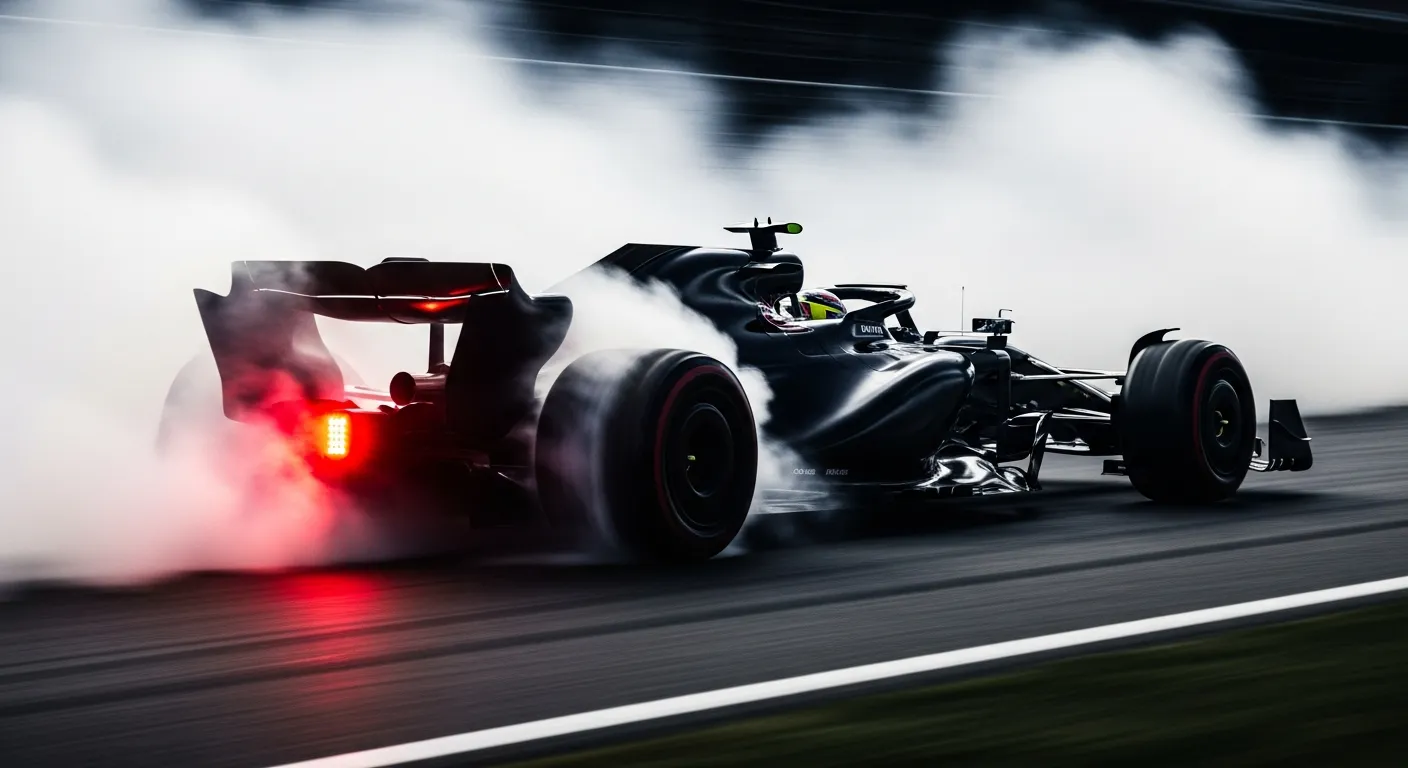
Esteban Ocon's performance at the 2018 Australian Grand Prix saw the Force India driver maintain a consistent run, converting a P14 grid start into a P12 finish, completing all 58 laps of the Albert Park circuit. The French driver crossed the finish line with a time of +1:00.278 relative to race winner Sebastian Vettel, demonstrating the VJM11's early-season pace in the midfield battle. His fastest lap of 1:27.600, recorded on lap 57, placed him tenth overall in the fastest lap standings, indicating a late-race push for performance. While not securing points, Ocon's drive was a steady start to the campaign, particularly when viewed against the broader context of [Formula 1 — official site](https://www.formula1.com/en) competition where consistency is often a foundation for future results. His teammate, Sergio Pérez, finished one position ahead in 11th, with a time of +46.817, highlighting the tight internal team battle at Force India.
The Albert Park Grand Prix Circuit is known for its challenging street circuit characteristics, and navigating it cleanly for a full race distance is a testament to driver and machine reliability. Ocon's race was largely uneventful from a retirement perspective, contrasting with several other competitors who faced mechanical issues, such as the Haas duo or Pierre Gasly's engine failure. This reliability is a crucial factor in the [FIA — F1 World Championship](https://www.fia.com/events/fia-formula-one-world-championship). The midfield proved particularly competitive, with drivers like [Nico Hülkenberg at the 2022 Singapore Grand Prix](/results/2022-marina-bay-nico-hulkenberg) often showcasing the intensity of these battles in subsequent seasons. While Ocon's result didn't yield championship points, it provided valuable data for the Force India team as they looked to develop the VJM11 further. Understanding the full scope of F1 historical data, including individual race results, can be explored through resources like [Jolpica/Ergast — 2026 season data](https://api.jolpi.ca/ergast/f1/2026.json). The race also saw strong performances from top contenders, similar to how [Max Verstappen at the 2022 United States Grand Prix](/results/2022-cota-max-verstappen) demonstrated dominant form in his championship year. For a broader understanding of the sport's history and regulations, [Wikipedia: Formula One](https://en.wikipedia.org/wiki/Formula_One) serves as a comprehensive resource, detailing how these results contribute to a driver's career narrative. The subtle differences in race pace and strategy can often define a driver's weekend, much like the intricate strategies seen with drivers such as [Charles Leclerc at the 2022 United States Grand Prix](/results/2022-cota-charles-leclerc) in later seasons.
Verified race record · Ergast
Grid
P14
Finish
P12
Points
0
Laps
58
Constructor
Force India F1 Team
Status
Finished
Teammate that weekend
Sergio Pérez
Grid P12 · Finish P11 · 0 pts
Championship · before vs after
Before round 1
P120 pts
After round 1
P120 pts