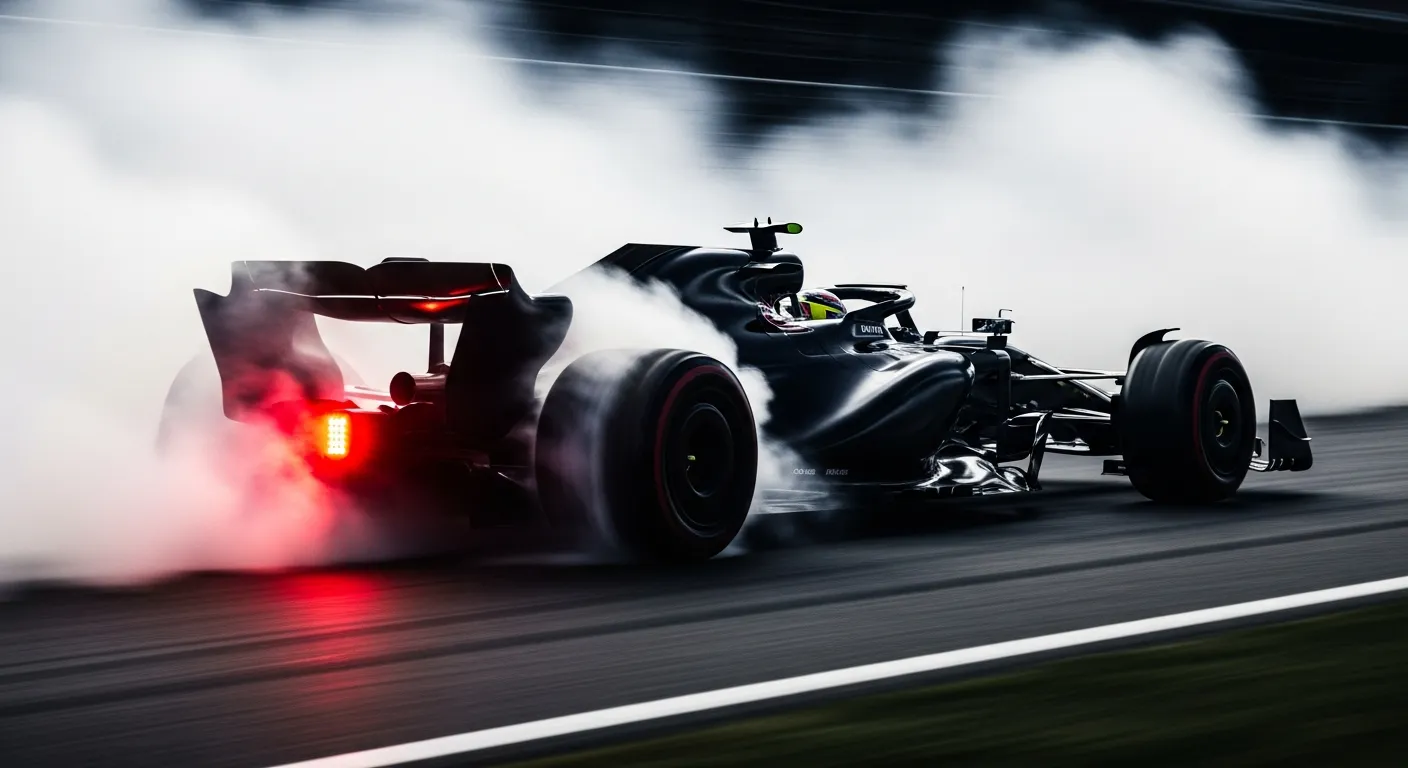
The 2018 Australian Grand Prix at the Albert Park Circuit delivered a potent reminder that even with a dominant qualifying performance, strategic execution under race conditions can entirely rewrite the script, as Ferrari demonstrated by snatching victory from Mercedes. This opening round of the Formula One World Championship for the turbo-hybrid era set an immediate, competitive tone.
Qualifying
Saturday's qualifying session saw Lewis Hamilton assert Mercedes' raw pace, securing pole position with a lap that underlined the W09's potential. His performance was a statement, placing him comfortably ahead of the Ferrari duo. Kimi Räikkönen managed to put his SF71H on the front row, with Sebastian Vettel just behind, signaling that while Mercedes held an edge, Ferrari was certainly in contention. The gap, however, suggested a straightforward race for Hamilton if he could manage the start and tire degradation. This early season form would be a recurring theme, with teams often bringing significant upgrades by races like the 2018 Spanish Grand Prix.
Race
The race start saw Hamilton convert his pole into an immediate lead, controlling the pace in the opening stint. The Albert Park street circuit, known for its challenging overtaking opportunities, typically favors the pole-sitter. However, the narrative shifted dramatically following a series of incidents. The double retirement of the Haas cars, first Kevin Magnussen and then Romain Grosjean due to unsecured wheel nuts after pit stops, triggered a Virtual Safety Car (VSC) period. This was the pivotal moment.
Strategic Story
Ferrari's strategy team, observing the VSC deployment, reacted with precision. Sebastian Vettel, who had been running third, was immediately called into the pits. The reduced speed delta under VSC conditions meant that the time lost in the pit lane was significantly less compared to a full-speed green flag stop. This allowed Vettel to complete his tire change and emerge ahead of both Kimi Räikkönen, who had already pitted, and crucially, Lewis Hamilton, who had not yet stopped. Mercedes, perhaps caught off guard or hoping for a full Safety Car, found themselves on the wrong side of the timing window. Hamilton eventually pitted under green flag conditions, rejoining behind Vettel. Despite Hamilton's relentless pressure in the latter half of the race, the track characteristics and Vettel's defensive driving meant the strategic advantage gained under the VSC proved insurmountable. This type of strategic gambit would be a defining feature of several races that year, including the tightly contested 2018 British Grand Prix. Understanding such race dynamics is crucial for any F1 enthusiast, and comprehensive F1 historical data archives often highlight these critical moments. The official Formula 1 website provides extensive coverage of such pivotal moments.
Championship Impact
Sebastian Vettel's victory in Melbourne was a significant early blow in the championship battle. It provided Ferrari with a crucial advantage in the Drivers' and Constructors' standings, demonstrating that their car, the SF71H, was a genuine contender. For Lewis Hamilton and Mercedes, while a second-place finish still yielded strong points, the loss of a seemingly certain victory underscored the razor-thin margins at the pinnacle of motorsport. This strategic misstep served as an early warning, pushing Mercedes to refine their real-time decision-making, a lesson that would be vital in subsequent races like the 2018 Hungarian Grand Prix. The season had begun with a clear message: Ferrari was here to challenge, and Mercedes would need to be flawless. Fans can always find the latest news and insights on the Formula 1 — official site.
Full classified results
Every driver's verified grid-to-flag result from the 2018 Australian Grand Prix — grid, finish, points, teammate H2H, and championship swing.
- P1Sebastian VettelFerrari25 pts
- P2Lewis HamiltonMercedes18 pts
- P3Kimi RäikkönenFerrari15 pts
- P4Daniel RicciardoRed Bull12 pts
- P5Fernando AlonsoMcLaren10 pts
- P6Max VerstappenRed Bull8 pts
- P7Nico HülkenbergRenault6 pts
- P8Valtteri BottasMercedes4 pts
- P10Carlos SainzRenault1 pts
- P11Sergio PérezForce India0 pts
- P12Esteban OconForce India0 pts
- P13Charles LeclercSauber0 pts
- P14Lance StrollWilliams0 pts
- —Pierre GaslyToro RossoEngine