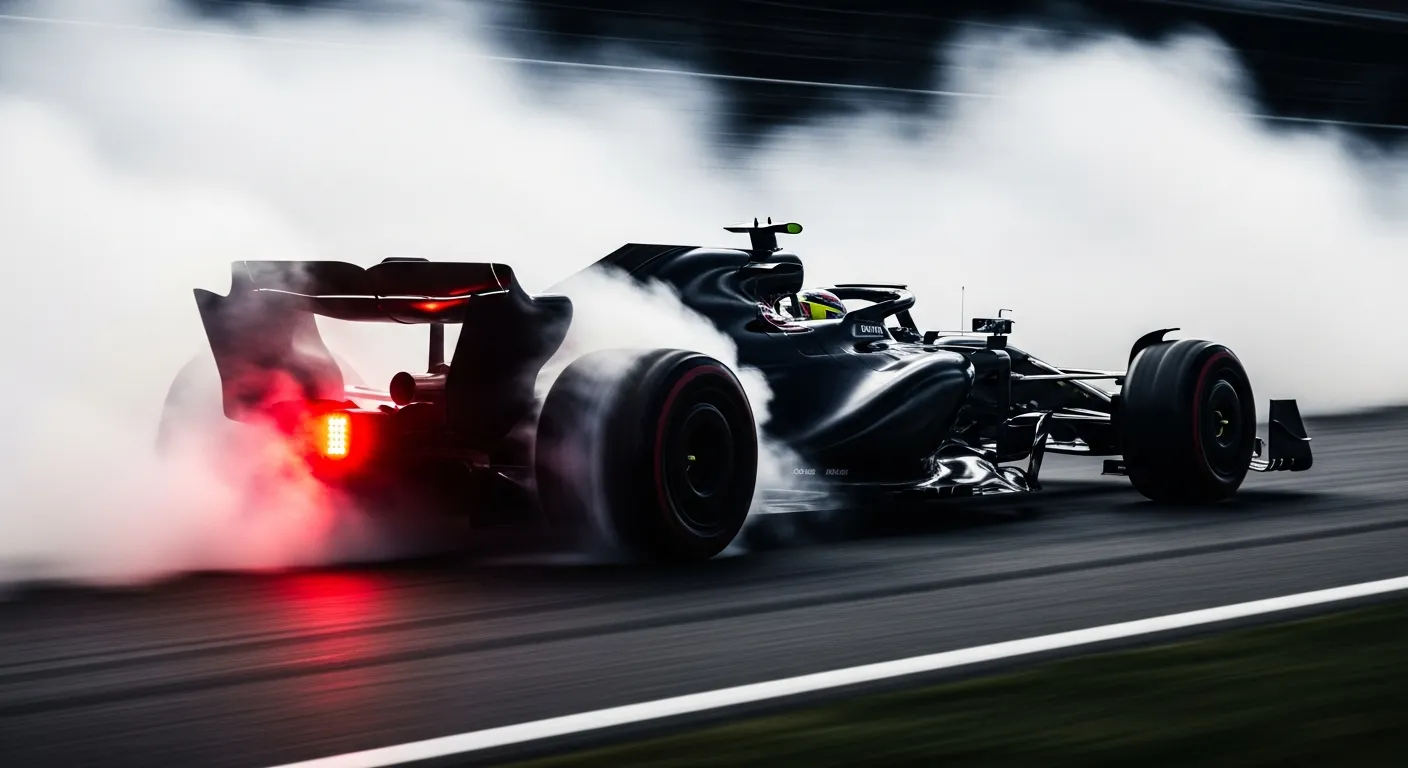
Fernando Alonso navigated the challenging Hungaroring circuit at the 2018 Hungarian Grand Prix, converting a midfield starting position into a hard-earned points finish for McLaren Racing. Starting from 11th on the grid, Alonso demonstrated his renowned racecraft, steadily progressing through the field to secure an 8th place finish. This performance saw him complete 69 laps, one lap down from race winner Lewis Hamilton, and earned McLaren 4 valuable championship points. The Hungaroring, with its tight and twisty nature, often rewards driver skill and strategic execution over outright power, and Alonso’s ability to move up three positions from his starting slot underscored his persistent competitive spirit even in a challenging car.
The race itself was a testament to McLaren's efforts to extract performance from the MCL33 chassis, especially given the contrasting fortunes of his teammate. While Alonso brought his car home, Stoffel Vandoorne's race ended prematurely on lap 49 due to a gearbox issue, highlighting the reliability hurdles McLaren faced that season. Alonso's fastest lap of 1:22.090, set on lap 68, ranked 9th overall, indicating a late-race push and a car that, in his hands, could still show flashes of pace. This result was a consistent effort in a season where points were often hard-fought for the Woking-based team, a common theme for many midfield constructors. The broader context of Formula 1's technical regulations often dictates such performance differentials across the grid, a subject thoroughly explored on the [Formula 1 — official site](https://www.formula1.com/en).
Alonso's drive was a masterclass in managing track position and tire degradation on a circuit where overtaking is notoriously difficult. His climb from 11th to 8th was not just about raw pace, but also about strategic positioning and capitalizing on opportunities, a skill set that has defined his career. The 2018 season presented various technical puzzles for teams, and understanding the intricate data behind each race is crucial for analysis, as demonstrated by resources like [Jolpica/Ergast — 2026 season data](https://api.jolpi.ca/ergast/f1/2026.json) which provides comprehensive race statistics for the sport. While the front of the field saw Lewis Hamilton dominate, followed by the Ferraris of Sebastian Vettel and Kimi Räikkönen, Alonso's battle was firmly within the midfield pack. He competed effectively against drivers like Kevin Magnussen, who finished just ahead in 7th, and fellow Spaniard Carlos Sainz Jr., who finished 9th for Renault. This period for McLaren, while not yielding podiums, often saw Alonso extracting the maximum from his package, a characteristic reminiscent of other top drivers maximizing their machinery, such as [Carlos Sainz at the 2022 Monaco Grand Prix](/results/2022-monaco-carlos-sainz) navigating similar tight street circuits. His consistent ability to score points, even when the car's inherent performance was a limiting factor, cemented his reputation as one of the grid's most effective operators, a legacy that continues to be discussed in the annals of [Wikipedia: Formula One](https://en.wikipedia.org/wiki/Formula_One). This blend of experience and racecraft allowed him to secure points in races where the car's raw speed might not have suggested such an outcome, a testament to his enduring impact on the sport. His performance here, much like the strategic drives seen from [Max Verstappen at the 2022 Spanish Grand Prix](/results/2022-barcelona-max-verstappen), underscores the importance of driver skill in optimizing race results.
Verified race record · Ergast
Grid
P11
Finish
P8
Points
4
Laps
69
Constructor
McLaren Racing
Status
+1 Lap
Teammate that weekend
Stoffel Vandoorne
Grid P15 · Gearbox · 0 pts
Championship · before vs after
Before round 12
P840 pts
After round 12
P944 pts