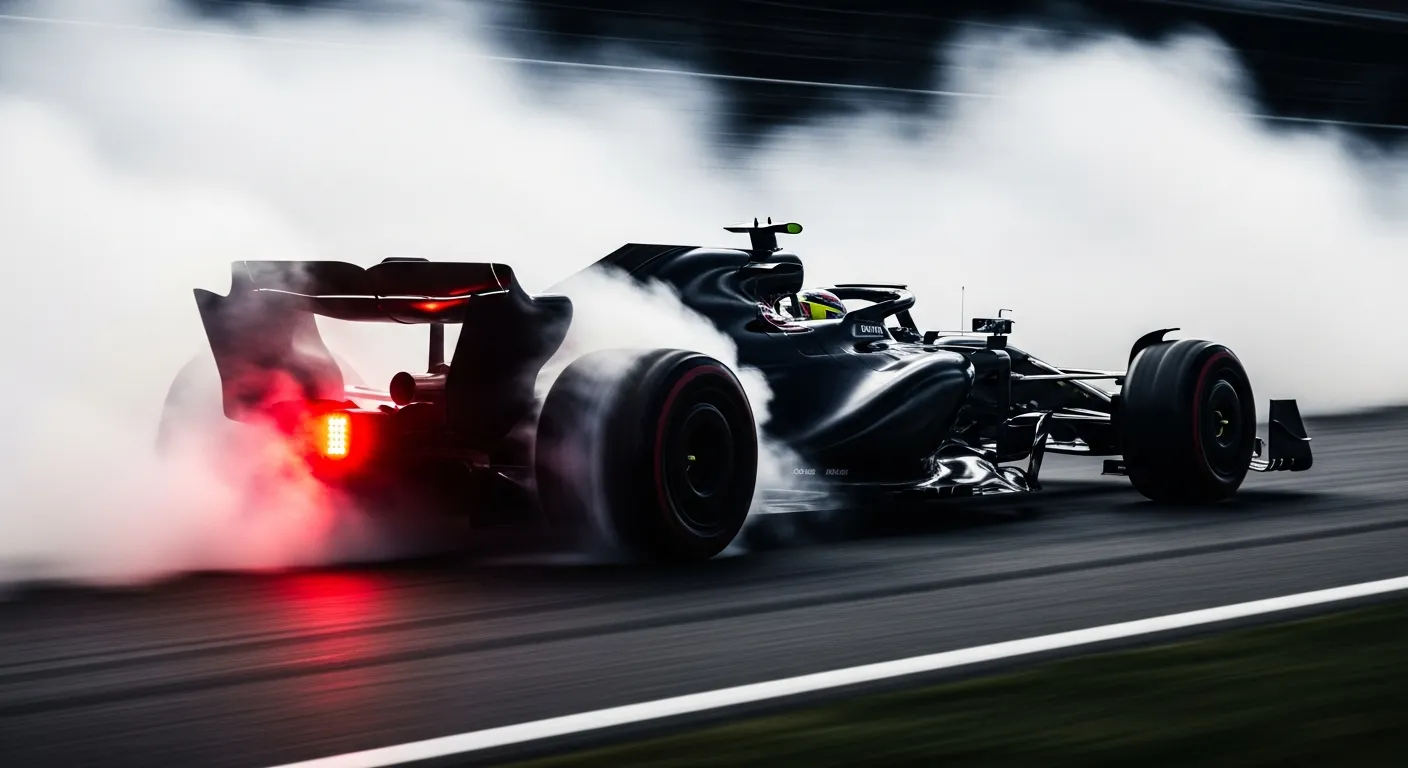
Lance Stroll's outing at the 2018 Mexican Grand Prix on October 28 saw him improve his starting position significantly, navigating the demanding Autódromo Hermanos Rodríguez circuit to secure a 12th place finish for Williams Grand Prix Engineering. Starting from 17th on the grid, Stroll completed 69 laps, two down on race winner Max Verstappen, demonstrating a consistent drive in a challenging season for the British outfit. His fastest lap of 1:22.983, recorded on lap 27, placed him 18th in the overall fastest lap rankings, a testament to the car's inherent limitations rather than driver performance. This lap time was notably slower than the race's fastest, a 1:18.741 set by Valtteri Bottas, highlighting the performance gap Williams faced in 2018.
The 2018 season was a particularly difficult one for Williams, with the FW41 chassis struggling for pace and reliability across various circuit types. At the high-altitude Mexico City circuit, where the thin air significantly impacts engine performance, aerodynamic downforce, and cooling efficiency, Stroll's ability to gain five positions from his starting slot was a notable effort. The unique atmospheric conditions at the Autódromo Hermanos Rodríguez often necessitate specific car setups and driver adaptations, making it a distinct challenge on the [Formula 1 calendar](https://www.formula1.com/en/racing/2018.html). His teammate, Sergey Sirotkin, who started 19th, finished just behind him in 13th, also completing 69 laps with a fastest lap of 1:22.640 on lap 66. This close proximity in performance between the two Williams drivers underscored the car's general competitive standing within the field, often finding itself at the rear of the pack. While the team was not in contention for points on this occasion, the race provided valuable data for ongoing development efforts, particularly in understanding how the car's aero package performed in low-density air. The strategic decisions made by the Williams pit wall, often a crucial element in maximizing performance for teams outside the front-runners, were focused on managing tire degradation and optimizing track position given the car's inherent pace. For a broader understanding of the sport's technical and sporting regulations, the [FIA — F1 World Championship](https://www.fia.com/events/fia-formula-one-world-championship) provides comprehensive details on governance and rules.
Stroll’s drive in Mexico City, while not yielding championship points, was characteristic of his season: extracting what was possible from a difficult package. His progression through the field, moving from 17th to 12th, meant he finished ahead of drivers like Kevin Magnussen and Romain Grosjean, who started 16th and 18th respectively. This kind of race craft, focused on capitalizing on others' misfortunes or making clean overtakes, is essential for drivers in less competitive machinery. It draws parallels with how other drivers have maximized their opportunities in challenging circumstances, such as [Esteban Ocon at the 2016 Hungarian Grand Prix](/results/2016-hungaroring-esteban-ocon) navigating his Manor to a 14th place finish, or how [Nico Hülkenberg at the 2016 Hungarian Grand Prix](/results/2016-hungaroring-nico-hulkenberg) consistently pushed his Force India into the points. The broader history of the sport, from its origins to modern era, is well-documented on [Wikipedia: Formula One](https://en.wikipedia.org/wiki/Formula_One), offering context for the evolution of team performance. For detailed historical race results and driver statistics, resources like [Jolpica/Ergast — F1 data archive](https://api.jolpi.ca/ergast/f1/2026.json) offer extensive archives, providing granular data for individual performances within the larger [Formula 1 season narrative](https://www.formula1.com/en). Comparing Stroll's efforts to other mid-field drivers, such as [Carlos Sainz at the 2016 Hungarian Grand Prix](/results/2016-hungaroring-carlos-sainz), who also consistently battled for positions in varying machinery, highlights the persistent grind required in Formula 1. Even without points, finishing ahead of several competitors and his teammate represented a tangible outcome for Stroll and Williams in a year defined by struggle. The team's ongoing efforts to improve their package were a constant theme throughout 2018, underscoring the relentless development cycle inherent in [Formula 1 racing](https://www.formula1.com/en).
Verified race record · Ergast
Grid
P17
Finish
P12
Points
0
Laps
69
Constructor
Williams Grand Prix Engineering
Status
+2 Laps
Teammate that weekend
Sergey Sirotkin
Grid P19 · Finish P13 · 0 pts
Championship · before vs after
Before round 19
P186 pts
After round 19
P186 pts