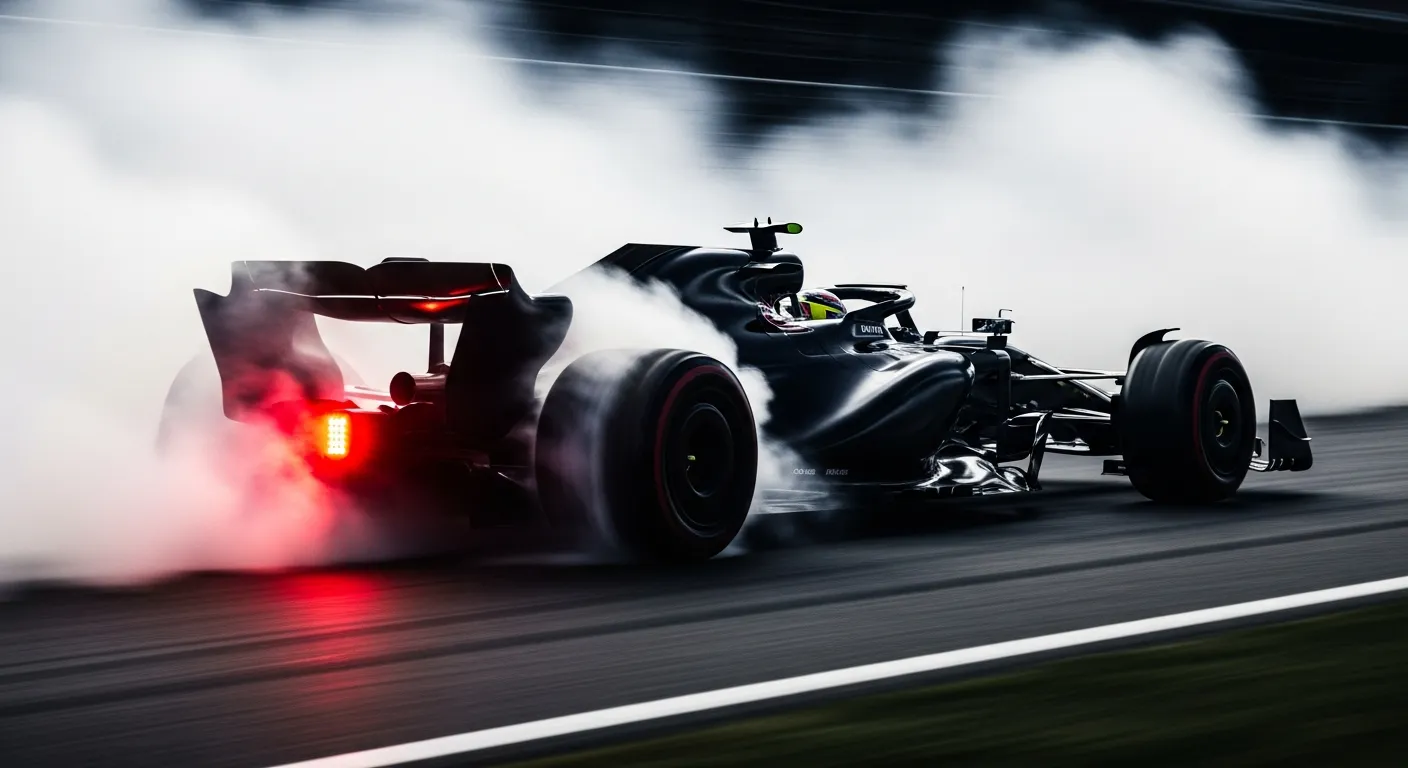
The 2018 Japanese Grand Prix at Suzuka delivered a premature conclusion for Charles Leclerc, whose Sauber C37 suffered a mechanical retirement on lap 38. Starting from P10 on the grid, the Monegasque driver had positioned himself well to challenge for points, a testament to his qualifying performance. However, the race itself proved to be a test of endurance that the Sauber machinery could not fully withstand. Despite recording a competitive fastest lap time of 1:34.515 on lap 37, just before his retirement, the underlying issue forced him out of contention. This DNF meant zero points for Leclerc, a significant contrast to his teammate Marcus Ericsson, who completed 52 laps and finished P12 for the Swiss outfit. The official [Formula 1 — official site](https://www.formula1.com/en) race review noted the intense midfield battles that characterized the event, highlighting the missed opportunity for Sauber to capitalize on Leclerc's strong starting position. Further details on the season's technical challenges can be found on the [FIA — F1 World Championship](https://www.fia.com/events/fia-formula-one-world-championship) overview.
Leclerc's inaugural [Formula One](https://en.wikipedia.org/wiki/Formula_One) season was a blend of impressive raw speed and the inherent challenges of a developing team. The 2018 Japanese Grand Prix, round 17 of the championship, exemplified this dynamic. The detailed result data, available via platforms like [Jolpica/Ergast — 2026 season data](https://api.jolpi.ca/ergast/f1/2026.json) (structured similarly for historical records), explicitly records the "Mechanical" status, confirming the technical failure. Such incidents underscore the critical balance between performance and reliability, a constant engineering challenge in F1. Drivers across various teams, from [Esteban Ocon at the 2023 Italian Grand Prix](/results/2023-monza-esteban-ocon) to [Alexander Albon at the 2023 Italian Grand Prix](/results/2023-monza-alex-albon), have experienced the frustration of race-ending technical issues, emphasizing that even the most promising starts can be undone by unforeseen mechanical faults. The [Formula 1 — official site](https://www.formula1.com/en) provides extensive archives on past seasons, including the 2018 championship. This particular retirement for Leclerc was a clear setback, preventing him from adding to his season's points tally. The race was ultimately dominated by Mercedes, with Lewis Hamilton securing the victory after completing all 53 laps, a stark illustration of the reliability and pace required at the front of the field. For Sauber, this event served as a crucial data point in their ongoing development, informing future design and operational strategies, which are often guided by [FIA — F1 World Championship](https://www.fia.com/events/fia-formula-one-world-championship) technical directives. The performance of drivers like [Nico Hülkenberg at the 2023 Italian Grand Prix](/results/2023-monza-nico-hulkenberg), who also faced technical challenges, further illustrates the demanding nature of the sport. The pursuit of speed must always be balanced with the imperative of finishing the race, a lesson consistently reinforced throughout a Formula 1 season.
Verified race record · Ergast
Grid
P10
Finish
Mechanical
Points
0
Laps
38
Constructor
Sauber F1 Team
Status
Mechanical
Teammate that weekend
Marcus Ericsson
Grid P20 · Finish P12 · 0 pts
Championship · before vs after
Before round 17
P1521 pts
After round 17
P1521 pts