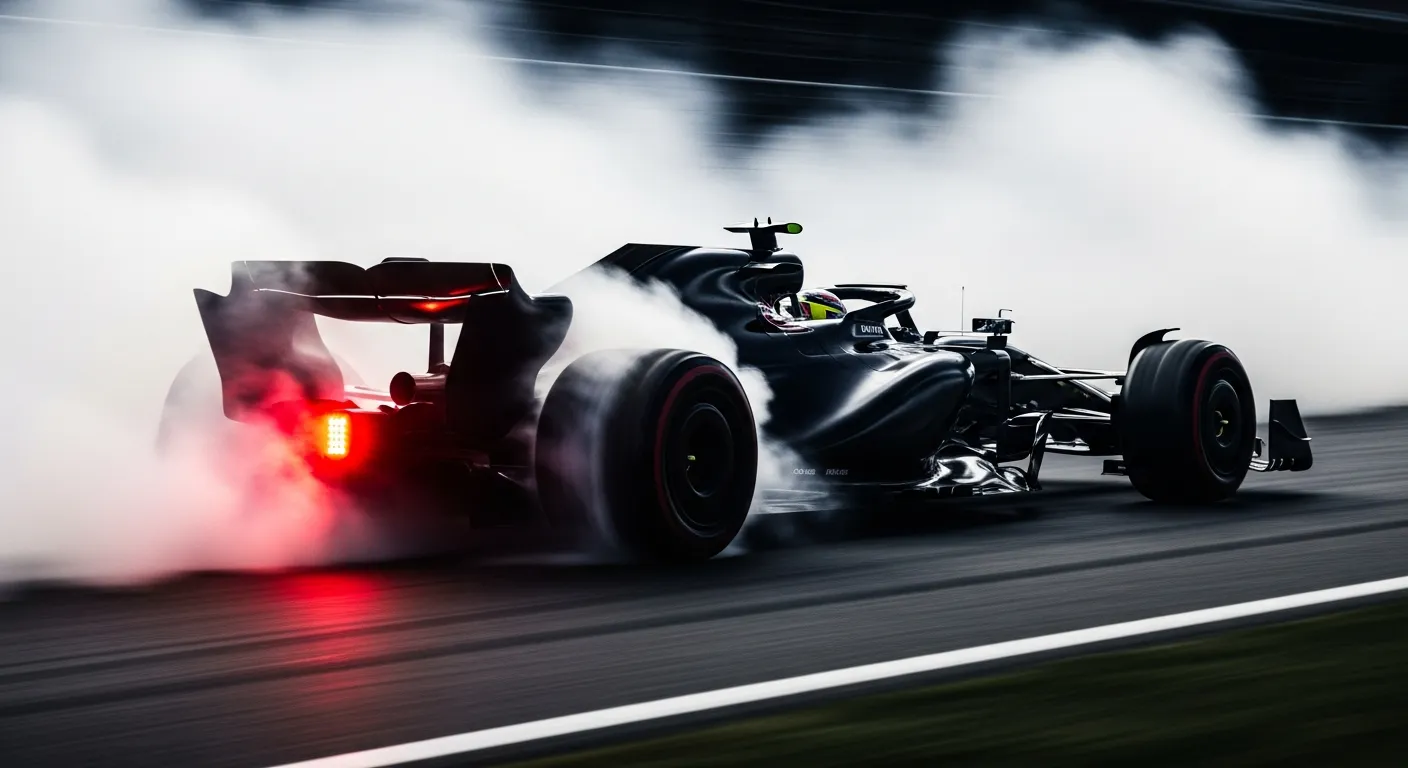
The 2018 Japanese Grand Prix at the iconic Suzuka Circuit solidified Mercedes' strategic prowess and Hamilton's relentless championship drive, particularly evident in their decisive execution at a circuit known for its unforgiving nature. This race proved to be a pivotal moment in the season, showcasing how fine margins in strategy and on-track incidents can reshape a title fight.
Qualifying
Qualifying for the 2018 Japanese Grand Prix was defined by a critical strategic divergence in Q3. As rain began to fall, Mercedes made the decisive call to send both their cars out on supersoft slicks early, securing a crucial front-row lockout before conditions worsened. This foresight positioned Lewis Hamilton on pole, with Valtteri Bottas alongside him, giving them a commanding advantage. In stark contrast, Ferrari opted for intermediate tyres, a gamble that backfired as the track dried slightly before the heavier rain arrived, then quickly became too wet for slicks. This left Sebastian Vettel starting from eighth position, a significant setback that would define his race, while Kimi Räikkönen managed to secure fourth. Red Bull's Max Verstappen qualified third, showcasing their pace in mixed conditions, while Daniel Ricciardo faced a grid penalty, starting from P15.
Race
From the moment the lights went out, Hamilton controlled the race from the front, converting his pole position into a commanding lead. Bottas maintained second, creating a strong Mercedes one-two. The early laps were not without incident, however. Max Verstappen, after a strong start, had contact with Kimi Räikkönen at the Spoon Curve, resulting in a five-second penalty. Later, Sebastian Vettel, making impressive progress through the field from his P8 start, attempted an overtake on Verstappen at the Hairpin, leading to contact that spun the Ferrari and dropped Vettel back down the order. This incident effectively ended Vettel's realistic podium hopes, forcing him into a recovery drive that ultimately yielded sixth place. The race also saw a brief Virtual Safety Car period triggered by debris from a collision between Kevin Magnussen and Charles Leclerc, which briefly neutralized the field but did not significantly alter the strategic landscape for the leaders. For a deeper dive into race events and official results, the Formula 1 — official site provides comprehensive archives.
Strategic Story
Mercedes' qualifying gamble paid dividends, granting them track position that proved invaluable on race day. Their strategy was straightforward: a single pit stop for both drivers, executed flawlessly. The early lead allowed Hamilton to manage his tyres and pace, unaffected by the mid-field skirmishes. Ferrari's race was largely dictated by their qualifying error, forcing Vettel into an aggressive recovery drive that ultimately led to the contact with Verstappen. Red Bull, despite Verstappen's penalty, showcased strong race pace, with both drivers making their way onto the podium and into the points respectively. Daniel Ricciardo's charge from P15 to P4 was a testament to both the car's performance and his overtaking prowess. Understanding the nuances of these strategic decisions is key to appreciating the sport, as detailed by the FIA — F1 World Championship.
Championship Impact
The outcome at Suzuka had profound implications for the 2018 World Championship. Hamilton's victory, coupled with Vettel's sixth-place finish, significantly extended the Mercedes driver's lead in the Drivers' Championship. This result pushed Hamilton further towards his fifth world title, making his position almost unassailable with only a few races remaining. Mercedes also capitalized on Ferrari's struggles to further cement their advantage in the Constructors' Championship. This dominant performance mirrored other strong outings for Mercedes in the turbo-hybrid era, such as their strategic execution at the 2019 Italian Grand Prix. For historical context on F1 seasons and their data, resources like Jolpica/Ergast — 2026 season data offer valuable insights, even if the specific year differs. This race was a stark reminder of how quickly championship momentum can shift, much like the strategic battles seen at the 2019 Hungarian Grand Prix. The full story of the 2018 season, and how this race fit into the broader narrative, can be explored through general F1 encyclopedic resources like Wikipedia: Formula One, or specific news analyses of the time, such as this race report from a leading F1 news outlet or a strategic breakdown of Mercedes' win. Read the full editorial
Full classified results
Every driver's verified grid-to-flag result from the 2018 Japanese Grand Prix — grid, finish, points, teammate H2H, and championship swing.
- P1Lewis HamiltonMercedes25 pts
- P2Valtteri BottasMercedes18 pts
- P3Max VerstappenRed Bull15 pts
- P4Daniel RicciardoRed Bull12 pts
- P5Kimi RäikkönenFerrari10 pts
- P6Sebastian VettelFerrari8 pts
- P7Sergio PérezForce India6 pts
- P9Esteban OconForce India2 pts
- P10Carlos SainzRenault1 pts
- P11Pierre GaslyToro Rosso0 pts
- P14Fernando AlonsoMcLaren0 pts
- P17Lance StrollWilliams0 pts
- —Charles LeclercSauberMechanical
- —Nico HülkenbergRenaultEngine