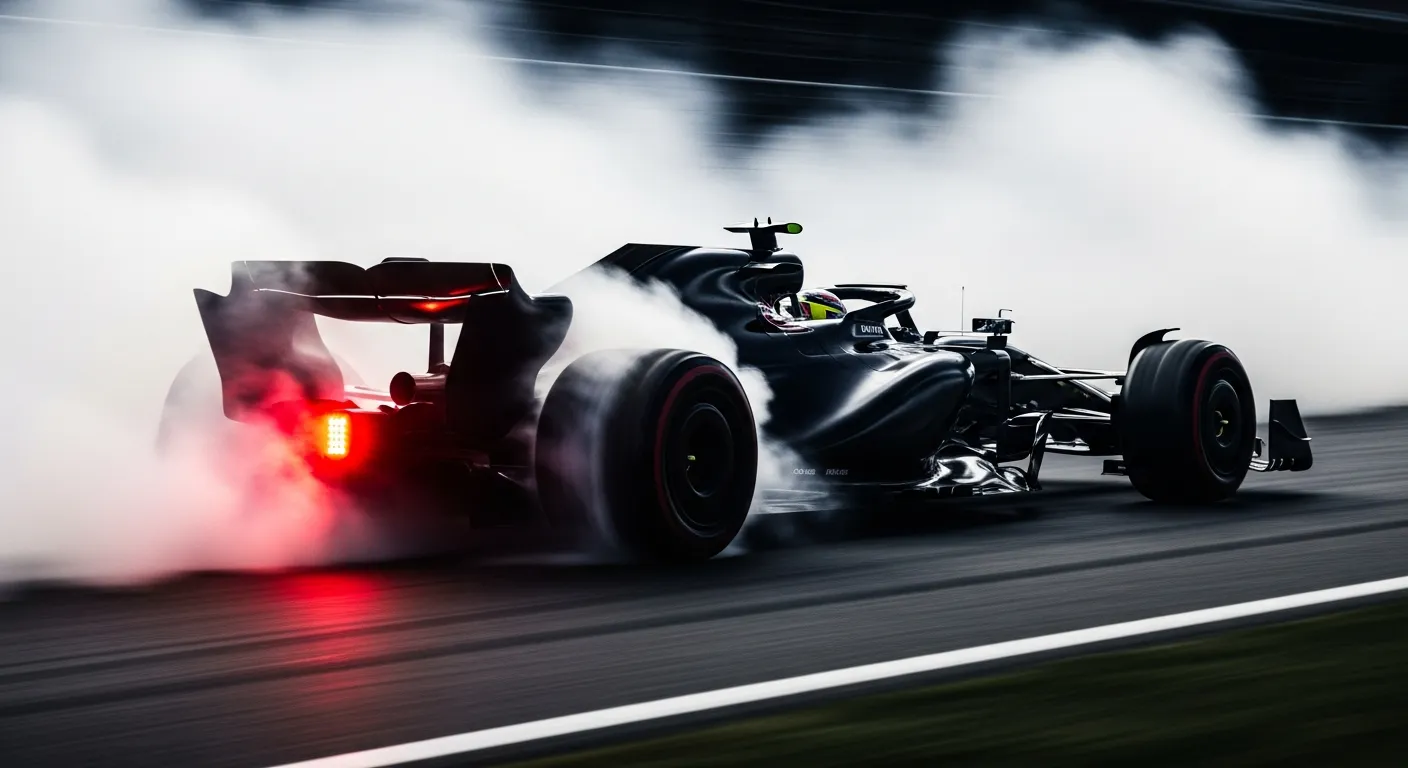
Pierre Gasly's 2018 Japanese Grand Prix at Suzuka presented a mixed outcome, as the Toro Rosso driver converted a promising P7 qualifying effort into an P11 finish, ultimately falling out of the points. Starting from the fourth row, Gasly aimed to capitalize on the STR13's pace demonstrated on Saturday. His teammate, Brendon Hartley, also showed strong qualifying form, starting P6, just one position ahead of Gasly. This strong grid presence for the Italian constructor hinted at potential points, a crucial objective in the competitive midfield of the [Formula 1 season](https://www.formula1.com/en). However, the race itself unfolded with a different dynamic. While both Toro Rosso drivers completed 52 laps, finishing one lap down from race winner Lewis Hamilton, the team found itself battling for position rather than consolidating their strong starting spots. The technical demands of the [Suzuka Circuit](https://en.wikipedia.org/wiki/Suzuka_Circuit) often expose any underlying performance deficits, and on this occasion, the race pace proved challenging against key rivals.
Despite the lack of championship points, Gasly's individual performance included setting the 10th fastest lap of the race on lap 35, recording a time of "1:34.133" with an average speed of "222.081 kph". This demonstrated moments of strong pace during the 52-lap event, notably quicker than his teammate Hartley's fastest lap of "1:34.857", which ranked 16th. The race saw intense battles further up the field, with drivers like [Max Verstappen at the 2016 Monaco Grand Prix](/results/2016-monaco-max-verstappen) often showcasing how critical early race positioning and sustained performance can be. Gasly's P11 finish, while just outside the points, placed him ahead of his teammate, who crossed the line in P13. Both drivers were classified as "+1 Lap", reflecting the gap to the leaders. This outcome underscored the competitive nature of the 2018 midfield, where a strong qualifying could quickly evaporate if race strategy or outright pace faltered, a challenge familiar to many teams as detailed in [FIA F1 World Championship regulations](https://www.fia.com/events/fia-formula-one-world-championship). For a broader understanding of historical race data, resources like the [Jolpica/Ergast F1 data archive](https://api.jolpi.ca/ergast/f1/2026.json) provide extensive context. The demanding conditions at Suzuka also led to retirements, such as [Nico Hülkenberg at the 2016 Emilia Romagna Grand Prix](/results/2016-imola-nico-hulkenberg) experiencing engine issues in a different season, highlighting the mechanical strain. Gasly's P11, similar to [Carlos Sainz at the 2016 Emilia Romagna Grand Prix](/results/2016-imola-carlos-sainz) who also finished a lap down, was a direct result of the specific race conditions and competitor performance on the day, rather than a catastrophic failure.
Verified race record · Ergast
Grid
P7
Finish
P11
Points
0
Laps
52
Constructor
Scuderia Toro Rosso
Status
+1 Lap
Teammate that weekend
Brendon Hartley
Grid P6 · Finish P13 · 0 pts
Championship · before vs after
Before round 17
P1328 pts
After round 17
P1428 pts