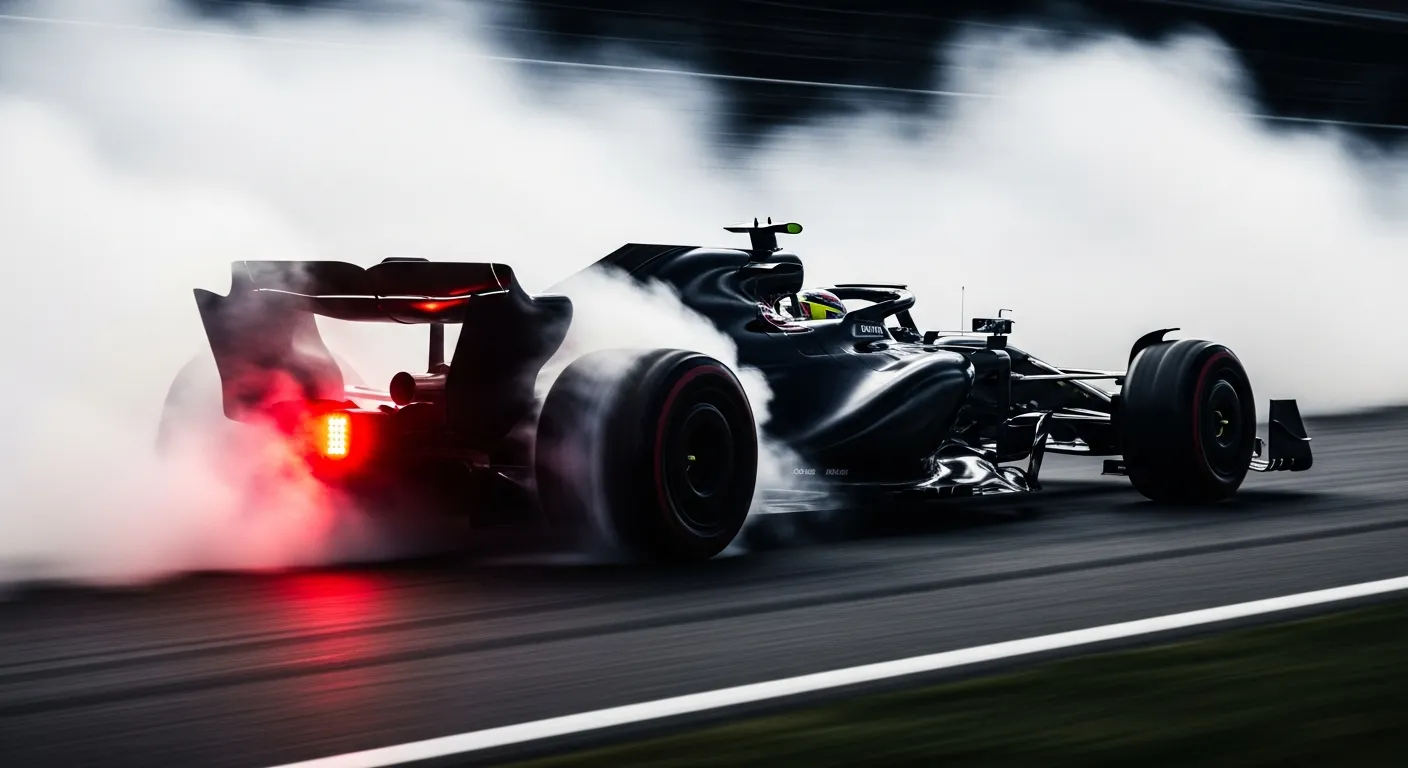
Pierre Gasly's final race of the 2018 Formula 1 season at the Yas Marina Circuit on November 25, 2018, was cut short by an engine failure, marking a disappointing end to his campaign with Scuderia Toro Rosso. Starting from 17th on the grid, Gasly had been navigating the 5.554-kilometer circuit in Abu Dhabi, a venue known for its twilight racing and demanding layout. His race progression saw him complete 46 laps before the mechanical issue forced his retirement. This DNF meant he registered no points for the event, maintaining his championship standing at 15th with 29 points, unchanged from before the race. The incident occurred relatively late in the Grand Prix, with Gasly having set his fastest lap of "1:43.988" on lap 42, placing him 15th in the overall fastest lap rankings for the race.
The premature end to Gasly's race contrasted with his teammate Brendon Hartley's performance, who started one position ahead on the grid at 16th and managed to complete 54 laps, finishing 12th. Hartley's fastest lap was "1:44.174" on lap 53, indicating a consistent, albeit unrewarded, run for the sister Toro Rosso. For Gasly, who was preparing for a significant move to Red Bull Racing for the 2019 season, this retirement at the Abu Dhabi Grand Prix was an unfortunate note to conclude his tenure with the Italian team. The 2018 season had been a crucial developmental year for Gasly, where he demonstrated flashes of potential, including a memorable fourth-place finish in Bahrain. The Yas Marina Circuit often provides a dramatic backdrop for season finales, as detailed on the [Formula 1 official site](https://www.formula1.com/en), and while the main battle for the championship was already decided, individual team and driver performances remained under scrutiny.
The technical failure, recorded as "Engine," underscores the reliability challenges that can emerge even in the final stages of a demanding [FIA F1 World Championship](https://www.fia.com/events/fia-formula-one-world-championship) season. Such mechanical issues are a constant factor in Formula 1, influencing outcomes across the grid, from front-runners like [Lewis Hamilton at the 2026 São Paulo Grand Prix](/results/2026-interlagos-lewis-hamilton) to emerging talents. Gasly's experience here highlights the fine margins in F1, where a strong run can be undone by unforeseen technical problems. The data from this race, including individual lap times and retirement statuses, is meticulously recorded and available through resources like the [Jolpica/Ergast F1 data archive](https://api.jolpi.ca/ergast/f1/2026.json), providing a comprehensive statistical overview of each event.
This DNF was a stark reminder of the rigorous demands placed on both drivers and machinery throughout a full season, a narrative thread common across the [Wikipedia's Formula One entry](https://en.wikipedia.org/wiki/Formula_One). While Gasly's focus was already shifting to his future with Red Bull, the Abu Dhabi outing served as a final data point for Scuderia Toro Rosso in their 2018 campaign. The team's engineers would have meticulously analyzed the engine failure, a critical process for continuous development and reliability improvements, a standard practice across all teams, including those preparing for future challenges like [George Russell at the 2026 São Paulo Grand Prix](/results/2026-interlagos-george-russell). The broader context of the season and the specific challenges of the Yas Marina track are often discussed in [Formula 1's comprehensive coverage](https://www.formula1.com/en), offering insights into the strategic decisions and technical demands. Even for drivers like [Charles Leclerc at the 2026 São Paulo Grand Prix](/results/2026-interlagos-charles-leclerc), who also started his F1 career in 2018, reliability often plays a pivotal role in results. The final round of any season, as highlighted by the [FIA's detailed event calendar](https://www.fia.com/events/fia-formula-one-world-championship), carries its own unique pressures, making every lap and every component critical.
Verified race record · Ergast
Grid
P17
Finish
Engine
Points
0
Laps
46
Constructor
Scuderia Toro Rosso
Status
Engine
Teammate that weekend
Brendon Hartley
Grid P16 · Finish P12 · 0 pts
Championship · before vs after
Before round 21
P1529 pts
After round 21
P1529 pts