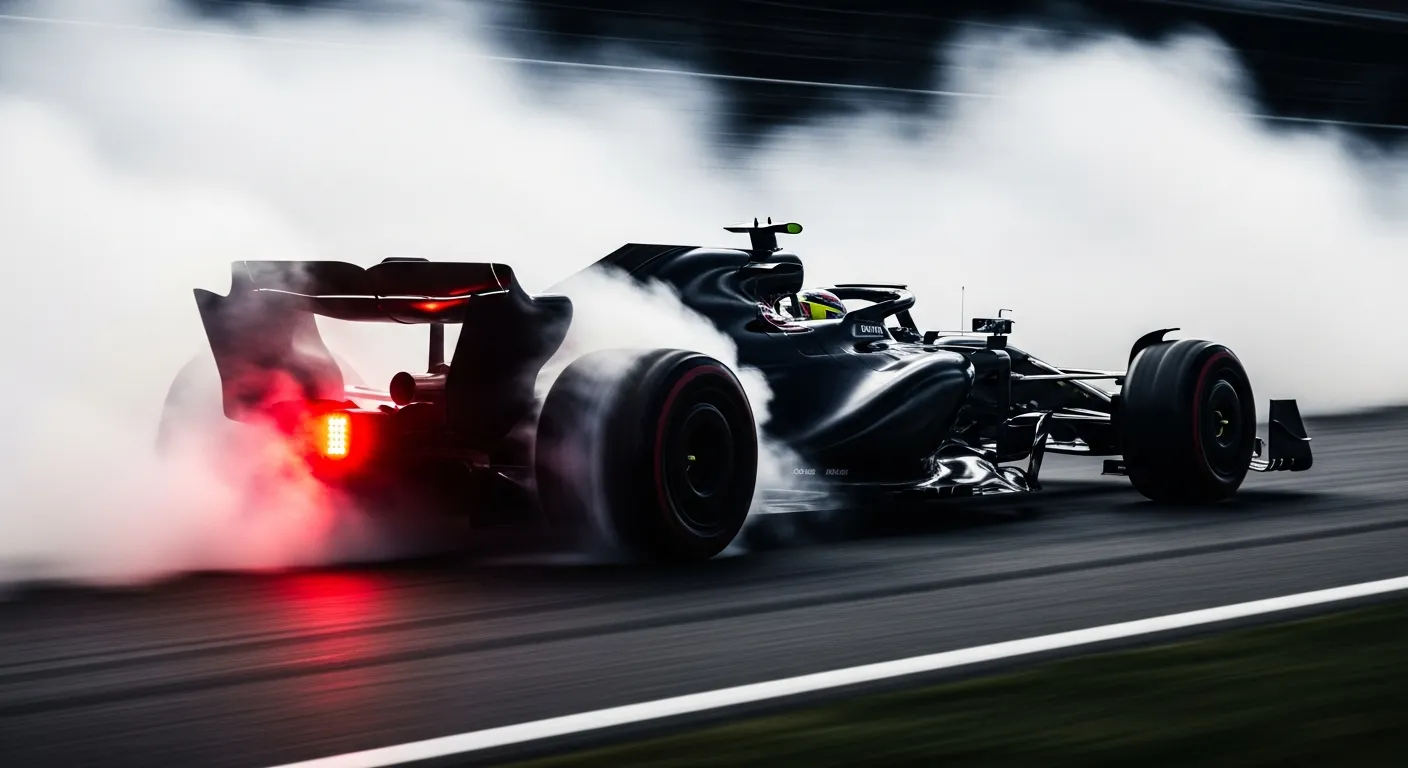
Alexander Albon's outing at the 2020 Spanish Grand Prix on August 16, 2020, marked a clear divergence in performance within the Red Bull Racing garage, as the Thai driver struggled to match the pace of his teammate, Max Verstappen, at the Circuit de Barcelona-Catalunya. Starting from sixth on the grid, Albon ultimately crossed the finish line in eighth position, securing four points for the Austrian constructor. This result placed him a full lap down on the race leader, highlighting the persistent challenge Albon faced in optimizing the RB16's setup and managing tire degradation throughout the 66-lap race distance. While Verstappen, starting just three positions ahead in third, converted his strong qualifying into a second-place finish, the performance gap between the two Red Bull drivers was a significant talking point throughout the weekend.
The race pace differential was particularly evident in their fastest lap times. Albon's quickest effort was a 1:22.194 on lap 41, which ranked 11th overall in the field. In contrast, Verstappen's fastest lap was a 1:21.477 on lap 53, placing him fourth in the fastest lap rankings and nearly seven-tenths quicker. This disparity often left Albon defending against cars that, on paper, should have been behind the Red Bull, rather than challenging the front-runners. The Circuit de Barcelona-Catalunya is renowned for its demanding nature on tires and its ability to expose underlying car characteristics, factors that proved particularly tricky for Albon to master in the RB16. For a deeper understanding of how driver performances are measured and compared across seasons, one might consult the [Formula 1 — official site](https://www.formula1.com/en), which provides extensive race data and analysis.
Albon's strategic choices also came under scrutiny, particularly given the diverse approaches seen across the grid and the clear advantage his teammate held. The Red Bull pit wall attempted to find a rhythm for Albon, but the inherent characteristics of the RB16 on this specific circuit, coupled with Albon's struggle to find confidence in the car's rear, made consistent pace elusive. This situation drew parallels to other drivers who have faced significant challenges within their teams, such as [Charles Leclerc at the 2023 Azerbaijan Grand Prix](/results/2023-baku-charles-leclerc) navigating the complexities of his Ferrari. The 2020 season, operating under unique circumstances due to the global pandemic, presented a compressed calendar that intensified the pressure on drivers to adapt quickly to varying track conditions and tire compounds. This specific Grand Prix underscored the nuanced relationship between driver, car, and circuit, a fundamental aspect of [Formula One](https://en.wikipedia.org/wiki/Formula_One). Understanding the intricate data behind these performances can be explored through detailed archives, such as those found on [Jolpica/Ergast — 2026 season data](https://api.jolpi.ca/ergast/f1/2026.json), which offer comprehensive results and statistics for analysis. The contrast with his teammate's podium finish at the same event was a recurring theme for Albon, a challenge that would continue to define his tenure at Red Bull Racing, much like the pressures faced by drivers such as [Max Verstappen at the 2023 Azerbaijan Grand Prix](/results/2023-baku-max-verstappen) when pushing for peak performance.
Verified race record · Ergast
Grid
P6
Finish
P8
Points
4
Laps
65
Constructor
Red Bull Racing
Status
+1 Lap
Teammate that weekend
Max Verstappen
Grid P3 · Finish P2 · 18 pts
Championship · before vs after
Before round 6
P636 pts
After round 6
P640 pts