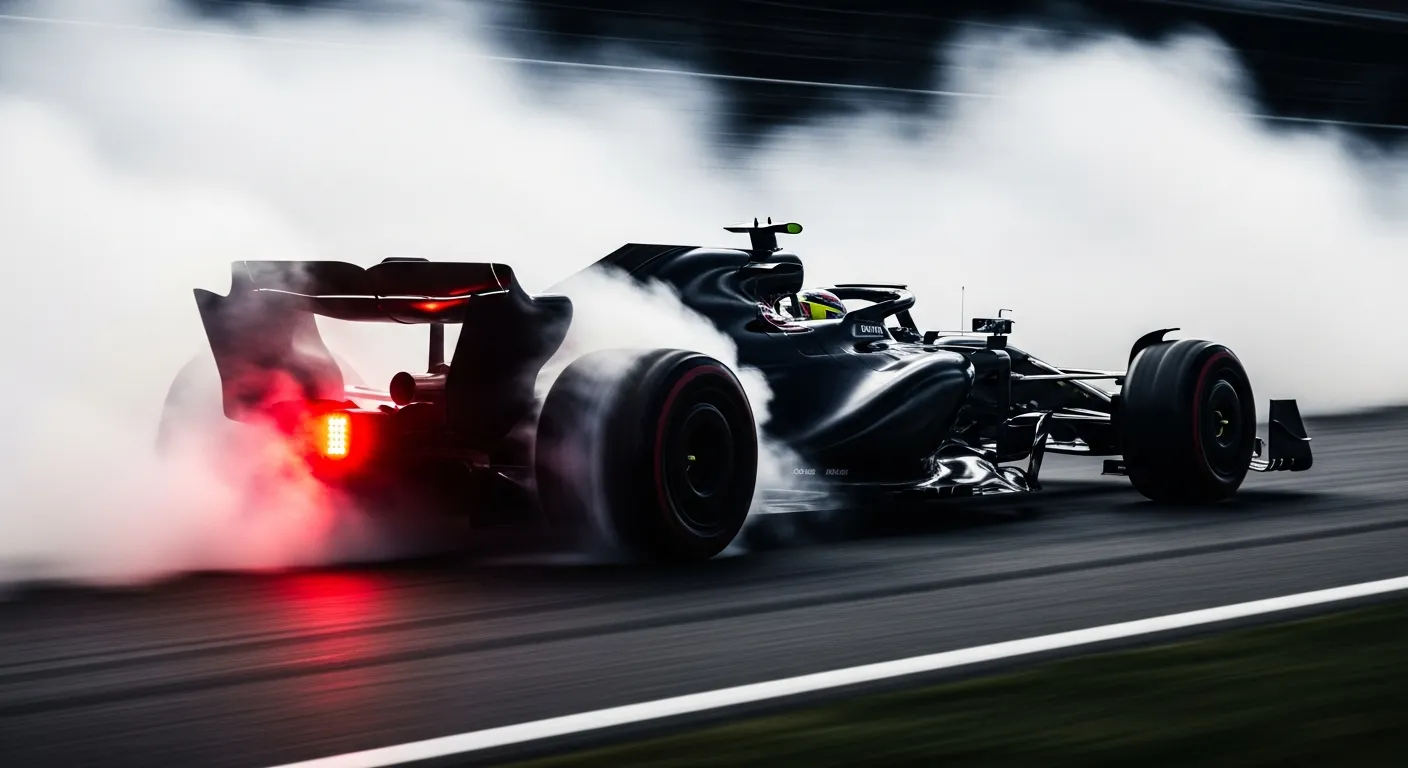
Alexander Albon's drive at the 2020 British Grand Prix, held on August 2nd at the iconic [Silverstone Circuit](https://en.wikipedia.org/wiki/Silverstone_Circuit), was a notable recovery effort for Red Bull Racing. Starting from 12th on the grid, Albon navigated the challenging 52-lap event to cross the finish line in 8th position, securing 4 crucial championship points. This performance represented a significant climb of four places from his starting grid slot, underscoring his resilience and the team's strategic execution during a race that saw its share of drama.
The weekend at Silverstone presented a complex picture for Red Bull. While his teammate, Max Verstappen, delivered a strong 2nd place finish, Albon's journey through the field was marked by both pace and incident. His fastest lap of the race, a 1:28.689 recorded on the final lap (lap 52), stood as the second quickest overall, only marginally slower than Verstappen's outright fastest lap of 1:27.097. This late-race surge in performance demonstrated the potential of the RB16 chassis when pushed, even as the team grappled with the unique tire demands of the 2020 season. The ability to extract such speed at the very end of a demanding race highlights a driver's understanding of tire management and car limits, a skill that often differentiates contenders in the [FIA Formula One World Championship](https://www.fia.com/events/fia-formula-one-world-championship). Similar demonstrations of late-race pace have been observed from drivers like [Carlos Sainz at the 2018 Spanish Grand Prix](/results/2018-barcelona-carlos-sainz), who also had to maximize his car's potential under pressure.
Albon's race was complicated early on by a collision with Kevin Magnussen, which ultimately led to a five-second time penalty. Despite this setback, the Thai driver maintained his focus, executing a determined strategy to regain lost ground and push back into the points. This kind of in-race recovery from penalties or incidents is a recurring theme in Formula 1, echoing the challenges faced by drivers such as [Max Verstappen at the 2018 Canadian Grand Prix](/results/2018-montreal-max-verstappen) when navigating race day complexities. The Red Bull Racing team's decision-making on strategy, combined with Albon's consistent driving, allowed him to complete the 52 laps in a total time of 1:28:33.953. This result, while not a podium, represented a valuable contribution to the constructor's championship. Analyzing such detailed [F1 season data](https://api.jolpi.ca/ergast/f1/2026.json) helps illustrate the nuances of each driver's performance. The broader context of the [Formula 1 season](https://www.formula1.com/en) often sees drivers like [Lewis Hamilton at the 2018 Canadian Grand Prix](/results/2018-montreal-lewis-hamilton) facing immense pressure to perform consistently. Albon's performance at Silverstone, securing points after starting outside the top ten and overcoming a penalty, demonstrated a capacity for fighting through the field. The official [Formula 1 news portal](https://www.formula1.com/en/latest/headlines.html) frequently covers these mid-field battles and strategic plays that define a race. This particular race underscored the dynamic nature of competition within the [Formula 1 paddock](https://www.formula1.com/en/latest/technical.html).
Verified race record · Ergast
Grid
P12
Finish
P8
Points
4
Laps
52
Constructor
Red Bull Racing
Status
Finished
Teammate that weekend
Max Verstappen
Grid P3 · Finish P2 · 19 pts
Championship · before vs after
Before round 4
P522 pts
After round 4
P626 pts