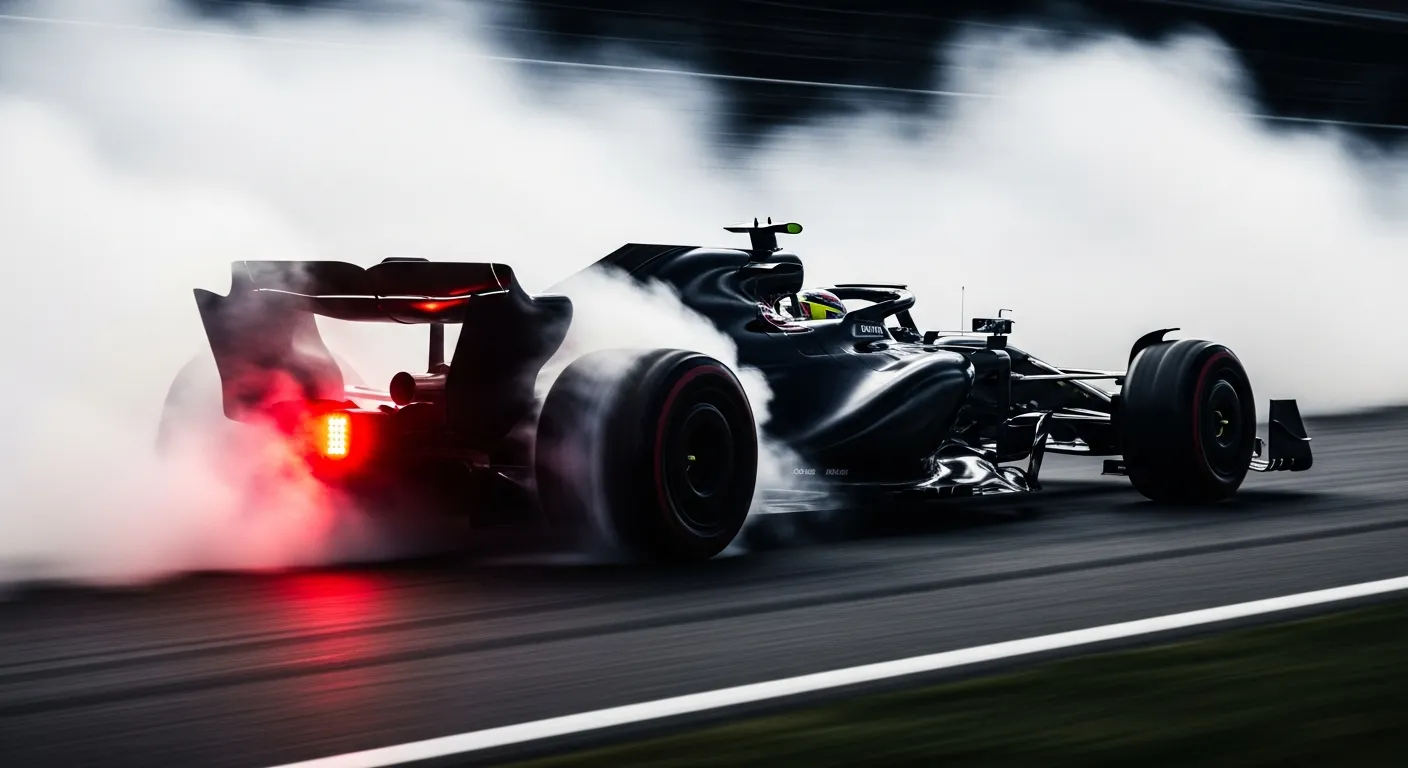
Esteban Ocon's outing at the 2020 Hungarian Grand Prix was a demonstration of a persistent midfield battle for the Renault Sport Formula One Team, where he maintained his starting position but ultimately finished a lap down. Starting from 14th on the grid at the Hungaroring, a circuit renowned for its tight, technical layout and the inherent difficulty in executing overtakes, Ocon's objective was to maximize his track position and extract consistent performance from the R.S.20. Through the 69 laps he completed, Ocon held his ground, concluding the race in 14th, precisely mirroring his grid slot. While his teammate, Daniel Ricciardo, showcased a more assertive climb from 11th to an 8th-place finish, securing valuable points for Renault, Ocon's performance placed him just outside the scoring positions. This outcome underscored the intense competition within the 2020 midfield, where even marginal gains or losses could dictate whether a driver earned championship points. The French driver's fastest lap of 1:20.261, recorded on lap 40, ranked 13th overall, indicating a solid, if not exceptionally quick, pace relative to many of his immediate competitors on the day.
The challenge for Ocon and the Renault team at this particular event was to extract maximum performance on a circuit that often exposes any car's weaknesses in handling and tire management over a full race distance. His finish, one lap behind the dominant race winner Lewis Hamilton, placed him among a cluster of drivers who also finished a lap down, including Sebastian Vettel and Sergio Pérez. This scenario, a frequent occurrence on circuits with limited overtaking opportunities like the Hungaroring, highlights the performance chasm between the front-running teams and the midfield in the 2020 season. For a broader understanding of how race results are officially recorded and analyzed, the [FIA F1 World Championship](https://www.fia.com/events/fia-formula-one-world-championship) provides comprehensive documentation. The comparison to his teammate, Daniel Ricciardo, whose fastest lap was notably quicker at 1:19.532, suggests a performance delta that the team would undoubtedly be analyzing post-race. Such intra-team comparisons are crucial for development, much like how teams assessed their drivers' performances in earlier seasons, for instance, [Fernando Alonso at the 2014 Australian Grand Prix](/results/2014-albert-park-fernando-alonso), where consistent pace and strategic execution were paramount.
Ocon's race saw him battling closely with drivers like Lando Norris, who finished just ahead in 13th, and Kimi Räikkönen, who was 15th, indicating a tight pack in the lower midfield. The strategic decisions made by the Renault pit wall, combined with Ocon's execution on track, allowed him to maintain his position but proved insufficient for an advancement into the points. The Hungaroring’s unique character means that even minor setup discrepancies or slight variations in tire degradation can have significant impacts on overall race performance and lap times. For those interested in the historical context and evolution of Formula 1, including the technical regulations that shape these high-performance machines, [Wikipedia's overview of Formula One](https://en.wikipedia.org/wiki/Formula_One) offers a detailed perspective on the sport's intricacies. The 2020 season, profoundly impacted by the global pandemic, presented unique operational and logistical challenges, making every race an invaluable opportunity for teams to gather critical data and refine their strategies. Analyzing such granular data, often available through comprehensive platforms like [Jolpica/Ergast F1 data](https://api.jolpi.ca/ergast/f1/2026.json), helps paint a complete picture of a driver's and team's performance trajectory over a season. The consistent performance of top drivers, like [Lewis Hamilton at the 2014 Chinese Grand Prix](/results/2014-shanghai-lewis-hamilton), often sets a benchmark against which the entire field measures its progress. Read the full editorial
Verified race record · Ergast
Grid
P14
Finish
P14
Points
0
Laps
69
Constructor
Renault Sport Formula One Team
Status
+1 Lap
Teammate that weekend
Daniel Ricciardo
Grid P11 · Finish P8 · 4 pts
Championship · before vs after
Before round 3
P114 pts
After round 3
P134 pts