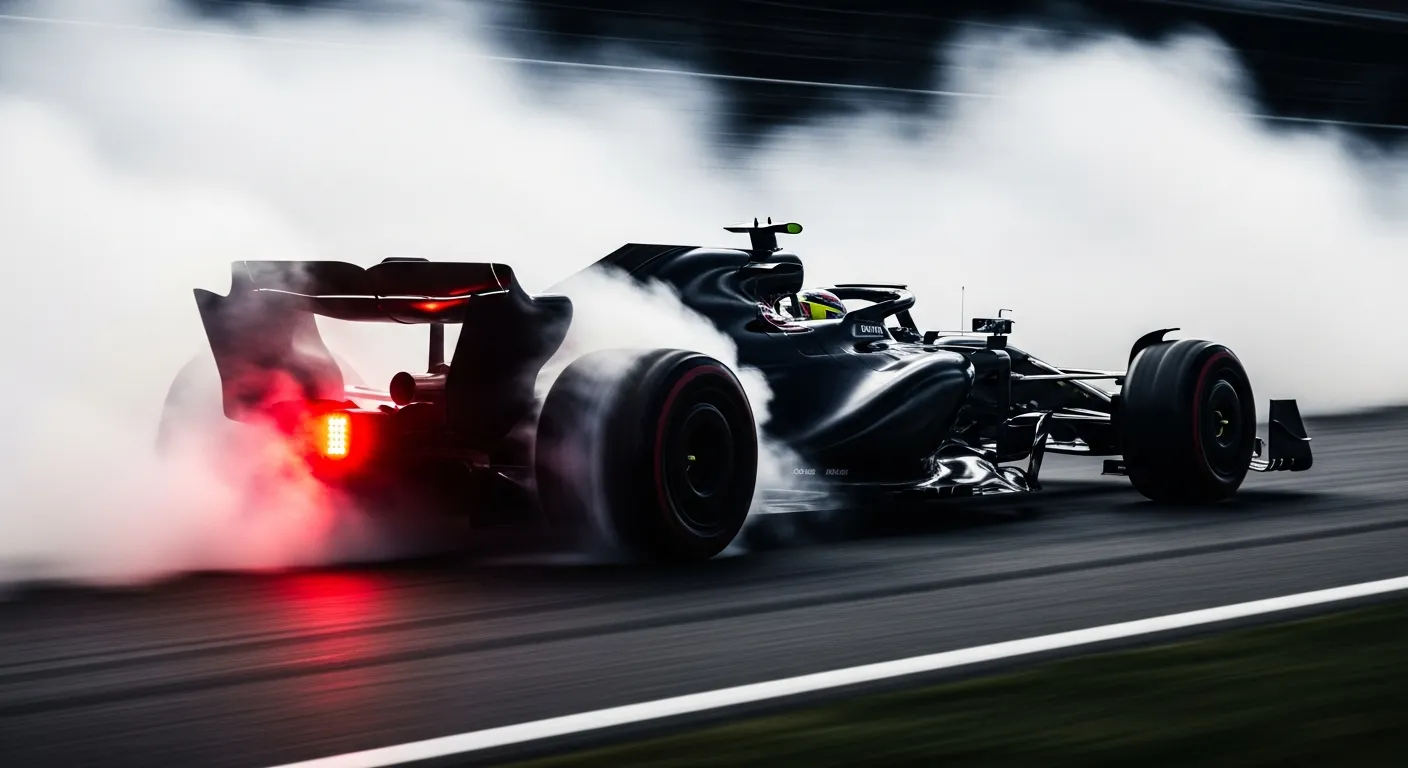
The 2021 Hungarian Grand Prix presented Max Verstappen with one of his most significant recovery drives of the season, navigating an opening lap incident to secure a 9th place finish. Starting from 3rd on the grid at the Hungaroring circuit, the Red Bull Racing driver's race was irrevocably altered within moments of the lights going out. A multi-car collision triggered by Valtteri Bottas saw Verstappen's teammate, Sergio Pérez, retire immediately with a "Collision" status after 0 laps. Verstappen himself was caught in the melee, sustaining significant damage to the right sidepod of his Red Bull RB16B. This early contact compromised the car's aerodynamic performance and cooling capabilities for the entirety of the 70-lap race. The full race report, including details of the opening lap chaos, is available on the [Formula 1 — official site](https://www.formula1.com/en) archives.
Despite the substantial damage, which visibly impacted the car's handling and straight-line speed, Verstappen demonstrated resilience, pushing through the field. The race was red-flagged following the initial incident, allowing the Red Bull team to perform emergency repairs, though the extent of the damage meant the car was far from its optimal state. As the race restarted, Verstappen found himself battling in the lower points positions, a stark contrast to his usual front-running pace. He completed all 70 laps, finishing the race in 2:06:03.443 and securing 9th position, earning 2 crucial points. His fastest lap of 1:20.945, recorded on lap 43, ranked 4th overall, a testament to his persistent effort even with a compromised machine. This outcome stood in stark contrast to the dominant performance of [Esteban Ocon at the 2024 Las Vegas Grand Prix](/results/2024-las-vegas-esteban-ocon), who, coincidentally, took his maiden victory at this very Hungarian Grand Prix. The incident also saw other notable retirements, including [Lance Stroll at the 2024 Las Vegas Grand Prix](/results/2024-las-vegas-lance-stroll), who was also involved in the opening lap chaos. Understanding the full scope of such race-altering events often requires a review of the [FIA — F1 World Championship](https://www.fia.com/events/fia-formula-one-world-championship) regulations regarding race restarts and damage assessment, which are fundamental to the sport's integrity.
The 2 points collected were a testament to Verstappen's determination to extract any possible performance from the damaged car. While a 9th place finish might seem modest, the context of the race-ending collision for his teammate and several other front-runners, including Charles Leclerc and Lando Norris, underscored the severity of the opening lap. The ability to complete all 70 laps and score points, regardless of the quantity, became a strategic victory in itself, preventing a complete loss of ground in the championship. The detailed performance metrics for all drivers, including the fastest lap times like that of [Pierre Gasly at the 2024 Las Vegas Grand Prix](/results/2024-las-vegas-pierre-gasly), who secured the fastest lap of the race with a 1:18.394 on lap 70, are compiled in comprehensive [Jolpica/Ergast — 2026 season data](https://api.jolpi.ca/ergast/f1/2026.json) datasets, providing a rich source for detailed analysis. This particular grand prix is often cited in discussions surrounding the unpredictability inherent in [Wikipedia: Formula One](https://en.wikipedia.org/wiki/Formula_One) racing, especially on circuits like the Hungaroring where track position is paramount. The narrative surrounding the 2021 season often returns to these pivotal moments, where championship contenders faced adversity. Further insights into driver and team statistics across seasons can be found in various [F1 historical data resources](https://www.formula1.com/en/results.html). The engineering challenge of running a car with significant aerodynamic compromise for an entire race is immense, requiring constant communication between driver and pit wall to manage temperatures and balance, a critical aspect of modern [Formula 1 technical operations](https://www.fia.com/sports/formula-1-world-championship/regulations/technical-regulations).
Verified race record · Ergast
Grid
P3
Finish
P9
Points
2
Laps
70
Constructor
Red Bull Racing
Status
Finished
Teammate that weekend
Sergio Pérez
Grid P4 · Collision · 0 pts
Championship · before vs after
Before round 11
P1185 pts
After round 11
P2187 pts