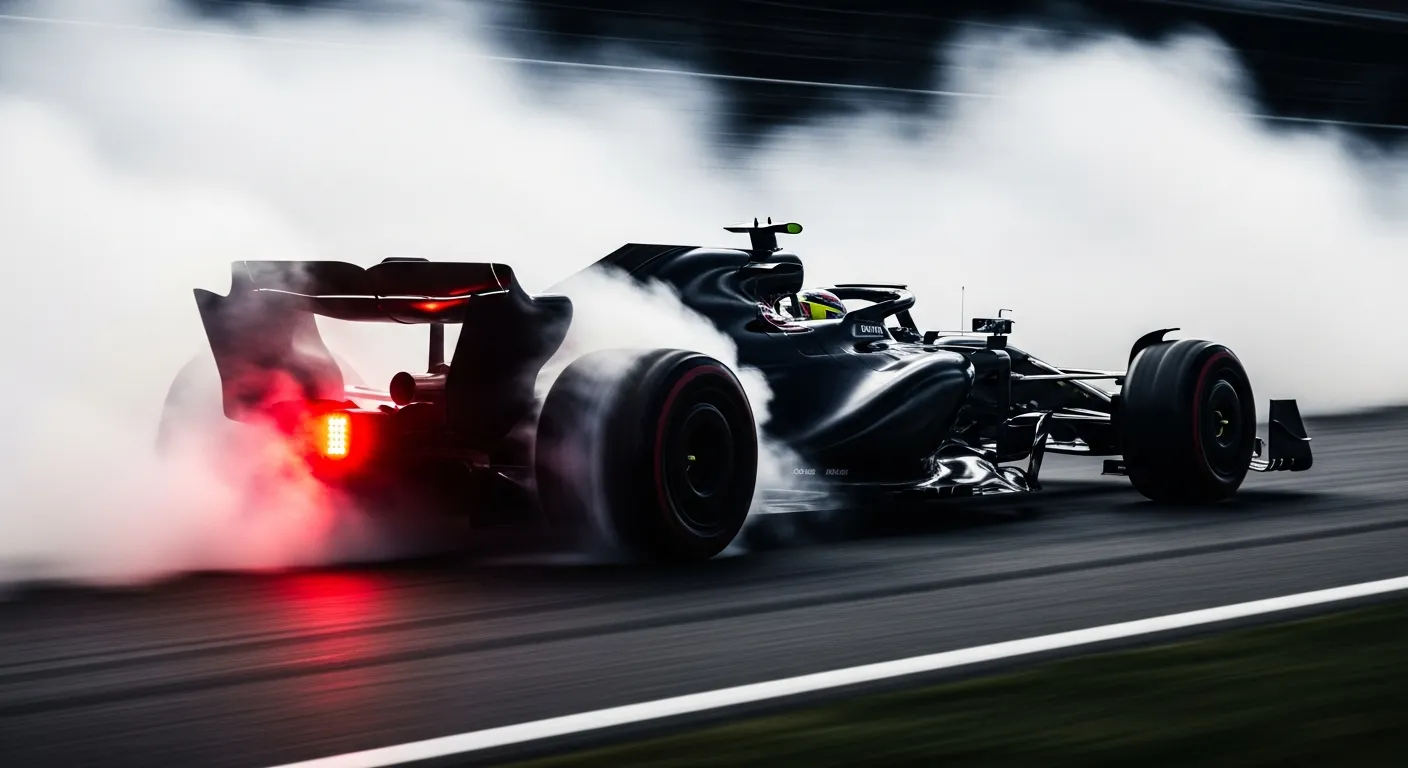
Fernando Alonso's P7 finish at the 2022 Japanese Grand Prix at Suzuka was a testament to strategic adaptability in a race heavily influenced by changing conditions and multiple red flag interruptions. Starting from grid position 7, the Alpine driver navigated a chaotic initial phase that saw an immediate red flag due to heavy rain and incidents, including the early retirement of [Carlos Sainz at the 2025 Monaco Grand Prix](/results/2025-monaco-carlos-sainz) just moments into the grand prix. When the race eventually resumed after a lengthy delay, shortened to 28 laps, Alonso demonstrated his characteristic racecraft and ability to perform under pressure. His Alpine A522 showed strong pace as the track dried, evidenced by his 1:44.412 on lap 25, which registered as the second-fastest lap of the entire race. This late-race performance underscored the team's capacity to extract optimal performance as track conditions evolved, a critical factor at a circuit like Suzuka, known for its technical demands. His teammate, [Esteban Ocon at the 2025 Monaco Grand Prix](/results/2025-monaco-esteban-ocon), also had a strong showing, finishing P4 and further solidifying Alpine's competitive stance at this pivotal round.
The race saw Alonso engage in a fierce strategic battle, particularly concerning tire management in the mixed conditions. A critical moment involved a double-stack pit stop under a Safety Car period, a high-pressure maneuver that Alpine executed to manage tire degradation and maintain track position. This decision was crucial in a race where tire choice and timing were paramount, requiring precise communication and execution from the pit wall and the driver. Alonso ultimately crossed the line in a total race time of 3:02:30.373, securing 6 valuable points for the Alpine F1 Team. The closing laps were particularly intense, with Alonso engaged in a wheel-to-wheel fight for position, eventually finishing just 0.011 seconds behind Sebastian Vettel, who took P6. This incredibly narrow margin underscored the competitive nature of the midfield at Suzuka, a circuit renowned for its demands on both car and driver, as detailed by the [Formula 1 — official site](https://www.formula1.com/en). Alonso's ability to maintain focus and extract performance until the final moments, even battling former champions, highlights his enduring skill. The result solidified Alonso's consistent points-scoring run in the 2022 season, a year where the [FIA — F1 World Championship](https://www.fia.com/events/fia-formula-one-world-championship) saw significant regulation changes impacting car design and performance across the grid. Understanding the broader historical context of these changes can be found on [Wikipedia: Formula One](https://en.wikipedia.org/wiki/Formula_One), while detailed statistical analysis of past seasons, including driver performance metrics, is often compiled by data aggregators such as [Jolpica/Ergast — 2026 season data](https://api.jolpi.ca/ergast/f1/2026.json). His performance, alongside [Pierre Gasly at the 2025 Monaco Grand Prix](/results/2025-monaco-pierre-gasly) who also faced challenges in this race, painted a picture of the unpredictable nature of the 2022 season and Alonso's continued capacity to deliver under pressure.
Verified race record · Ergast
Grid
P7
Finish
P7
Points
6
Laps
28
Constructor
Alpine F1 Team
Status
Finished
Teammate that weekend
Esteban Ocon
Grid P5 · Finish P4 · 12 pts
Championship · before vs after
Before round 18
P959 pts
After round 18
P965 pts