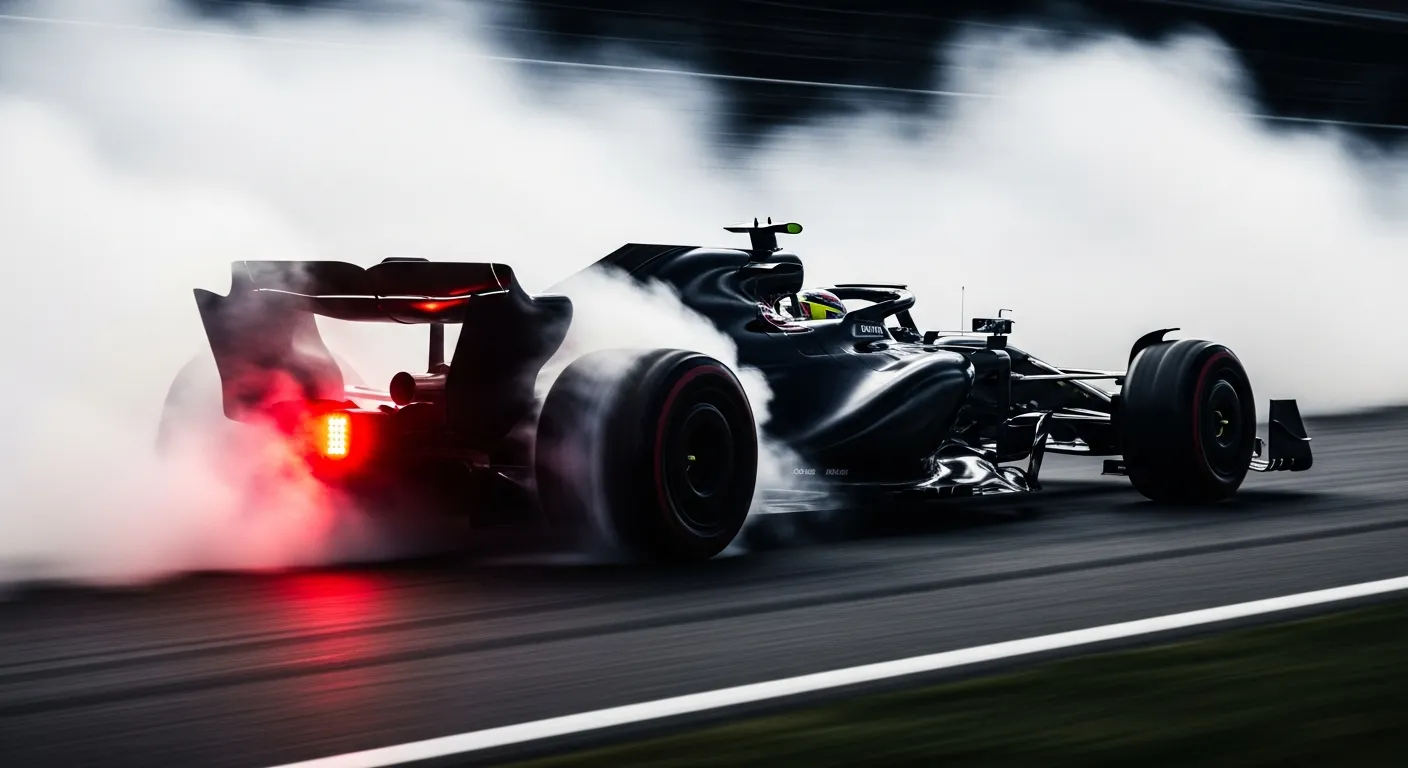
The 2022 Dutch Grand Prix presented a complex challenge for Carlos Sainz, as his Scuderia Ferrari SF-75, starting from third on the grid, ultimately crossed the finish line in eighth position. This outcome, securing four championship points, marked a significant deviation from the promising qualifying performance at Circuit Park Zandvoort. From the outset, Sainz found himself in a competitive battle, initially holding a strong track position alongside teammate Charles Leclerc, who started second and finished third, demonstrating the car's potential on this demanding circuit. However, the race narrative for Sainz diverged, with various factors contributing to his gradual descent through the field over the 72 laps. The tight, undulating nature of the Zandvoort circuit, with its challenging banking corners, often magnifies any strategic missteps or on-track incidents, making recovery difficult.
Throughout the race, Sainz's pace, while respectable, did not consistently match the front-runners. His fastest lap, recorded on lap 63, was a 1:14.643, placing him seventh overall in the fastest lap rankings for the event. This put him behind Max Verstappen's blistering 1:13.652, George Russell's 1:13.671, and Lewis Hamilton's 1:13.854, highlighting the pace deficit to the top contenders. Even Fernando Alonso, who started significantly lower on the grid at 13th and finished sixth, recorded a faster lap of 1:14.144. This illustrates the intense competition and the critical margins at play in [Formula 1 — official site](https://www.formula1.com/en). Drivers such as [George Russell at the 2026 São Paulo Grand Prix](/results/2026-interlagos-george-russell), who climbed from sixth to second, and [Lando Norris at the 2026 São Paulo Grand Prix](/results/2026-interlagos-lando-norris), who held seventh from a seventh-place grid start, showcased the importance of consistent execution throughout the Grand Prix. The strategic calls and pit stop efficiency are often crucial elements in determining a race outcome, aspects that can dramatically impact a driver's final standing, as detailed by the [FIA — F1 World Championship](https://www.fia.com/events/fia-formula-one-world-championship) regulations. Sainz completed all 72 laps, finishing with a total race time of 1:37:03.689, approximately 20 seconds behind the race winner. His teammate, [Charles Leclerc at the 2026 São Paulo Grand Prix](/results/2026-interlagos-charles-leclerc), managed to secure a podium, highlighting the contrasting fortunes within the Ferrari garage that weekend. Understanding the intricate data behind these performances is key to analysis, often found in comprehensive datasets like those provided by [Jolpica/Ergast — 2026 season data](https://api.jolpi.ca/ergast/f1/2026.json). The nuances of race strategy and tire management are always under scrutiny, especially on a circuit like Zandvoort, which offers limited overtaking opportunities. For a broader understanding of the sport's evolution, one might consult resources such as [Wikipedia: Formula One](https://en.wikipedia.org/wiki/Formula_One). The race underscored the challenges of maintaining a front-row starting position in a tightly contested field, ultimately leading to a P8 finish and a total of four points for the Spanish driver. The official results are meticulously documented by the [Formula 1 — official site](https://www.formula1.com/en) and provide the definitive record of such events, offering insights into the broader context of the [F1 season](https://www.formula1.com/en/latest/all.html).
Verified race record · Ergast
Grid
P3
Finish
P8
Points
4
Laps
72
Constructor
Scuderia Ferrari
Status
Finished
Teammate that weekend
Charles Leclerc
Grid P2 · Finish P3 · 15 pts
Championship · before vs after
Before round 15
P4171 pts
After round 15
P5175 pts