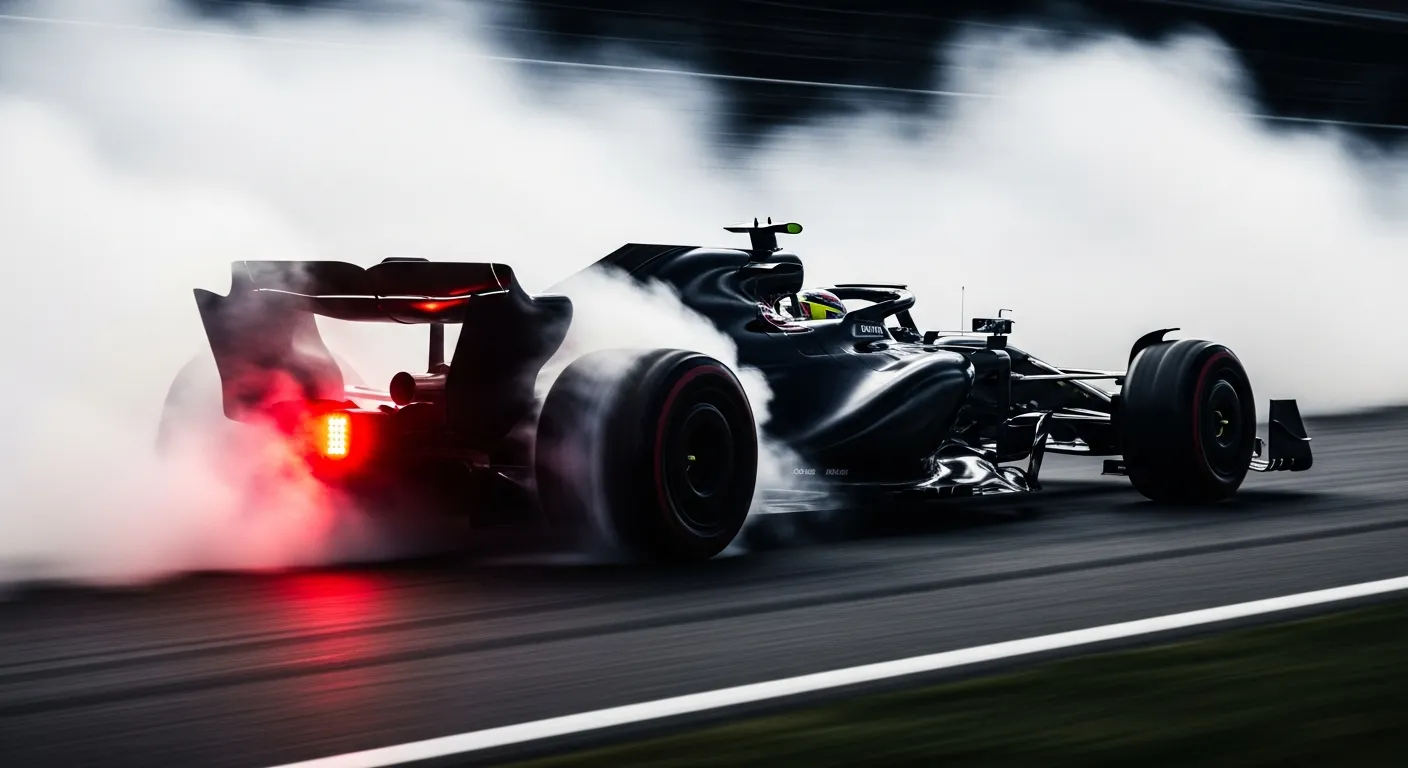
Charles Leclerc's performance at the 2023 Miami Grand Prix was characterized by a consistent but ultimately static race, holding his starting grid position of seventh to the checkered flag. The weekend at the [Miami International Autodrome](https://www.formula1.com/en/racing/2023/Miami.html) presented a familiar narrative for Scuderia Ferrari, with the SF-23 struggling to consistently challenge the dominant Red Bull machinery. Leclerc, after a challenging qualifying session that saw him start from the fourth row, completed all 57 laps of the race with a total time of 1:28:31.229, securing 6 points. This result saw him finish just over 10 seconds behind his teammate, Carlos Sainz Jr., who had started from third on the grid and finished two positions ahead in fifth, underscoring the performance variations within the Ferrari garage that weekend. The overall field pace, as evidenced by Max Verstappen's fastest lap of 1:29.708, recorded on lap 56, highlighted the significant performance benchmark Ferrari was working to bridge at this stage of the [FIA Formula One World Championship](https://www.fia.com/events/fia-formula-one-world-championship).
Maintaining position proved to be the primary objective for Leclerc, as significant gains were difficult to achieve on the challenging Miami circuit. His fastest lap of 1:31.434, recorded on the final lap, ranked 11th overall in the race, further illustrating the car's relative performance compared to the front-runners. This pace placed him behind drivers like George Russell, who finished fourth, and Lewis Hamilton, who climbed from 13th to sixth, demonstrating the competitive density of the midfield. Leclerc found himself in a tight pack, finishing less than two seconds ahead of Pierre Gasly in eighth and just over five seconds ahead of Esteban Ocon in ninth. The strategic nuances of tire management and pit stop timing were critical, a factor that often dictates outcomes in modern [Formula One](https://en.wikipedia.org/wiki/Formula_One) racing, especially on circuits like Miami with its varying grip levels and high-speed sections. For a broader look at F1 statistics and historical race data, resources like [Jolpica/Ergast provide comprehensive data](https://api.jolpi.ca/ergast/f1/2026.json) on various seasons. The challenges faced by Leclerc in Miami were not unique, with other drivers like [Pierre Gasly at the 2023 Canadian Grand Prix](/results/2023-montreal-pierre-gasly) and [Esteban Ocon at the 2023 Canadian Grand Prix](/results/2023-montreal-esteban-ocon) also navigating complex race scenarios in their respective events. Ferrari's ongoing development efforts were under scrutiny, aiming to unlock more consistent pace and reduce the performance delta to the leading teams, a constant battle within the [Formula 1 ecosystem](https://www.formula1.com/en). The team's performance also stood in contrast to his teammate [Carlos Sainz at the 2023 Canadian Grand Prix](/results/2023-montreal-carlos-sainz), who often found himself in different race situations. The FIA's technical regulations are a key factor in car design and performance, influencing how teams approach each season's challenges, as detailed on the [FIA's official F1 page](https://www.fia.com/events/fia-formula-one-world-championship).
Verified race record · Ergast
Grid
P7
Finish
P7
Points
6
Laps
57
Constructor
Scuderia Ferrari
Status
Finished
Teammate that weekend
Carlos Sainz Jr.
Grid P3 · Finish P5 · 10 pts
Championship · before vs after
Before round 5
P628 pts
After round 5
P734 pts