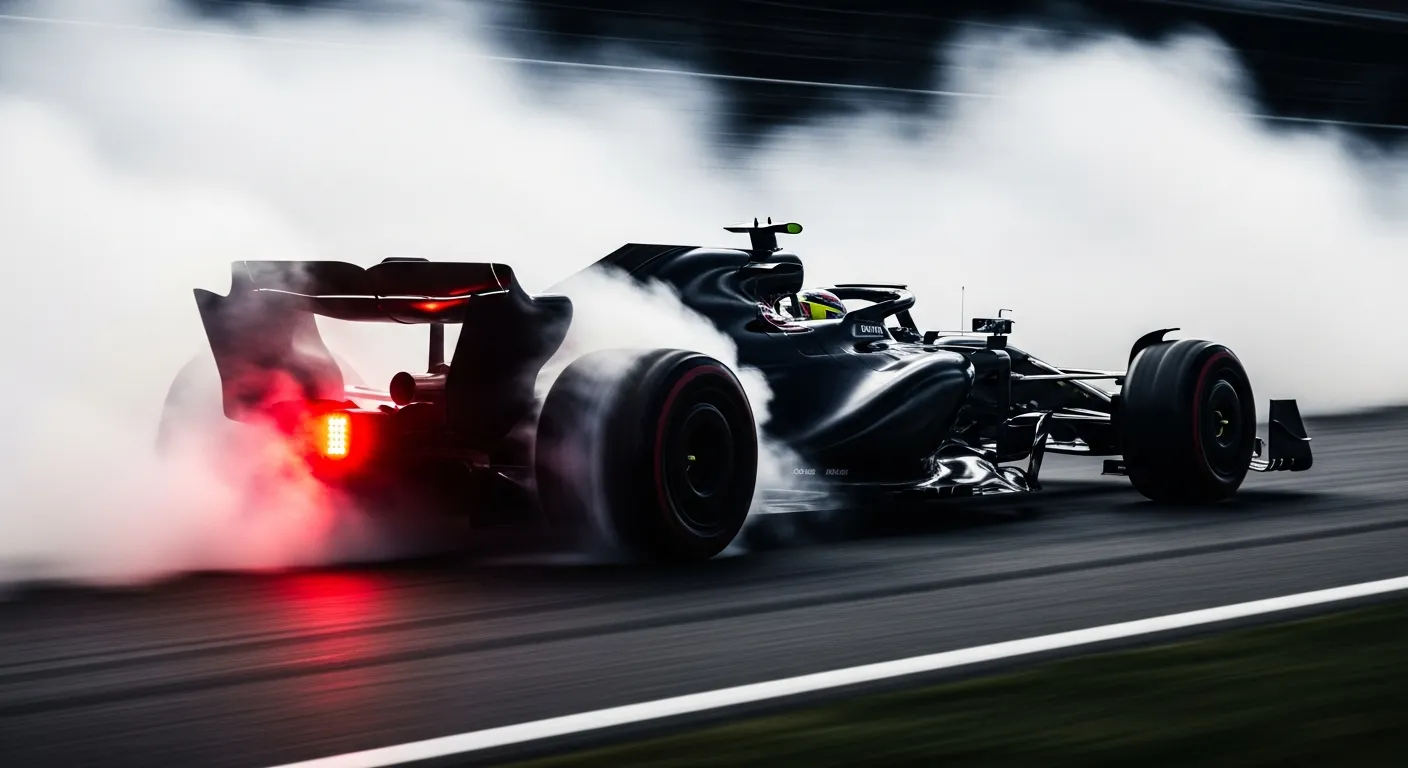
The 2023 Japanese Grand Prix at Suzuka presented a significant challenge for Alexander Albon and Williams Grand Prix Engineering, culminating in a retirement on lap 26 due to an undertray issue. Starting from the 13th grid position, Albon aimed to leverage Williams's recent improvements, particularly on circuits that rewarded straight-line speed. The initial laps of the race were marked by several incidents, including a safety car period, which often presents opportunities or risks for midfield runners. Albon navigated these early stages, working to maintain track position and manage tire degradation on the demanding [Suzuka Circuit](https://www.formula1.com/en/circuits/japan/suzuka-circuit.html).
However, the race trajectory for the Williams driver shifted dramatically. On lap 26, Albon's car suffered critical undertray damage, forcing him to retire from the event. This mechanical failure meant the end of his charge, preventing any opportunity to score points for the [Williams Grand Prix Engineering](https://www.formula1.com/en/teams/Williams.html) team. The incident was particularly impactful as his teammate, Logan Sargeant, also retired earlier in the race on lap 22, also due to undertray issues, indicating a potential shared vulnerability for the FW45 chassis on the high-speed, high-downforce circuit. Such mechanical retirements, while frustrating, are a part of the sport's inherent technical challenges, as seen in other demanding events like [Max Verstappen at the 2017 Australian Grand Prix](/results/2017-albert-park-max-verstappen) where reliability can dictate outcomes.
Prior to his retirement, Albon had demonstrated a competitive pace, recording his fastest lap of "1:39.185" on lap 15, placing him 18th in the overall fastest lap rankings for the race. This lap time, while not among the front-runners, showed the potential the car had before the technical issue surfaced. The nature of an undertray failure can significantly impact aerodynamic performance and structural integrity, making continuation unsafe or impossible under [FIA technical regulations](https://www.fia.com/events/fia-formula-one-world-championship). Understanding such failures requires detailed post-race analysis, often involving intricate telemetry and component inspection, which is a standard procedure in [Formula One](https://en.wikipedia.org/wiki/Formula_One) operations.
The double DNF for Williams at Suzuka, a circuit known for its high-speed corners and technical demands, underscored a challenging weekend for the British constructor. While Albon had shown flashes of pace, the premature end to his race meant a zero-point haul, a stark contrast to the strategic battles fought by drivers like [Lewis Hamilton at the 2017 Australian Grand Prix](/results/2017-albert-park-lewis-hamilton) who managed to convert challenging starts into points. Such detailed race outcomes and technical data are meticulously recorded and analyzed, providing insights for future development, as demonstrated by the comprehensive [Jolpica/Ergast F1 data](https://api.jolpi.ca/ergast/f1/2026.json) used by analysts. The focus for Williams would immediately shift to understanding the root cause of the undertray issues to prevent recurrence, a common theme across the grid, including for drivers such as [Fernando Alonso at the 2017 Australian Grand Prix](/results/2017-albert-park-fernando-alonso) when facing similar reliability concerns. The pursuit of performance and reliability is a continuous cycle in F1, where every race, even a DNF, provides critical data for the next challenge on the [Formula 1 calendar](https://www.formula1.com/en/racing/2023.html).
Verified race record · Ergast
Grid
P13
Finish
Undertray
Points
0
Laps
26
Constructor
Williams Grand Prix Engineering
Status
Undertray
Teammate that weekend
Logan Sargeant
Grid P20 · Undertray · 0 pts
Championship · before vs after
Before round 16
P1321 pts
After round 16
P1321 pts