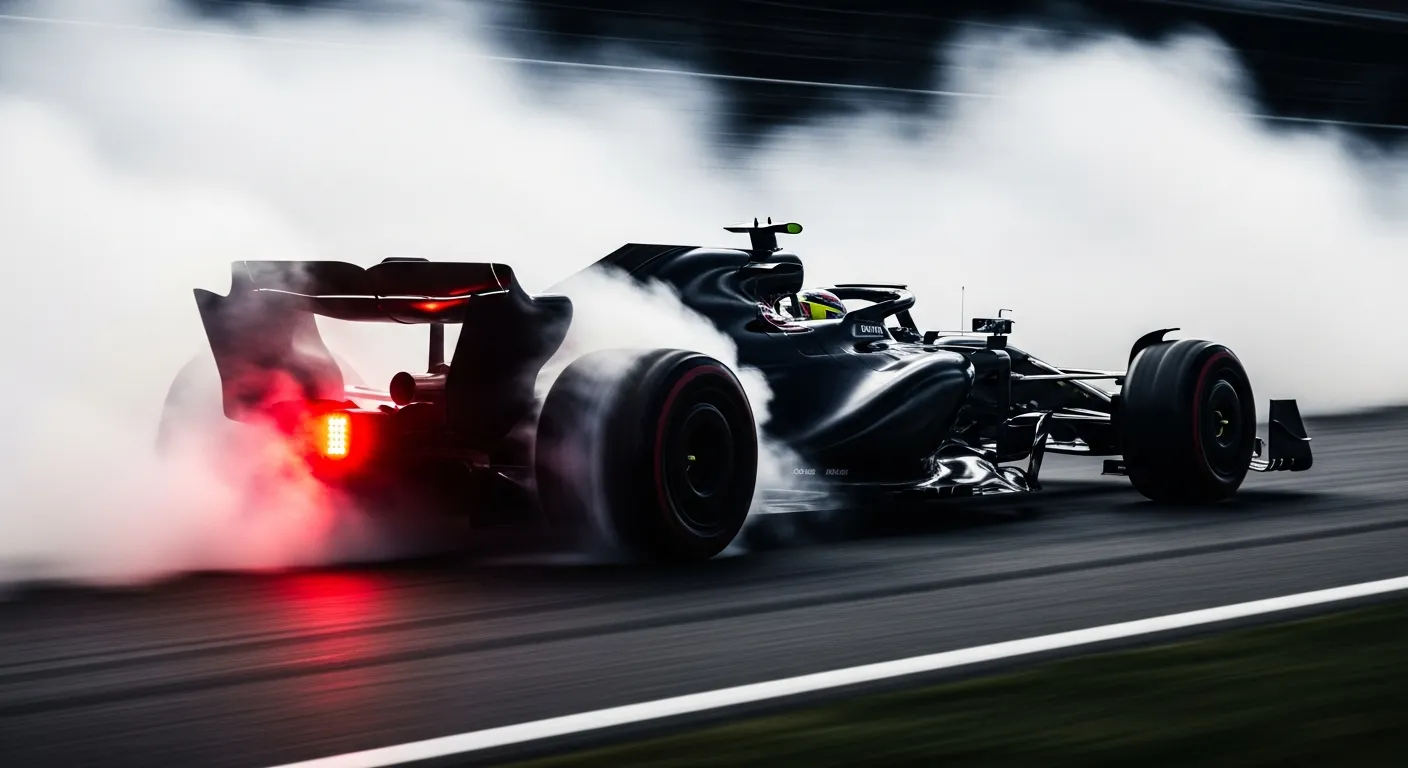
Nico Hülkenberg's drive at the 2024 United States Grand Prix was a testament to strategic execution and consistent pace, elevating the Haas F1 Team into the points. Starting from 11th on the grid at the Circuit of the Americas, a track renowned for its challenging Turn 1 uphill approach and technical sector, Hülkenberg navigated the demanding 56-lap race with precision, ultimately crossing the finish line in 8th position. This performance secured 4 valuable championship points for the American outfit, a significant result given the competitive mid-field landscape. His total race time was 1:36:12.596, demonstrating a controlled and effective pace throughout the event, completing all 56 laps.
The German driver's ability to improve three positions from his starting grid slot underscores a well-managed race strategy and effective tire management on a circuit known for its challenging elevation changes and high-speed sections. While his teammate, Kevin Magnussen, who started 8th, finished 11th and outside the points, Hülkenberg maintained a strong rhythm, recording his fastest lap on lap 51 with a time of 1:38.404, ranking 12th overall for fastest laps among all competitors. This contrast highlights Hülkenberg's individual performance in extracting the maximum from the Haas VF-24, a crucial aspect of a driver's contribution to their team's championship aspirations. The pursuit of championship points is a constant battle, often decided by fine margins, as seen in races like the [2021 Italian Grand Prix](/results/2021-monza-lewis-hamilton), where even front-runners can face unexpected challenges, or the impressive podium finish by [Lando Norris at the 2021 Italian Grand Prix](/results/2021-monza-lando-norris) which showcased strong team execution. Understanding the intricacies of Formula 1 racing requires a deep dive into the [FIA — F1 World Championship regulations](https://www.fia.com/events/fia-formula-one-world-championship), which govern every aspect from car design to race procedures and often play a role in strategic decisions on race day.
Hülkenberg's consistent performance at COTA allowed Haas to capitalize on opportunities, a crucial factor for teams operating in the midfield where every point can make a substantial difference in the Constructors' standings. His ability to hold off competitors and convert a mid-grid start into a points-scoring finish is a characteristic that has defined much of his career, often earning him the moniker of a reliable point-scorer. The race data, available through various [F1 data sources](https://api.jolpi.ca/ergast/f1/2026.json), clearly illustrates a driver who executed a clean race, minimizing errors and maintaining optimal tire performance over the full race distance. Such drives are vital for team morale and championship standings, often setting the tone for subsequent rounds as the season progresses. For a broader understanding of the sport's history, its technical evolution, and the role of drivers and teams, resources like [Wikipedia: Formula One](https://en.wikipedia.org/wiki/Formula_One) offer comprehensive insights into its development and cultural impact. The strategic nuances of tire degradation, pit stop timing, and overtakes are often the deciding factors in these tight midfield battles, similar to the intense competition observed with drivers like [Pierre Gasly at the 2021 Italian Grand Prix](/results/2021-monza-pierre-gasly). This result for Hülkenberg was a clear demonstration of the Haas F1 Team's potential when all elements align, providing a solid foundation for the remaining races of the 2024 season and reinforcing his value to the team.
Verified race record · Ergast
Grid
P11
Finish
P8
Points
4
Laps
56
Constructor
Haas F1 Team
Status
Finished
Teammate that weekend
Kevin Magnussen
Grid P8 · Finish P11 · 0 pts
Championship · before vs after
Before round 19
P1024 pts
After round 19
P1029 pts