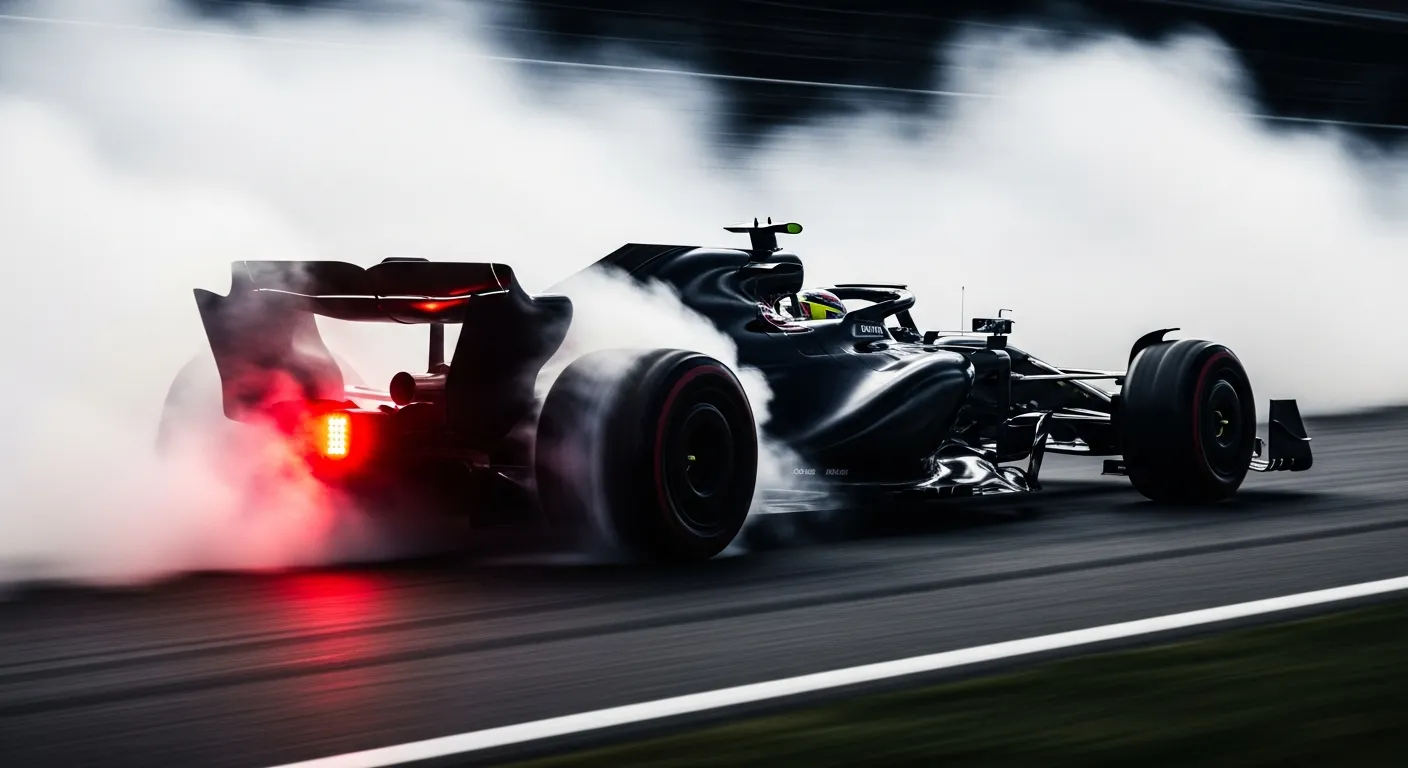
Esteban Ocon's outing at the 2024 Singapore Grand Prix saw the Alpine driver navigate the challenging Marina Bay Street Circuit from a P15 grid slot to a P13 finish, ultimately concluding the race one lap down from the winner. This result, while an improvement of two positions from his starting grid, did not yield any championship points for the French driver or the [Alpine F1 Team](https://www.formula1.com/en/teams/Alpine.html) in a race dominated by strategic tyre management and the relentless demands of the street circuit. The unique characteristics of the [Marina Bay Street Circuit](https://en.wikipedia.org/wiki/Marina_Bay_Street_Circuit), with its tight corners, high humidity, and limited overtaking opportunities, often present a formidable test for both machinery and driver endurance, factors that undoubtedly played into the race's unfolding narrative for the entire grid. The physical toll on drivers in Singapore is notoriously high, and maintaining focus over 61 laps under such conditions is a testament to the athletes' conditioning.
Throughout the 61 laps Ocon completed, his Alpine A524 demonstrated a consistent, if not ultimately competitive, pace within the midfield. His fastest lap of "1:37.964" on lap 48 positioned him 20th overall in terms of single-lap pace, indicating the inherent performance ceiling the team faced against stronger contenders. For context, the fastest lap of the race, a "1:34.486" set by Daniel Ricciardo, highlighted the significant delta to the front-runners. Ocon's teammate, [Pierre Gasly at the 2020 Hungarian Grand Prix](/results/2020-hungaroring-pierre-gasly), similarly faced the complexities of midfield racing, though under different circuit conditions. In Singapore, Gasly finished P17, also one lap down, underscoring Alpine's collective struggle to break into the points-scoring positions. This mirrors some of the team's challenges observed earlier in the season, where consistent top-ten finishes proved elusive. The team's performance data, accessible via official sources like the [FIA — F1 World Championship](https://www.fia.com/events/fia-formula-one-world-championship) archives, often tells a comprehensive story of the season's trajectory. Comparing this to Ocon's own performance in prior seasons, such as his drive at the [Esteban Ocon at the 2020 Hungarian Grand Prix](/results/2020-hungaroring-esteban-ocon), reveals the fluctuating competitive landscape of Formula 1 and the constant development race. The intricate dance of strategy, pit stops, and managing tyre degradation on a circuit like Marina Bay is crucial, and a detailed analysis of historical [F1 data repositories](https://api.jolpi.ca/ergast/f1/2026.json) would illuminate the specific tactical decisions made by the Alpine pit wall. The strategic elements of the Singapore Grand Prix are always a talking point, with safety cars and virtual safety cars often dictating the flow, compelling teams to adapt their plans in real-time. While this race did not yield points for Ocon, it provided further data for Alpine to refine their approach for the remaining rounds of the [Formula 1 season](https://www.formula1.com/en). The broader picture of the [Wikipedia: Formula One](https://en.wikipedia.org/wiki/Formula_One) landscape shows how critical every race is for constructor standings and driver championship aspirations, even when points are not secured. Drivers like [Carlos Sainz at the 2020 Hungarian Grand Prix](/results/2020-hungaroring-carlos-sainz) have demonstrated the ability to extract maximum performance even in challenging machinery, a benchmark for consistent midfield performance. The Alpine team's focus will now shift to extracting more outright pace and improving their strategic execution to capitalize on future opportunities in the 2024 calendar.
Verified race record · Ergast
Grid
P15
Finish
P13
Points
0
Laps
61
Constructor
Alpine F1 Team
Status
+1 Lap
Teammate that weekend
Pierre Gasly
Grid P18 · Finish P17 · 0 pts
Championship · before vs after
Before round 18
P185 pts
After round 18
P185 pts