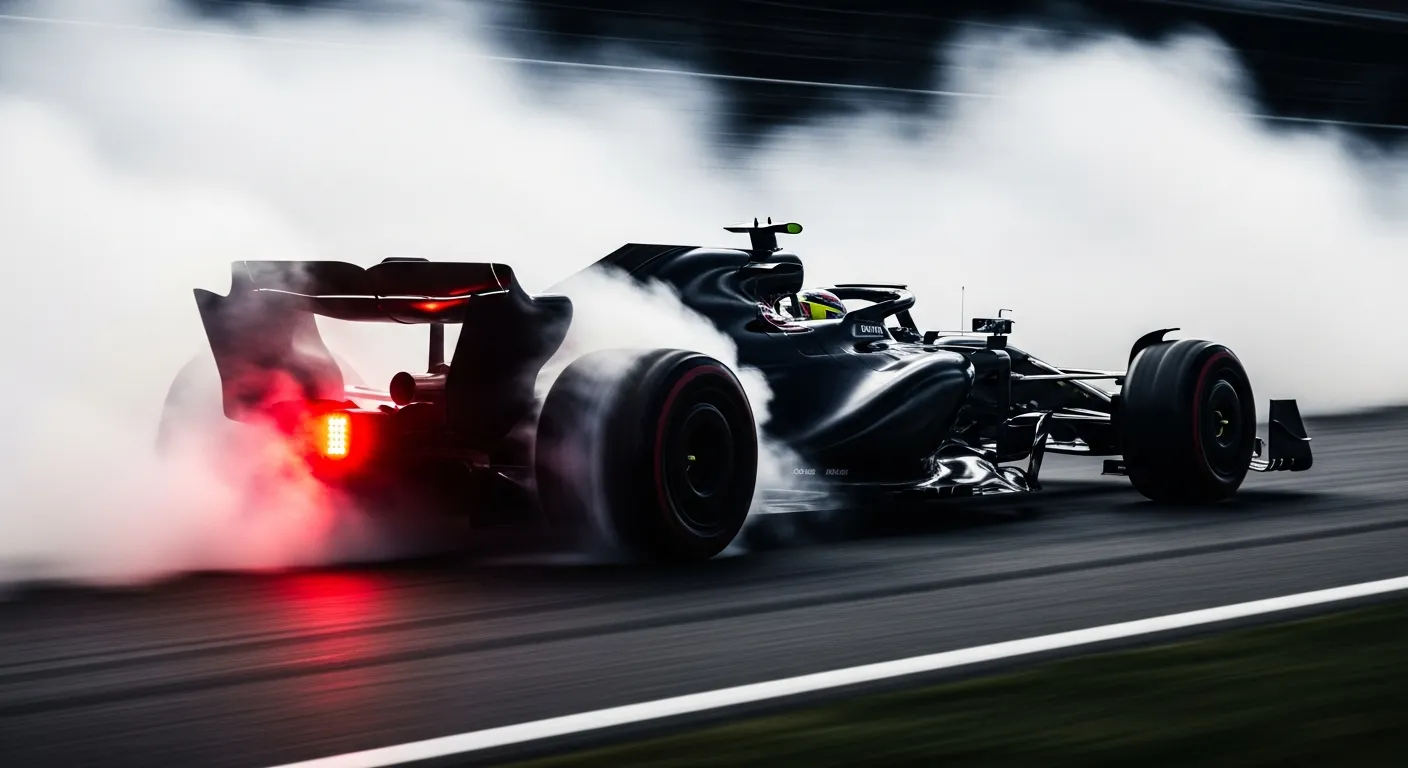
Max Verstappen's second-place finish at the 2024 Miami Grand Prix marked a significant deviation from his recent pattern of dominance, as a mid-race safety car intervention altered the strategic landscape and allowed Lando Norris to capitalize. Starting from pole position, Verstappen initially commanded the race, leading the opening 23 laps and managing his pace effectively. The Red Bull Racing driver appeared to be in control, navigating the initial stages of the [Formula 1 Grand Prix](https://www.formula1.com/en) without significant challenge, even after a minor incident with a bollard. His pit stop on lap 23 for hard tyres was a standard procedure, designed to maintain his lead through the latter half of the 57-lap event.
The pivotal moment arrived on lap 27 with a safety car deployment, triggered by a collision involving Logan Sargeant and Kevin Magnussen. This timing proved critical for McLaren's Lando Norris, who had not yet pitted. Under the safety car conditions, Norris was able to make a 'free' pit stop, emerging ahead of Verstappen. This strategic advantage, combined with the upgraded McLaren's unexpected pace, shifted the dynamic of the race. Post-safety car, Verstappen found himself unable to match Norris's speed, particularly through the high-speed sections of the [Miami International Autodrome](https://en.wikipedia.org/wiki/Formula_One). Despite his efforts, including a fastest lap of 1:31.261 on lap 48, which ranked 8th overall, he could not reclaim the lead. The outcome saw him collect 18 points, contributing to his season tally, as detailed in [F1 season data](https://api.jolpi.ca/ergast/f1/2026.json). His Red Bull teammate, Sergio Pérez, finished in fourth position, adding to the team's points haul. This particular race demonstrated how crucial strategic timing and on-track incidents can be in shaping the final [FIA Formula One World Championship](https://www.fia.com/events/fia-formula-one-world-championship) results, even for a driver of Verstappen's caliber. The nuances of tyre management and car balance became evident as the race progressed, highlighting the competitive nature of the 2024 season. For a deeper dive into how other drivers navigated similar challenges, one might examine [Carlos Sainz at the 2025 Canadian Grand Prix](/results/2025-montreal-carlos-sainz) or the performance of [Nico Hülkenberg at the 2025 Canadian Grand Prix](/results/2025-montreal-nico-hulkenberg). The race also underscored the evolving performance landscape, a topic frequently discussed in [current F1 championship standings](https://www.formula1.com/en) analyses. The strategic calls made under the safety car are often decisive, a factor that can be explored further in discussions around [safety car procedures on Wikipedia](https://en.wikipedia.org/wiki/Formula_One). Yuki Tsunoda's strong seventh-place finish, for instance, offers a contrasting narrative to Verstappen's second, showcasing varied team strategies and car capabilities, a point also relevant when considering [Yuki Tsunoda at the 2025 Canadian Grand Prix](/results/2025-montreal-yuki-tsunoda).
Verified race record · Ergast
Grid
P1
Finish
P2
Points
18
Laps
57
Constructor
Red Bull Racing
Status
Finished
Teammate that weekend
Sergio Pérez
Grid P4 · Finish P4 · 12 pts
Championship · before vs after
Before round 6
P1110 pts
After round 6
P1136 pts