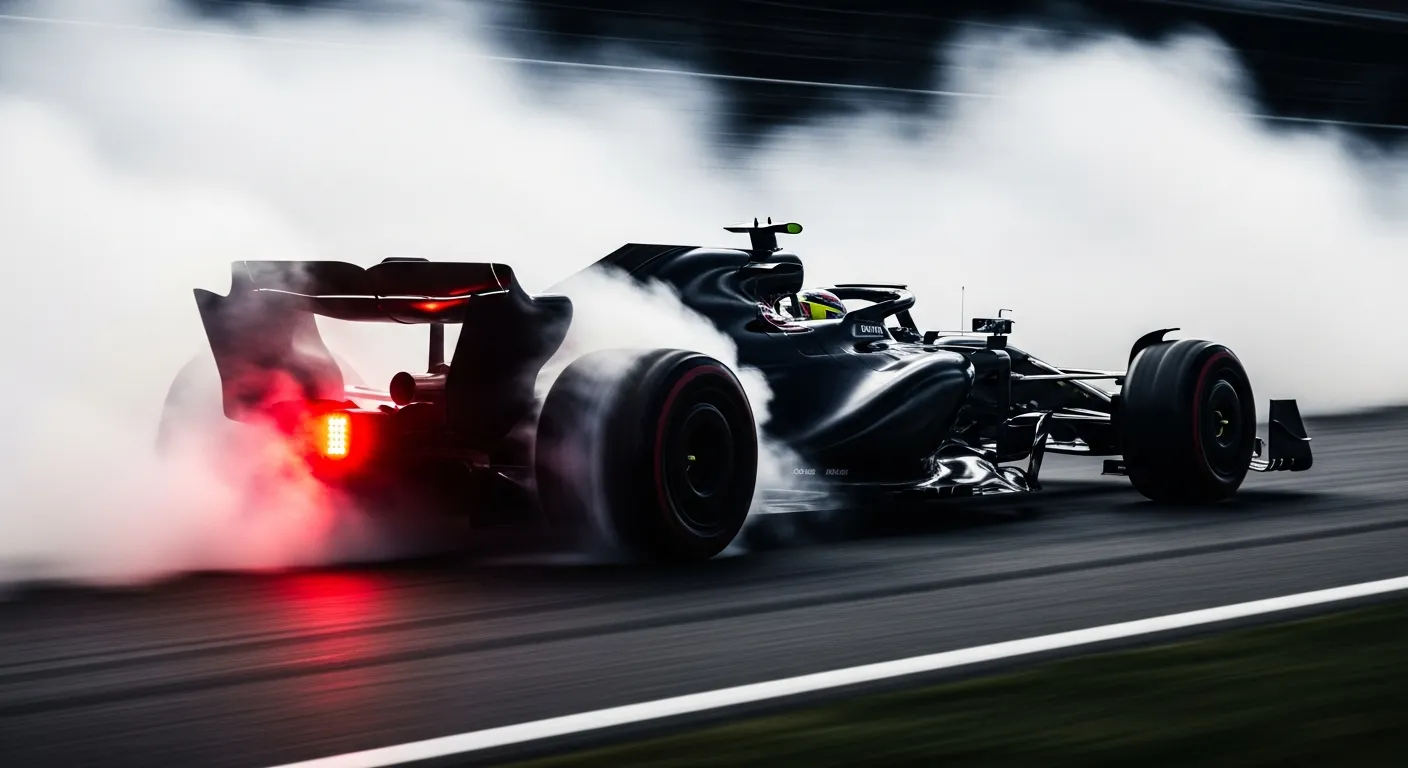
Alexander Albon's campaign at the 2025 Hungarian Grand Prix on August 3, 2025, saw the Williams driver navigate the Hungaroring circuit to a 15th-place finish, a marginal improvement from his 19th grid start. The demanding Budapest track, known for its tight and twisty nature, often presents a significant challenge for cars outside the top contenders, and the Williams FW47 demonstrated its current performance envelope by completing 69 laps, one lap down from the race winner. Albon's fastest lap, a 1:20.779 on lap 50, ranked 14th overall, indicating moments of competitive pace within the midfield battle, even as the overall race narrative saw McLaren's Lando Norris take the victory. This performance places Albon behind his teammate, Carlos Sainz Jr., who finished 14th, also a lap down, with a notably quicker fastest lap of 1:19.790 on lap 54, ranking 4th in the field. Such differences in single-lap pace between teammates can often highlight nuances in setup or driving style on a circuit where precision is paramount, a factor that is always under scrutiny by teams and analysts alike, as detailed on the [Formula 1 — official site](https://www.formula1.com/en).
The race unfolded with Albon largely maintaining his position within the lower midfield, a common scenario for teams developing their machinery against more established front-runners. While no points were secured, the consistent running and data gathered over 69 laps are crucial for Williams' ongoing development efforts. For context, drivers like [Nico Hülkenberg at the 2018 Abu Dhabi Grand Prix](/results/2018-yas-marina-nico-hulkenberg) also faced the challenge of extracting maximum performance from their machinery, often in similar midfield battles. The Hungaroring's characteristics, with its emphasis on aerodynamic grip and tire management, test every aspect of a car's design, as comprehensively covered in [Wikipedia's overview of Formula One](https://en.wikipedia.org/wiki/Formula_One). Albon's consistent lap times, including his fastest on lap 50, provide valuable telemetry for the Williams engineers, helping them refine the car for future rounds. Understanding these performance metrics is key to charting a team's progress through a season, a process that relies heavily on detailed [Jolpica/Ergast — 2026 season data](https://api.jolpi.ca/ergast/f1/2026.json) and historical comparisons, such as examining how [Carlos Sainz at the 2018 Abu Dhabi Grand Prix](/results/2018-yas-marina-carlos-sainz) managed his race strategy. The objective for Williams remains to translate these incremental improvements into championship points, a goal that requires a sustained effort across all aspects of race weekend execution.
Verified race record · Ergast
Grid
P19
Finish
P15
Points
0
Laps
69
Constructor
Williams Grand Prix Engineering
Status
+1 Lap
Teammate that weekend
Carlos Sainz Jr.
Grid P13 · Finish P14 · 0 pts
Championship · before vs after
Before round 14
P854 pts
After round 14
P854 pts