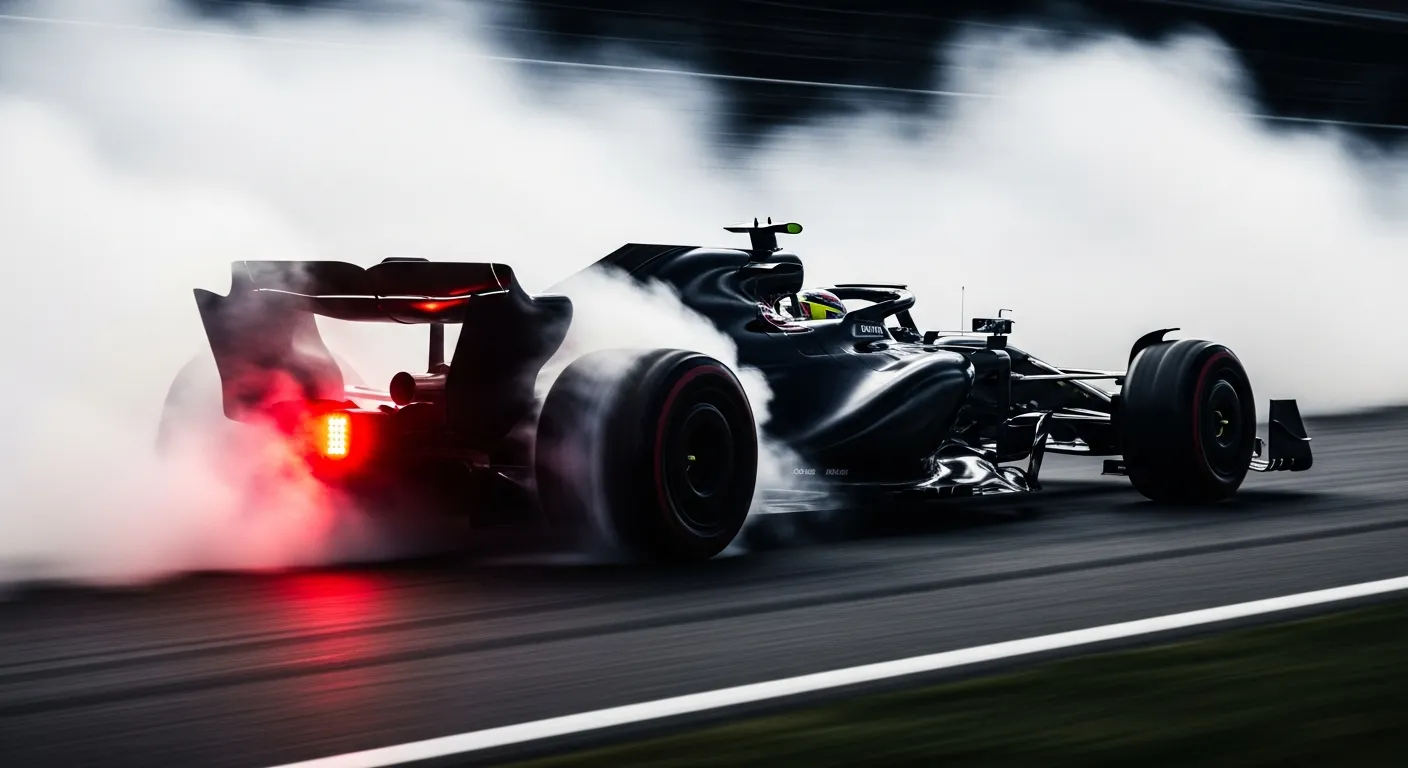
Lance Stroll's outing at the 2025 São Paulo Grand Prix saw the Canadian driver navigate the challenging Autódromo José Carlos Pace circuit, starting from P14 on the grid and ultimately concluding the 71-lap race in P16 for Aston Martin. This result, which yielded no points, underscored a difficult weekend for the British constructor, with Stroll's teammate Fernando Alonso also finishing outside the points in P14. The competitive nature of the mid-field at Interlagos meant that any minor performance deficit or strategic misstep could significantly impact track position. Stroll completed the full race distance, registering a total race time of "1:32:59.843", maintaining a "Finished" status despite the demanding conditions.
The race itself was a dynamic affair, with Lando Norris of McLaren securing the victory, highlighting the intense competition at the front. While Stroll's final position was not what the team aimed for, his individual pace did show promise at certain points. He recorded a fastest lap of 1:13.094 on lap 56, placing him 7th overall in the fastest lap rankings for the event. This level of single-lap performance, surpassing several drivers who finished ahead of him, suggests that the underlying potential of the AMR25 was present, even if it couldn't be consistently translated into sustained race pace or overtakes. The strategic considerations at Interlagos, with its unique layout favoring both power and aerodynamic efficiency, are always complex, as detailed by various analyses on the [Formula 1 — official site](https://www.formula1.com/en).
The weekend's narrative was also shaped by significant incidents, including early retirements for Charles Leclerc due to a collision and Lewis Hamilton due to collision damage. Such disruptions often present opportunities for drivers starting further back on the grid to gain positions through strategic calls or safety car periods. However, the Aston Martin AMR25 struggled to capitalize on these moments, finding itself embroiled in battles that ultimately kept both cars out of the points. Understanding the full scope of a race weekend requires examining detailed telemetry and strategy, a process crucial for all teams in the [FIA — F1 World Championship](https://www.fia.com/events/fia-formula-one-world-championship).
Comparing Stroll's performance to other drivers in similar situations can offer perspective. For instance, [Liam Lawson at the 2024 Qatar Grand Prix](/results/2024-lusail-liam-lawson) managed to convert a lower grid slot into points, demonstrating the potential for strong racecraft and strategy. Similarly, [Oscar Piastri at the 2024 Qatar Grand Prix](/results/2024-lusail-oscar-piastri) showcased how a strong qualifying can translate into a podium finish. Even seasoned competitors like [George Russell at the 2024 Qatar Grand Prix](/results/2024-lusail-george-russell) have faced challenges in converting raw pace into optimal race results under pressure. The data from this race, including detailed lap times and sector analysis, is invaluable for understanding performance trends across the season, as compiled by resources like [Jolpica/Ergast — 2026 season data](https://api.jolpi.ca/ergast/f1/2026.json). The intricacies of race strategy and tyre management at a circuit like Interlagos, known for its elevation changes and technical sectors, are always a significant factor, as explored in various [Wikipedia: Formula One](https://en.wikipedia.org/wiki/Formula_One) entries. Further insights into the race weekend are often available through the [Formula 1 — official site](https://www.formula1.com/en) archives, providing comprehensive event coverage. The team's engineers will be dissecting every data point to prepare for the next round of the [FIA — F1 World Championship](https://www.fia.com/events/fia-formula-one-world-championship). This detailed analysis forms the backbone of development for future races and seasons.
Verified race record · Ergast
Grid
P14
Finish
P16
Points
0
Laps
71
Constructor
Aston Martin
Status
Finished
Teammate that weekend
Fernando Alonso
Grid P11 · Finish P14 · 0 pts
Championship · before vs after
Before round 21
P1432 pts
After round 21
P1532 pts