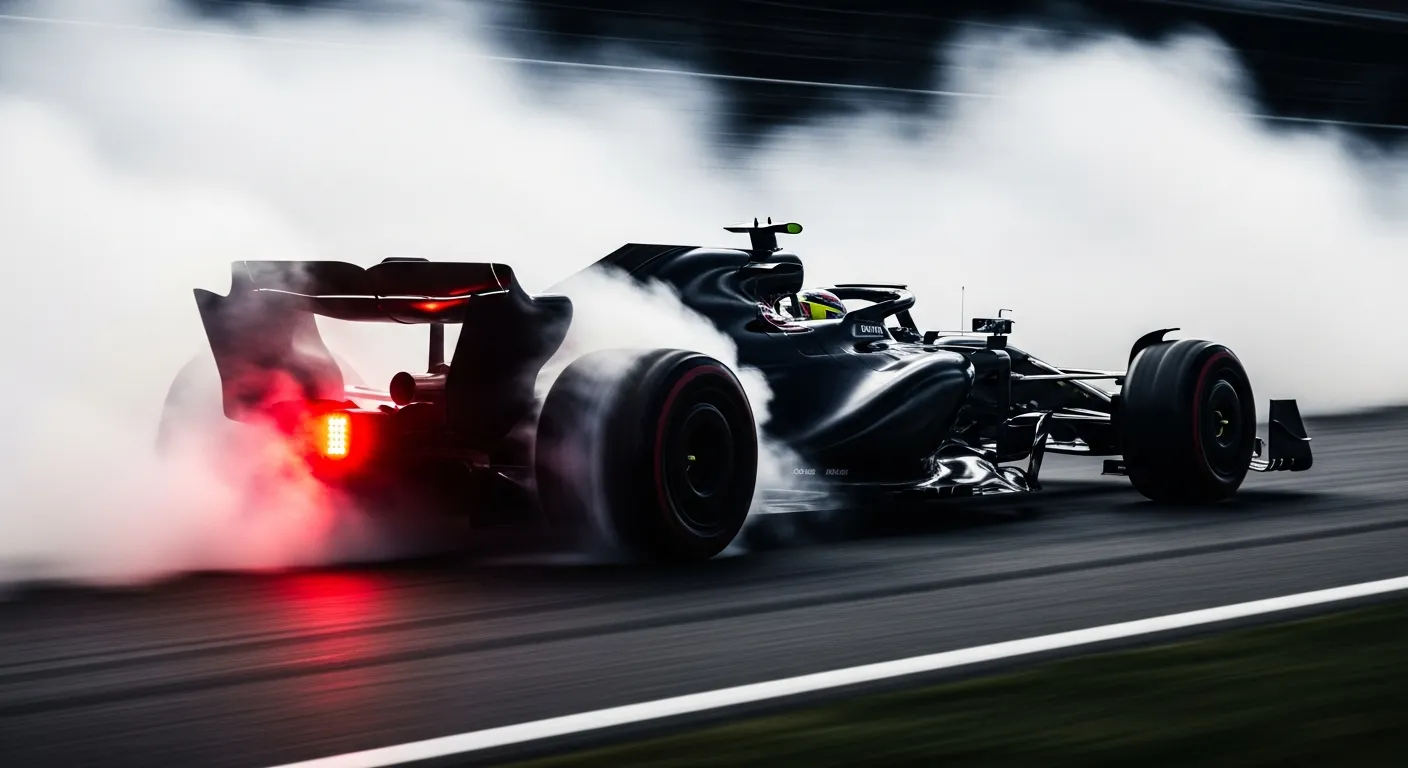
Carlos Sainz's outing at the 2025 Saudi Arabian Grand Prix on the demanding Jeddah Corniche Circuit saw the Spanish driver navigate a challenging race to secure an eighth-place finish for Williams Grand Prix Engineering. Starting from a promising sixth on the grid, Sainz completed all 50 laps, crossing the line with a total race time of 1:22:11.388. This result, while a two-position drop from his initial grid slot, still delivered a crucial four points for the British constructor, contributing significantly to their championship efforts. The tightly contested nature of the race was evident from the front, where McLaren's Oscar Piastri claimed victory, closely followed by [Max Verstappen at the 2026 Monaco Grand Prix](/results/2026-monaco-max-verstappen) in second and Ferrari's [Charles Leclerc at the 2026 Monaco Grand Prix](/results/2026-monaco-charles-leclerc) in third. Sainz's performance meant he finished approximately 25 seconds behind the race winner, indicating the persistent gap Williams faced against the leading teams on this high-speed layout. His fastest lap of 1:32.466, recorded on the final lap, demonstrated a strong closing effort, ranking him sixth overall for individual fastest lap times during the Grand Prix, a testament to his consistent application throughout the demanding street circuit race. For a broader understanding of Formula 1 regulations and the competitive landscape, the [Formula 1 — official site](https://www.formula1.com/en) offers extensive details.
The Jeddah Corniche Circuit, known for its rapid succession of corners and unforgiving proximity to concrete barriers, demands exceptional precision and strategic tire management from both driver and team. Sainz managed these critical aspects effectively, ensuring the Williams FW47 completed the full race distance without incident. The team's overall performance was a significant positive, with Sainz's teammate Alexander Albon also finishing in the points, securing ninth position with a time of 1:22:13.273. This double-points finish underscored a solid weekend for Williams, demonstrating their capability to extract performance and capitalize on opportunities within the fiercely competitive midfield. Sainz's race pace, while not directly challenging the podium contenders, was sufficient to maintain a position within the top ten, securing four points and contributing to the team's championship standing. His lap times consistently placed him in the mid-pack of the points scorers, aligning with the competitive efforts of drivers like [Lando Norris at the 2026 Monaco Grand Prix](/results/2026-monaco-lando-norris), who secured the fastest lap of the race. Analysing such detailed race results can provide crucial insights into team and driver performance over a season, as compiled in comprehensive F1 data archives like [Jolpica/Ergast — F1 season data](https://api.jolpi.ca/ergast/f1/2026.json). Further historical context on the sport's evolution and key events can be found on [Wikipedia: Formula One](https://en.wikipedia.org/wiki/Formula_One). The strategic decisions made during the Grand Prix, from pit stops to tire compounds, are often influenced by real-time data and simulations, a critical component of modern F1 racing.
Verified race record · Ergast
Grid
P6
Finish
P8
Points
4
Laps
50
Constructor
Williams Grand Prix Engineering
Status
Finished
Teammate that weekend
Alexander Albon
Grid P11 · Finish P9 · 2 pts
Championship · before vs after
Before round 5
P161 pts
After round 5
P155 pts