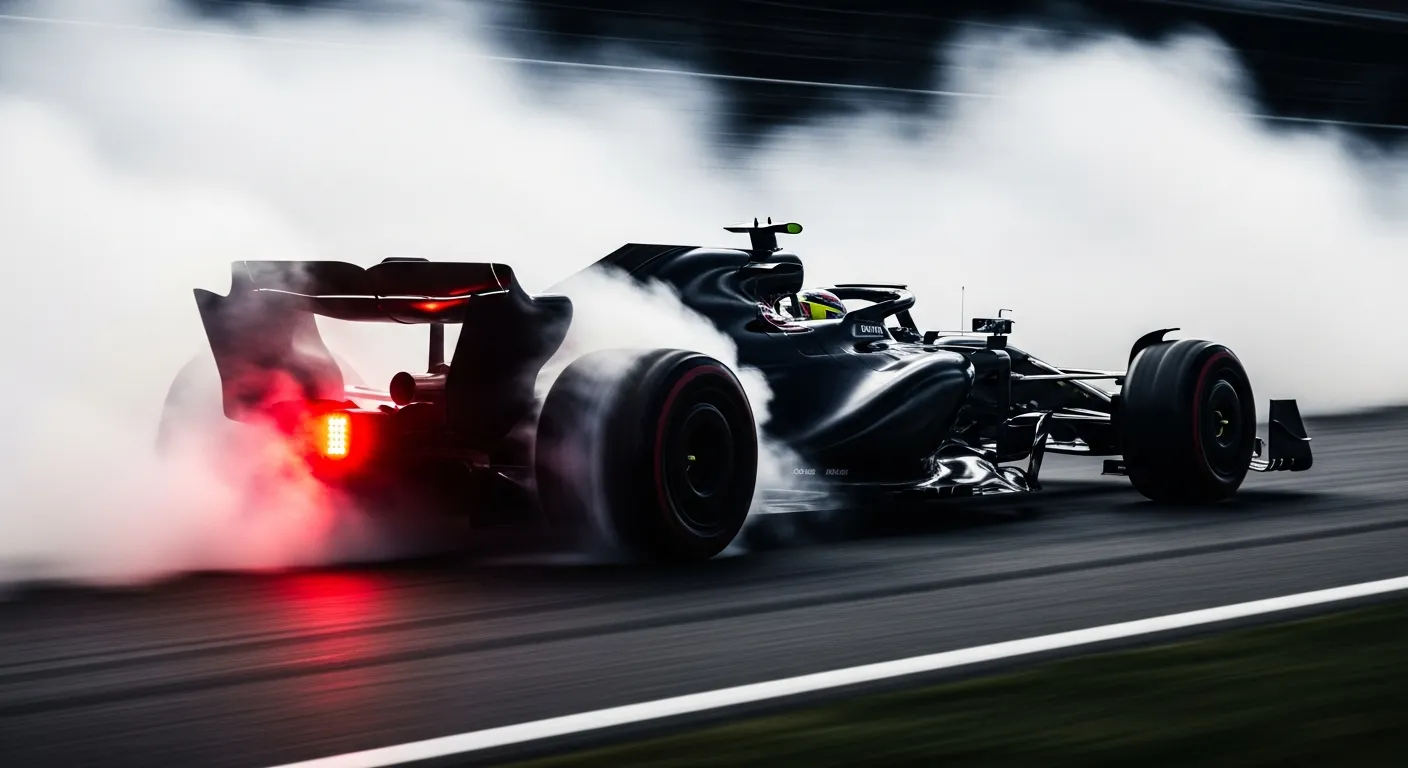
Oscar Piastri's performance at the 2025 Mexican Grand Prix saw him convert a seventh-place grid start into a solid fifth-place finish, securing 10 points for McLaren Racing. The Autódromo Hermanos Rodríguez, known for its high-altitude challenges and demanding energy management, presented a complex environment where precision and tire strategy were paramount. Piastri completed all 71 laps of the race, posting a total time of "1:38:40.639". His race pace was consistently strong, particularly evident on lap 53, where he recorded a "1:20.422" lap time, placing him third overall in the fastest lap rankings for the event, just behind George Russell's fastest lap of "1:20.052". This robust showing contributed significantly to McLaren's overall success, as his teammate Lando Norris secured the victory from pole position, underscoring the team's potent package at this venue. The McLaren team's strategic execution and the MCL39's setup clearly suited the unique characteristics of the Mexico City circuit, allowing both drivers to extract maximum performance. Piastri's ability to climb two positions from his starting grid slot demonstrates effective race management and consistent pace throughout the Grand Prix. The overall [Formula 1 season](https://www.formula1.com/en) often sees such strategic gains make a critical difference in the constructors' championship standings. For more on the sport's structure, the [Wikipedia page on Formula One](https://en.wikipedia.org/wiki/Formula_One) offers a comprehensive overview.
The race unfolded with intense battles across the midfield, and Piastri navigated these challenges adeptly to maintain a strong points-scoring position. His consistent lap times, including that notable third-ranked fastest lap, underscore his competitive edge, especially in the latter stages of the race. While his teammate was at the front of the field, Piastri's role in securing a double-points finish for McLaren was crucial for their championship aspirations, adding valuable points in this round of the [FIA Formula One World Championship](https://www.fia.com/events/fia-formula-one-world-championship). Looking at historical performances at high-altitude tracks, consistent pace and reliability are key, a lesson perhaps learned from races like [Max Verstappen at the 2021 Belgian Grand Prix](/results/2021-spa-francorchamps-max-verstappen), where adverse conditions can rapidly change race dynamics and demand adaptability. Future season data, such as that available for the [2026 season](https://api.jolpi.ca/ergast/f1/2026.json), often builds upon insights from current performances. Piastri's drive kept him ahead of key rivals like Kimi Antonelli and George Russell, who finished sixth and seventh respectively, despite Russell achieving the fastest lap of the race. The official [Formula 1 website](https://www.formula1.com/en) provides detailed race reports and analysis. Comparatively, drivers like [Charles Leclerc at the 2021 Belgian Grand Prix](/results/2021-spa-francorchamps-charles-leclerc) also faced challenging conditions that year, highlighting the variability of F1 events. Another example of a driver managing a complex race situation and extracting performance is [George Russell at the 2021 Belgian Grand Prix](/results/2021-spa-francorchamps-george-russell). The McLaren team's operational efficiency was also on display, ensuring Piastri could execute his strategy without significant issues, culminating in a valuable 10-point haul. This performance indicates a sustained competitive level from the Australian driver and the McLaren outfit, a testament to their continuous development efforts as covered by the [FIA's technical regulations](https://www.fia.com/events/fia-formula-one-world-championship).
Verified race record · Ergast
Grid
P7
Finish
P5
Points
10
Laps
71
Constructor
McLaren Racing
Status
Finished
Teammate that weekend
Lando Norris
Grid P1 · Finish P1 · 25 pts
Championship · before vs after
Before round 20
P1346 pts
After round 20
P2356 pts