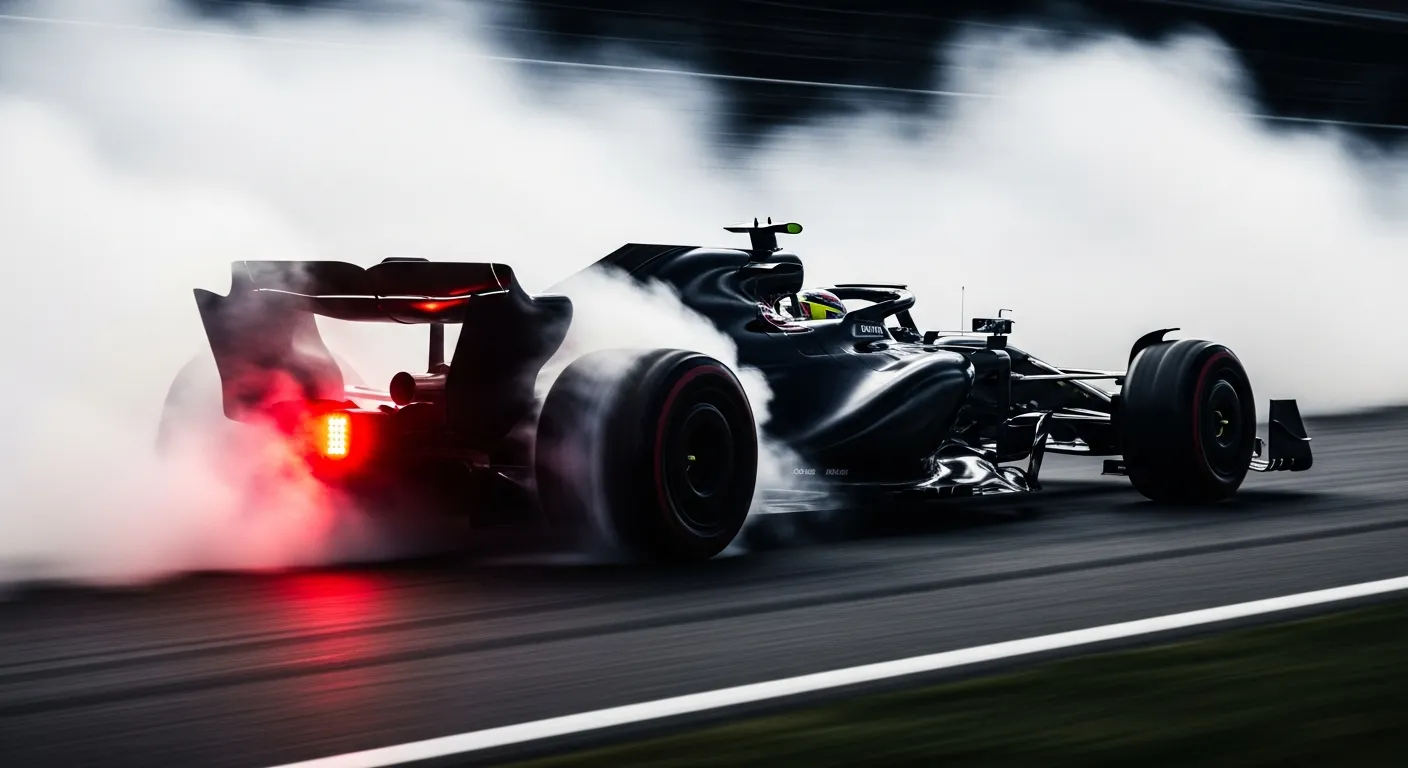
Yuki Tsunoda’s drive at the 2025 Miami Grand Prix saw him convert a qualifying effort into a consistent race finish, securing a crucial point for Red Bull Racing. Starting from 10th on the grid, the Japanese driver navigated the 57-lap event at the [Miami International Autodrome](https://en.wikipedia.org/wiki/Miami_International_Autodrome) to cross the finish line in the same position, recording a total race time of 1:30:06.021. This performance, while not a dramatic charge through the field, demonstrated a disciplined approach to race management and tire preservation, a critical aspect of modern [Formula 1](https://www.formula1.com/en) competition. His ability to maintain position from lights out to the checkered flag, especially on a circuit that can be unforgiving, underscores a measured approach to race strategy. The single point gained is a testament to the consistent effort required to compete at the pinnacle of motorsport within the [FIA Formula One World Championship](https://www.fia.com/events/fia-formula-one-world-championship).
The race unfolded with McLaren's Oscar Piastri taking the win, a notable performance that set a high bar for the field. Tsunoda's Red Bull teammate, Max Verstappen, who started from pole position, ultimately finished 4th, highlighting the competitive challenges Red Bull faced in Miami. Verstappen's fastest lap, a 1:30.466 on lap 41, ranked 5th overall, while Tsunoda's best effort came on lap 55 with a 1:30.964, placing him 10th in the fastest lap rankings. This delta underscores the differing race trajectories within the same constructor, with Verstappen often pushing the absolute limit of the car. For Tsunoda, the objective was clearly to consolidate a points finish, a strategy that often differs from a front-runner's approach in [Formula One](https://en.wikipedia.org/wiki/Formula_One) racing.
Maintaining a top-ten position from start to finish on a circuit known for its challenging sequences and potential for incidents, such as the collision that forced [Liam Lawson](/results/2025-miami-liam-lawson) out of the race after 36 laps, requires a blend of pace and precision. Tsunoda's ability to keep pace with the midfield pack, fending off challenges and managing his tires across the full race distance, was key to his result. His performance can be contrasted with drivers like [Carlos Sainz](/results/2020-bahrain-carlos-sainz), who often excels at converting challenging grid slots into points, or even [Alexander Albon](/results/2020-bahrain-alex-albon), who managed to climb from 7th to 5th in this very race for Williams, demonstrating the varying degrees of success in midfield battles. The granular data from events like this, including fastest lap ranks and sector times, provides a comprehensive view for analysts reviewing [2026 season data](https://api.jolpi.ca/ergast/f1/2026.json) and beyond. While a single point might appear modest, in the tightly contested [constructors' championship](https://www.formula1.com/en/championship/constructors.html), every contribution is significant. The strategic decisions made by Red Bull Racing, from tire choices to pit stop timings, played a role in Tsunoda's ability to hold his ground and secure his position. This race offered a clear illustration of how varied team strategies can be, even within the same stable, as evidenced by the contrasting outcomes for Tsunoda and Verstappen.
Verified race record · Ergast
Grid
P10
Finish
P10
Points
1
Laps
57
Constructor
Red Bull Racing
Status
Finished
Teammate that weekend
Max Verstappen
Grid P1 · Finish P4 · 12 pts
Championship · before vs after
Before round 6
P165 pts
After round 6
P119 pts