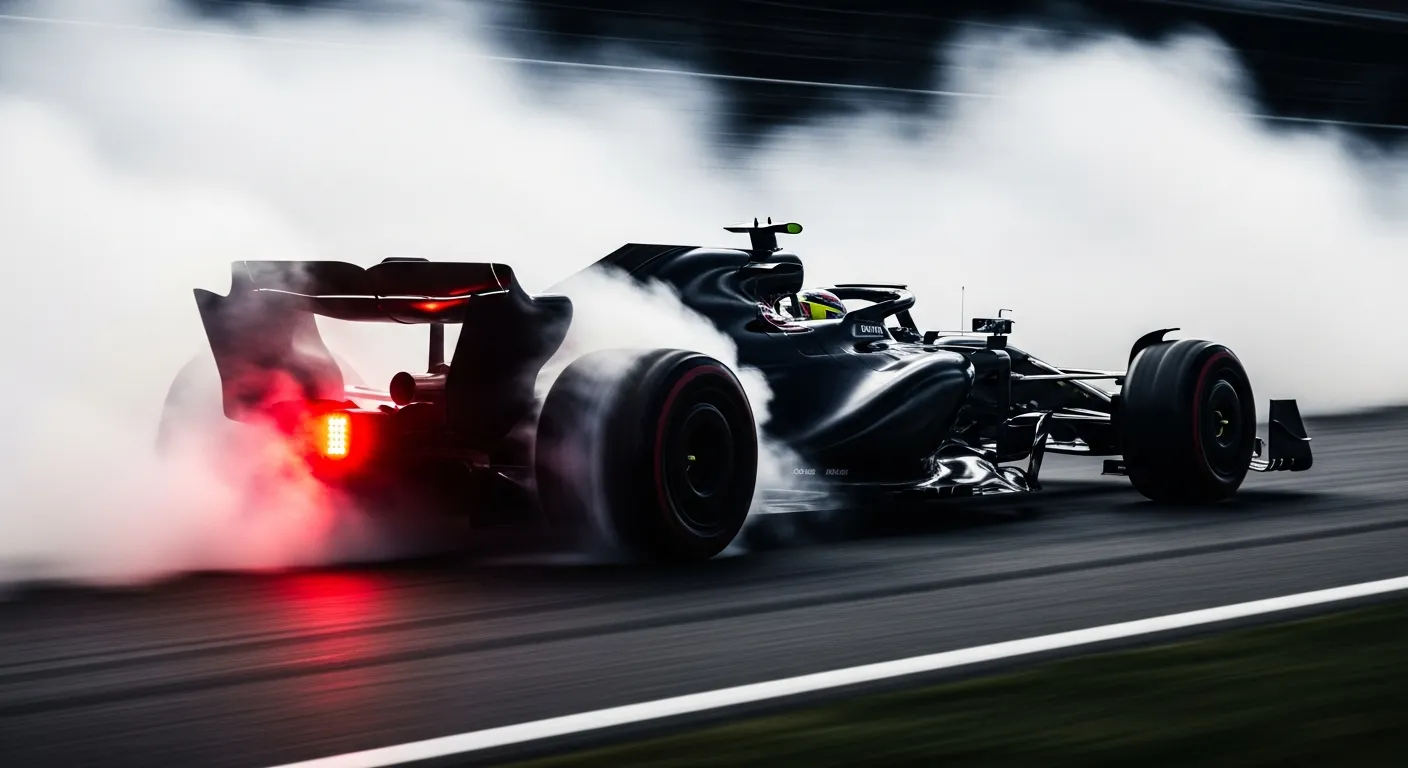
Lance Stroll's 2025 Monaco Grand Prix campaign for Aston Martin culminated in a P15 finish, two laps down, a result that offered no championship points and underlined the inherent difficulties of starting deep in the field on the Circuit de Monaco. Starting from the 19th grid slot, Stroll faced an immediate uphill battle on a track notoriously resistant to overtakes, where track position is paramount. His race saw him complete 76 laps, ultimately crossing the line behind drivers like Alexander Albon and Carlos Sainz Jr., who managed to secure points for Williams despite also being two laps down. The Aston Martin AMR25 struggled to find a competitive rhythm in the principality, a common challenge on this unique street circuit as explored on the [Formula 1 — official site](https://www.formula1.com/en).
While Stroll did manage a fastest lap of 1:14.877 on Lap 69, placing him 11th in the overall fastest lap rankings for the event, this individual pace was not enough to overcome the initial grid disadvantage or the overall performance gap to the front-runners. The team's weekend was further complicated by the retirement of teammate Fernando Alonso, whose race ended prematurely on Lap 36 due to an engine issue. This meant Aston Martin left Monaco without any points, a significant setback in their constructors' championship aspirations. The strategic nuances of racing in Monaco are extensively covered, detailing how critical qualifying is for any driver, particularly when looking at historical race results available via [Jolpica/Ergast — 2026 season data](https://api.jolpi.ca/ergast/f1/2026.json). The challenges faced by Stroll, starting from the back, resonate with the difficulties encountered by [Pierre Gasly at the 2023 Miami Grand Prix](/results/2023-miami-pierre-gasly) on another demanding street circuit.
Navigating the tight confines of Monte Carlo requires precision and a car that can deliver consistent performance through its numerous low-speed corners. Stroll's ability to maintain position and complete the race, albeit two laps adrift, demonstrated resilience given the car's starting performance. The [FIA — F1 World Championship](https://www.fia.com/events/fia-formula-one-world-championship) regulations emphasize the importance of reliability, a factor that proved costly for Alonso's Aston Martin. For a deeper understanding of the sport's history and technical evolution, the [Wikipedia: Formula One](https://en.wikipedia.org/wiki/Formula_One) page offers valuable context on how circuits like Monaco shape championship narratives. The data from Monaco will be crucial for Aston Martin as they analyze their package for upcoming rounds on the [Formula 1 — official site](https://www.formula1.com/en) official F1 season calendar. The contrast between Stroll's finish and Alonso's DNF illustrates the fine margins in Formula 1, where even a small issue can lead to a race-ending event. Drivers often reflect on the unique demands of Monaco; for instance, [Oscar Piastri at the 2023 Miami Grand Prix](/results/2023-miami-oscar-piastri) also navigated a street circuit with its own set of demands, highlighting the specific skills required. The detailed breakdown of driver performances and team standings, including the impact of zero-point finishes, can be further examined through comprehensive [Jolpica/Ergast — 2026 season data](https://api.jolpi.ca/ergast/f1/2026.json). While Monaco can sometimes be an outlier in a season's performance trends, it invariably tests a team's fundamental car design and driver skill, often compounding any existing performance deficits. This race for Stroll, much like the experience of [Fernando Alonso at the 2023 Miami Grand Prix](/results/2023-miami-fernando-alonso), underscores the relentless nature of F1 competition.
Verified race record · Ergast
Grid
P19
Finish
P15
Points
0
Laps
76
Constructor
Aston Martin
Status
+2 Laps
Teammate that weekend
Fernando Alonso
Grid P6 · Engine · 0 pts
Championship · before vs after
Before round 8
P1014 pts
After round 8
P1114 pts