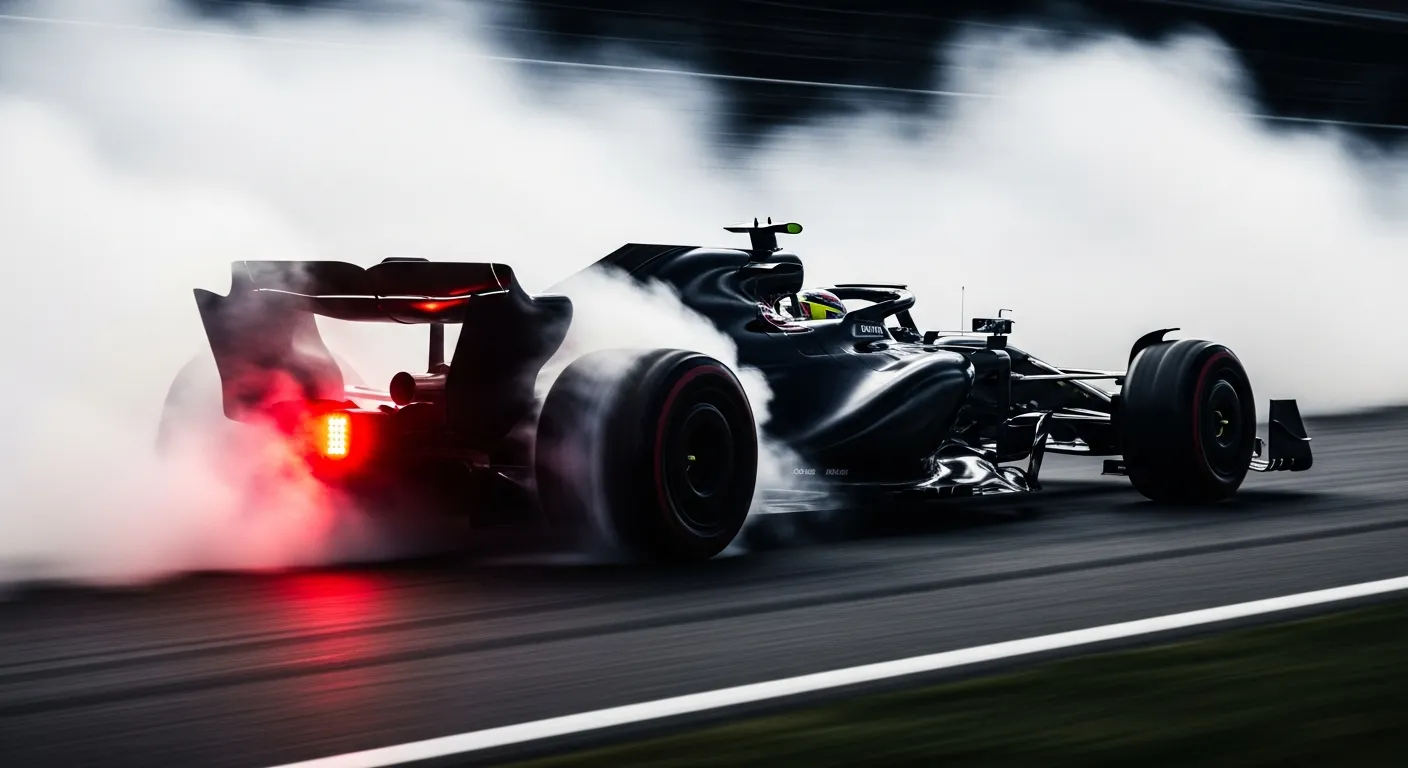
George Russell's drive at the 2025 Italian Grand Prix was a methodical execution of pace and strategy, converting a fifth-place grid start into an identical finishing position and securing valuable points for Mercedes AMG F1 at the Autodromo Nazionale Monza. From the outset, Russell positioned his W16 effectively, navigating the high-speed circuit that demands precision and power. The race saw Max Verstappen claim victory for Red Bull, followed by the McLaren duo of Lando Norris and Oscar Piastri, with Charles Leclerc of Ferrari taking fourth. Russell's ability to hold his ground amidst this competitive front-running pack underscored the Mercedes team's consistent performance at this round. The [Formula 1 official site](https://www.formula1.com/en) provides a comprehensive overview of the race weekend's dynamics, highlighting the intense battles throughout the field. His consistent lap times, particularly a notable 1:21.800 on lap 45, placed him eighth in the fastest lap rankings, demonstrating the car's potential when pushed.
The strategic calls from the Mercedes pit wall were crucial in maintaining Russell's position. While his teammate, Kimi Antonelli, started just behind him in sixth and finished ninth, Russell managed to keep a gap to the Ferrari of Lewis Hamilton, who finished sixth after starting tenth. This performance at Monza, a track known for its unique demands on engine and aerodynamic efficiency, is a testament to the engineering efforts at Mercedes AMG F1, a constructor with a rich history in the sport as detailed on [Wikipedia: Formula One](https://en.wikipedia.org/wiki/Formula_One). The team's capacity to extract performance, especially through critical phases of the race, allowed Russell to complete all 53 laps in a total time of 1:13:57.206, securing 10 points. For comparison, drivers like [Oliver Bearman at the 2026 Canadian Grand Prix](/results/2026-montreal-oliver-bearman) also face the challenge of converting strong qualifying into race day results, emphasizing the fine margins in F1.
These 10 points were vital, solidifying Russell's fourth position in the Drivers' Championship standings, a position he held both before and after the Italian Grand Prix. The data from the 2025 season, available through sources like [Jolpica/Ergast — 2026 season data](https://api.jolpi.ca/ergast/f1/2026.json), illustrates the tight competition at the sharp end of the grid. Russell’s consistent points haul is a key factor in Mercedes’ constructors’ championship campaign, where every point is contested fiercely. The FIA's oversight of the [F1 World Championship](https://www.fia.com/events/fia-formula-one-world-championship) ensures a level playing field, but individual driver performance remains paramount. Drivers such as [Alexander Albon at the 2026 Canadian Grand Prix](/results/2026-montreal-alex-albon), who finished seventh in this race, often demonstrate the strategic depth required to maximize points from various grid positions. Similarly, the challenges faced by [Carlos Sainz at the 2026 Canadian Grand Prix](/results/2026-montreal-carlos-sainz) in other races highlight the constant pressure to perform. The detailed race results, including individual lap times and sector analyses, often reveal the subtle differences in strategy and execution that define a strong finish in Formula 1, as further explored on the [Formula 1 official site](https://www.formula1.com/en). The full breakdown of all race results, including those from the 2025 season, can be accessed via various [F1 data archives](https://api.jolpi.ca/ergast/f1/2026.json) for deeper analysis.
Verified race record · Ergast
Grid
P5
Finish
P5
Points
10
Laps
53
Constructor
Mercedes AMG F1
Status
Finished
Teammate that weekend
Kimi Antonelli
Grid P6 · Finish P9 · 2 pts
Championship · before vs after
Before round 16
P4184 pts
After round 16
P4194 pts