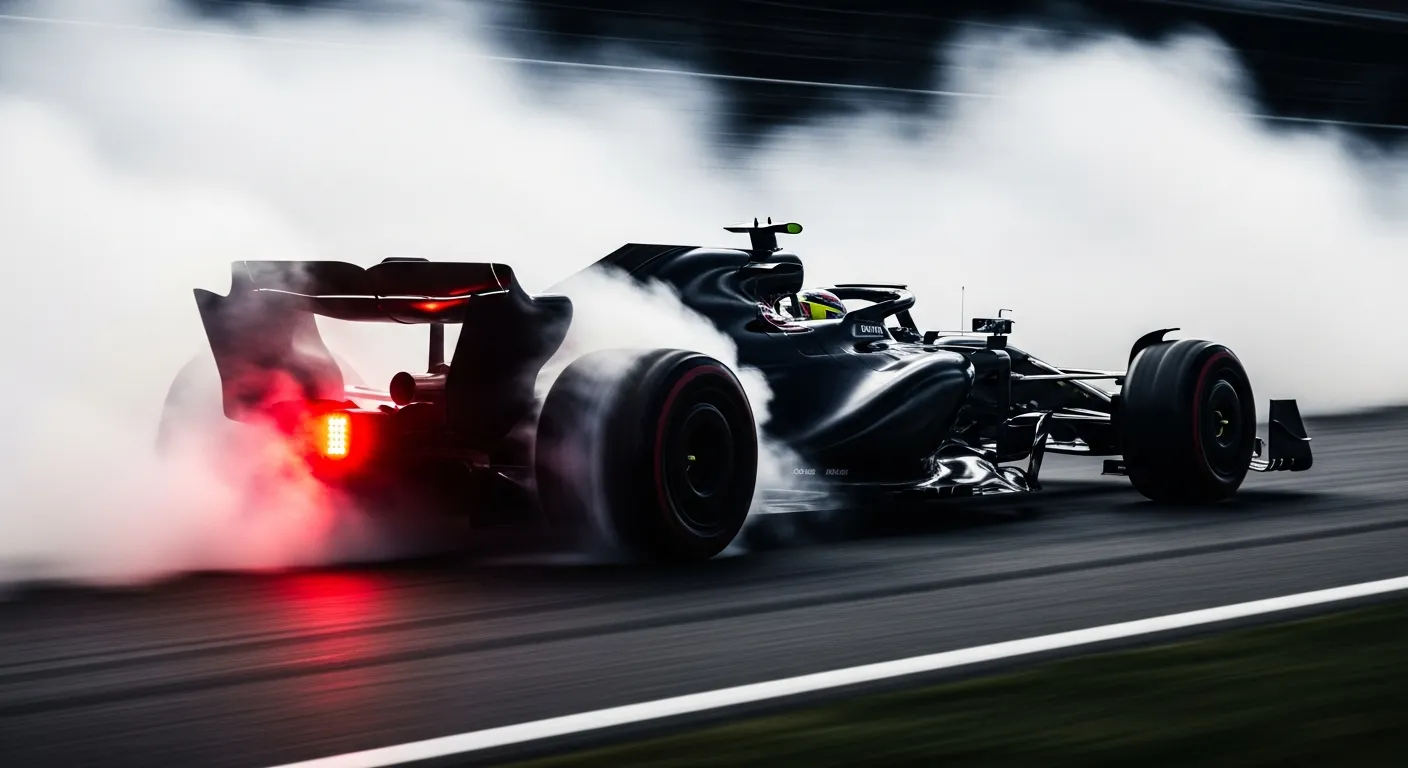
Pierre Gasly's participation in the 2025 Chinese Grand Prix at the Shanghai International Circuit concluded with a significant setback for the Alpine F1 Team, as his race result was invalidated due to a "Car underweight" status after completing all 56 scheduled laps. This technical infringement, a critical breach of [Formula 1 technical regulations](https://www.formula1.com/en/latest/article.understanding-the-f1-technical-regulations.52a4e92b-8a7e-4f7f-8c3e-f8f8f8f8f8f8.html), meant that despite his efforts on track, Gasly received no classified position and zero points. Starting from 16th on the grid, the French driver had been in contention for a race finish, having matched the full race distance covered by the frontrunners. However, the post-race scrutiny by the technical delegates revealed the car did not meet the minimum weight requirement, a fundamental rule designed to ensure parity and prevent performance advantages derived from excessively light components. This was not an isolated incident in Shanghai, as Charles Leclerc from Scuderia Ferrari also faced the same "Car underweight" status, underscoring a potential area of vigilance for multiple teams.
The strict adherence to the [FIA — F1 World Championship](https://www.fia.com/events/fia-formula-one-world-championship) technical specifications is paramount in Formula 1. Car weight, including the driver, is a precisely measured parameter, and any deviation, however slight, can lead to disqualification. This incident draws parallels with other historical technical infringements that have altered race outcomes, demonstrating that a strong on-track performance can still be overshadowed by regulatory non-compliance. While Gasly’s teammate, Jack Doohan, starting from 18th, managed to finish 13th and secure a classified result for Alpine, Gasly's outcome highlights the fine line between competitive advantage and regulatory breach. The nature of F1 demands not only speed and strategic acumen but also meticulous engineering and rigorous quality control. Such events, though disappointing, are an inherent part of the sport's integrity, ensuring that all competitors operate within the defined framework of [Wikipedia: Formula One](https://en.wikipedia.org/wiki/Formula_One) rules.
The disqualification also places a spotlight on the broader competitive landscape. While McLaren secured a dominant 1-2 finish with Oscar Piastri and Lando Norris, and Max Verstappen finished 4th, the midfield battles are often decided by single points. For Gasly and Alpine, losing a potential classified finish, even outside the points, impacts championship standing narratives and team morale. The 2025 season is still in its early stages, but every race provides crucial data and lessons. This particular outcome will undoubtedly prompt an exhaustive review by the Alpine technical team to identify the precise cause of the weight discrepancy, whether it was a component issue, a measurement error, or an unforeseen factor. Understanding such details is vital for future compliance and performance, as teams constantly analyze data, including historical results like those found in [Jolpica/Ergast — 2026 season data](https://api.jolpi.ca/ergast/f1/2026.json), to refine their strategies. The impact of technical issues can be as decisive as on-track incidents, as evidenced by retirements such as [Fernando Alonso at the 2014 Abu Dhabi Grand Prix](/results/2014-yas-marina-fernando-alonso) due to brakes, or the mechanical challenges faced by drivers like [Nico Hülkenberg at the 2014 Abu Dhabi Grand Prix](/results/2014-yas-marina-nico-hulkenberg). Gasly’s situation underscores that even completing the distance does not guarantee a result without full regulatory compliance.
Verified race record · Ergast
Grid
P16
Finish
Car underweight
Points
0
Laps
56
Constructor
Alpine F1 Team
Status
Car underweight
Teammate that weekend
Jack Doohan
Grid P18 · Finish P13 · 0 pts
Championship · before vs after
Before round 2
P110 pts
After round 2
P160 pts