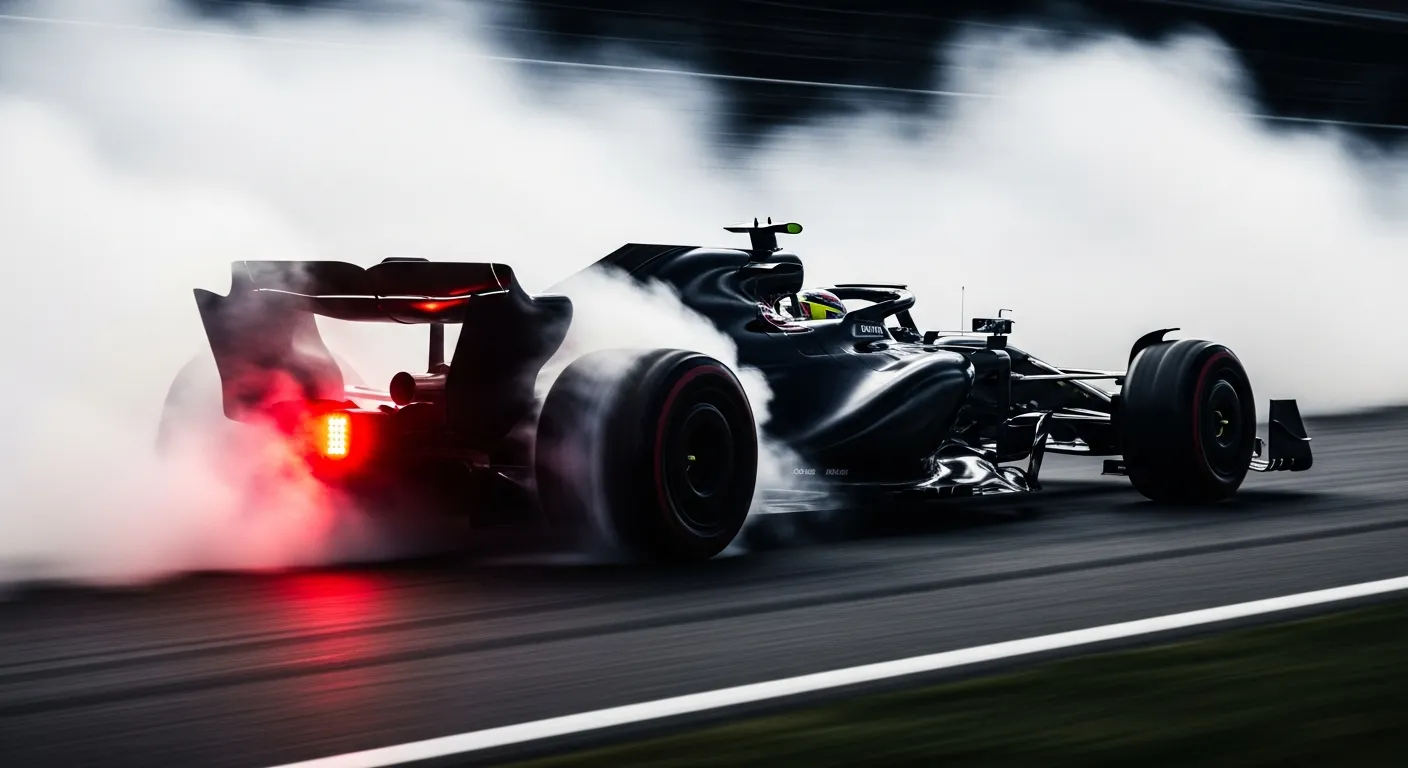
George Russell's performance at the 2026 Australian Grand Prix was a meticulously executed masterclass, converting pole position into a commanding victory and setting a definitive early marker for the Mercedes AMG F1 team. Starting from grid position 1, Russell maintained a controlled pace throughout the 58 laps of the Melbourne Grand Prix Circuit, ultimately crossing the finish line in position 1. This flawless execution was underscored by his teammate Kimi Antonelli securing second place, delivering a powerful 1-2 finish for the German constructor. Russell's ability to manage the race from the front, avoiding the pitfalls that have plagued other front-runners in the past, such as [Max Verstappen's DNF from the lead at the 2021 Azerbaijan Grand Prix](/results/2021-baku-max-verstappen), highlights a significant early advantage. For a broader overview of the season's start, the [Formula 1 — official site](https://www.formula1.com/en) provides comprehensive coverage.
Russell completed the race in 1:23:06.801, a testament to the Mercedes AMG F1 car's pace and reliability from the outset of the 2026 season. While his fastest lap of 1:22.670 on lap 21 ranked sixth overall, the objective was clearly to manage the race rather than chase individual lap records, a strategy that paid off handsomely with 25 points. This contrasts with drivers like [Charles Leclerc, who secured a consistent P4 at the 2021 Azerbaijan Grand Prix](/results/2021-baku-charles-leclerc) through careful management. The detailed results for this race and the entire 2026 season can be explored via [Jolpica/Ergast — 2026 season data](https://api.jolpi.ca/ergast/f1/2026.json). The strong start positions Mercedes AMG F1 favorably in the early [FIA — F1 World Championship](https://www.fia.com/events/fia-formula-one-world-championship) standings, a crucial factor in the long championship battle.
The Mercedes AMG F1 team's performance, particularly the dominant 1-2, signals a formidable package for the new regulations. Russell's victory ensures he leads the Drivers' Championship, a position he will aim to consolidate in subsequent rounds. The stability and consistency demonstrated in Melbourne are vital, especially when considering the challenges other teams faced, including Max Verstappen's recovery from grid 20 to finish P6, and several retirements across the field. This early success is a strong indicator of intent, reminiscent of teams that have historically capitalized on new regulation cycles, as documented on [Wikipedia: Formula One](https://en.wikipedia.org/wiki/Formula_One). Maintaining this momentum will be key, much like how drivers aim for consistent points finishes throughout a season, a goal achieved by [Lando Norris, who finished P5 at the 2021 Azerbaijan Grand Prix](/results/2021-baku-lando-norris). Further insights into driver and team performances are available on the [Formula 1 — official site](https://www.formula1.com/en), and the sporting regulations governing such events are detailed by the [FIA — F1 World Championship](https://www.fia.com/events/fia-formula-one-world-championship).
Verified race record · Ergast
Grid
P1
Finish
P1
Points
25
Laps
58
Constructor
Mercedes AMG F1
Status
Finished
Teammate that weekend
Kimi Antonelli
Grid P2 · Finish P2 · 18 pts
Championship · before vs after
Before round 1
P10 pts
After round 1
P125 pts