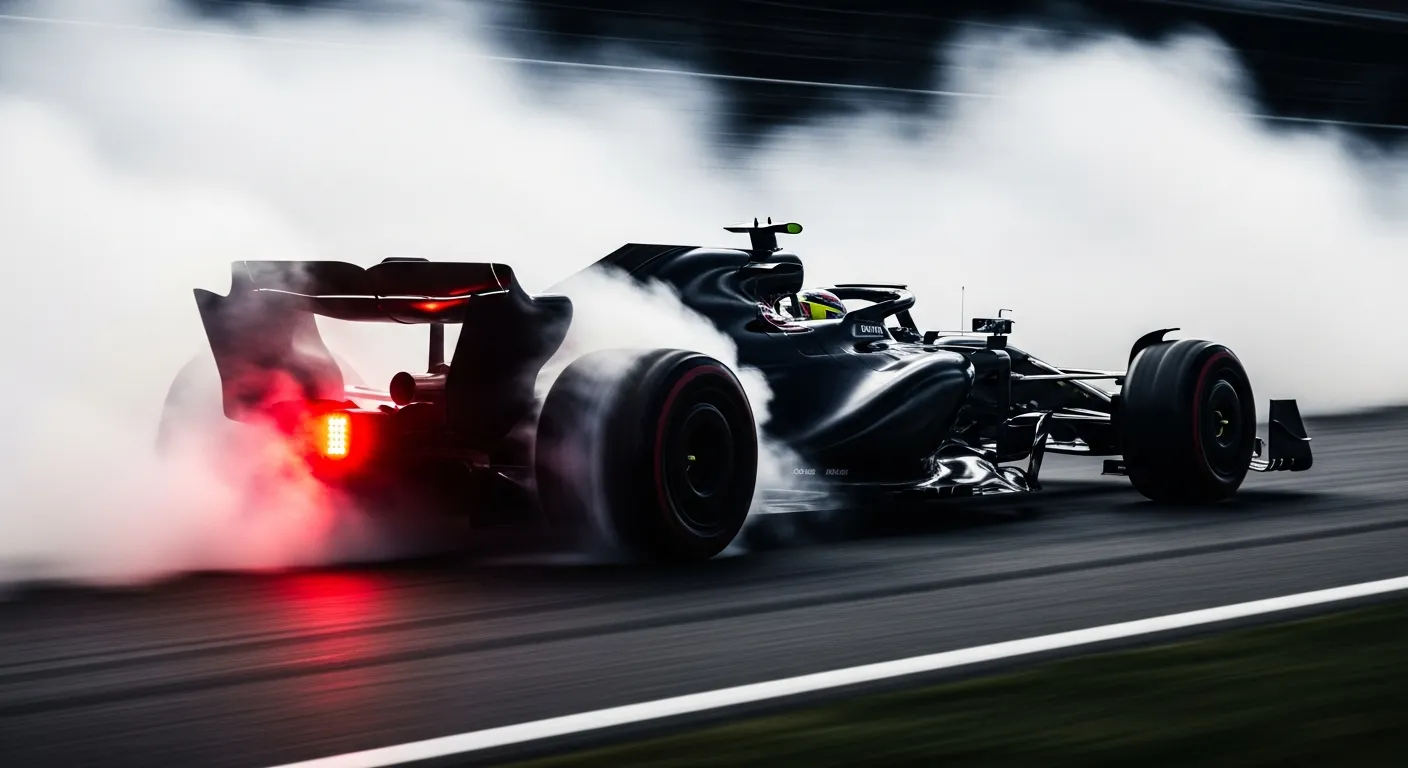
George Russell's 2026 Japanese Grand Prix at the iconic [Suzuka Circuit](https://en.wikipedia.org/wiki/Formula_One) was a study in strategic compromise, seeing him convert a front-row start from second on the grid into a fourth-place finish. While his Mercedes AMG F1 teammate, Kimi Antonelli, clinched victory from pole position, Russell navigated the 53 laps to secure 12 valuable points, contributing significantly to the constructor's strong showing. The race saw Russell maintain a competitive pace throughout, clocking his fastest lap, a 1:32.549, on the very final lap, marking the second-quickest individual lap of the entire event, as detailed in the comprehensive [2026 season data](https://api.jolpi.ca/ergast/f1/2026.json). This performance, while not a podium, underscored the team's overall package, even as the British driver found himself trailing Oscar Piastri's McLaren and Charles Leclerc's Ferrari by the checkered flag, finishing with a total race time of 1:28:19.157. The initial phase saw Russell holding his position well, but the mid-race strategy calls and pit stop cycles ultimately shuffled the order, placing him just outside the top three contenders.
The dynamics of the race at Suzuka highlighted the intense intra-team battle at Mercedes AMG F1, a scenario not unfamiliar in Formula 1's history, reminiscent of the competitive pressures seen with [Max Verstappen at the 2020 Mexico City Grand Prix](/results/2020-mexico-city-max-verstappen) navigating a challenging grid. Russell's drive, though yielding a solid points haul, meant a slight dip in his championship standing, moving from first to second overall in the [FIA Formula One World Championship](https://www.fia.com/events/fia-formula-one-world-championship). The race was a testament to the fine margins at the top of the sport, where a strong qualifying can set the stage, but race day execution and strategic flexibility dictate the final outcome. For a broader understanding of how such results shape the season, consistency is paramount, a lesson often reinforced across the grid, much like [Carlos Sainz at the 2020 United States Grand Prix](/results/2020-cota-carlos-sainz) demonstrated in a different context. Russell completed all 53 laps, a testament to the reliability of his Mercedes AMG F1 car, a crucial factor for any team aiming for a constructor's title, as discussed on the [official Formula 1 site](https://www.formula1.com/en). This stands in contrast to competitors who faced mechanical issues or accidents, such as Lance Stroll's retirement after 30 laps, or Oliver Bearman's accident on lap 20, emphasizing the demanding nature of the [Formula 1 calendar](https://www.formula1.com/en/racing/2026.html). The detailed race results are available via the [official F1 results archive](https://www.formula1.com/en/results.html), offering further insight into the performance metrics across the field. Even drivers like [Alexander Albon at the 2020 United States Grand Prix](/results/2020-cota-alex-albon) have shown how every position gained or lost impacts the broader championship picture.
Verified race record · Ergast
Grid
P2
Finish
P4
Points
12
Laps
53
Constructor
Mercedes AMG F1
Status
Finished
Teammate that weekend
Kimi Antonelli
Grid P1 · Finish P1 · 25 pts
Championship · before vs after
Before round 3
P151 pts
After round 3
P263 pts