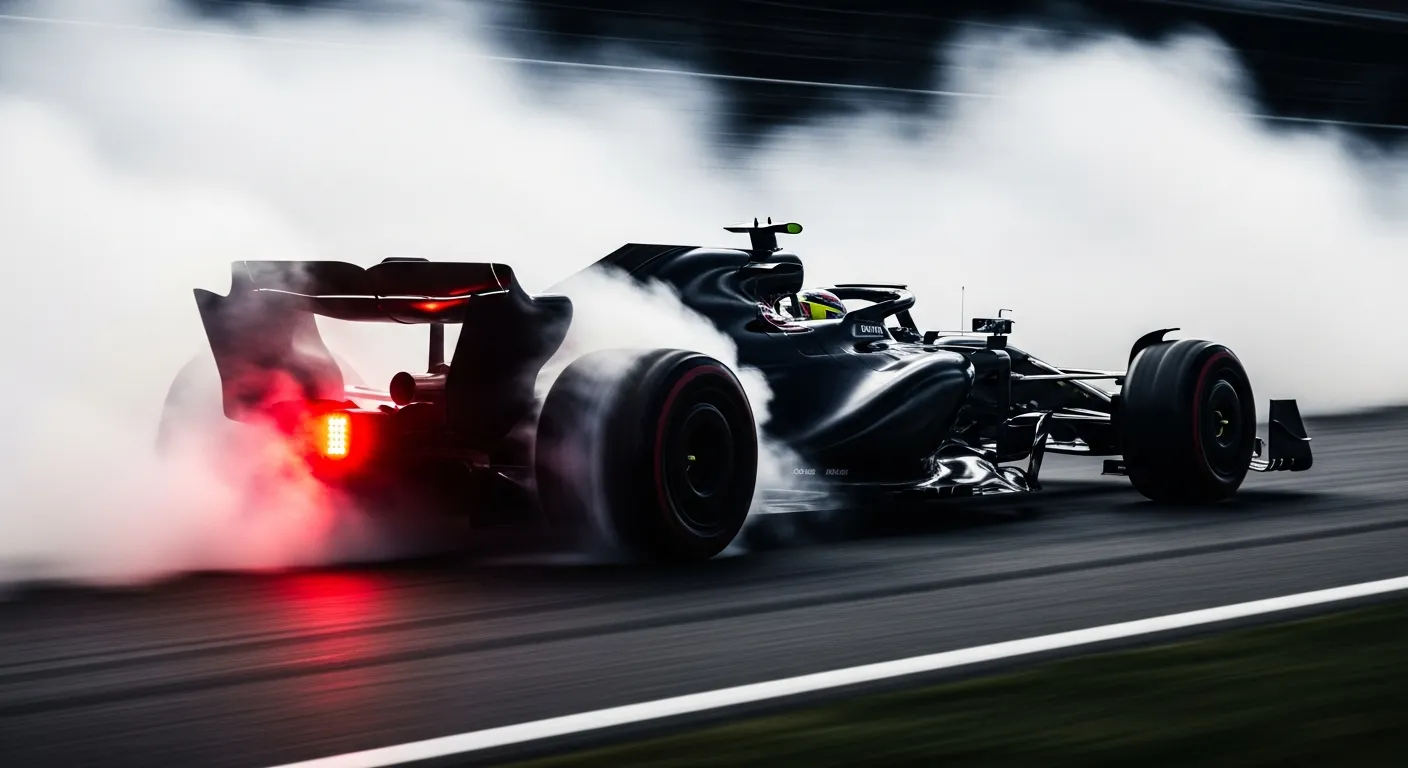
The 2026 Miami Grand Prix proved to be a short and frustrating affair for Liam Lawson, whose race concluded on lap six with a gearbox retirement, marking a significant setback for the Racing Bulls team on a weekend that held promise.
Liam Lawson's outing at the Miami International Autodrome on May 3, 2026, began with a solid eleventh-place grid position, placing his Racing Bulls car on the cusp of the points-scoring positions. Expectations were certainly present for the young New Zealander to contend within the midfield pack. However, the race quickly turned into a test of endurance for the machinery rather than the driver. After just six laps of the demanding circuit, Lawson was forced to retire due to a critical gearbox failure. This premature end meant he recorded zero points for the event, a disappointing outcome given his starting position and the team's ambitions. During his brief stint on track, Lawson managed to set a fastest lap of 1:34.814 on lap three, which ranked 18th overall among all competitors. While this time offered a snapshot of the car's potential early in the race, the mechanical issue overshadowed any performance insights. Such early retirements are a stark reminder of the fine margins in Formula 1, where even a strong qualifying effort can be undone by unforeseen technical problems. This mirrors instances where mechanical reliability has impacted other drivers, such as [Charles Leclerc at the 2018 Belgian Grand Prix](/results/2018-spa-francorchamps-charles-leclerc), who also faced an early exit, albeit from a collision.
The DNF status for Lawson meant a missed opportunity to contribute to the constructors' championship for Racing Bulls, especially as his teammate, Arvid Lindblad, navigated his way to a 14th-place finish, completing 56 laps. Lindblad's fastest lap, a 1:34.058 on lap 30, was notably quicker than Lawson's early effort, suggesting that the Racing Bulls package had more pace to offer over a full race distance. However, Lawson's early exit prevented any direct comparison or strategic interplay between the two cars. The gearbox issue highlights the relentless technical challenges faced by teams throughout a Formula 1 season, where the reliability of components is as crucial as outright speed. This mechanical failure echoes the frustrations of other drivers facing early exits due to incidents, such as [Pierre Gasly at the 2018 Belgian Grand Prix](/results/2018-spa-francorchamps-pierre-gasly), who also saw his race cut short. For a detailed breakdown of all results and technical specifications, the [Jolpica/Ergast 2026 season data](https://api.jolpi.ca/ergast/f1/2026.json) offers comprehensive insights into the performance metrics of each team and driver. Understanding the intricate design and operational parameters of these vehicles is paramount, a subject extensively covered on the [Wikipedia: Formula One](https://en.wikipedia.org/wiki/Formula_One) page. This outcome in Miami serves as a point of analysis for the Italian outfit, as they will undoubtedly scrutinize the data to prevent similar occurrences in future rounds of the [Formula 1 World Championship](https://www.formula1.com/en). The goal will be to ensure both drivers can maximize their track time and convert promising grid positions into tangible points, a task that requires both driver skill and robust engineering, much like how [Lance Stroll at the 2018 Belgian Grand Prix](/results/2018-spa-francorchamps-lance-stroll) managed to secure a points finish despite a challenging starting position.
Verified race record · Ergast
Grid
P11
Finish
Gearbox
Points
0
Laps
6
Constructor
Racing Bulls
Status
Gearbox
Teammate that weekend
Arvid Lindblad
Grid P16 · Finish P14 · 0 pts
Championship · before vs after
Before round 4
P1010 pts
After round 4
P1010 pts