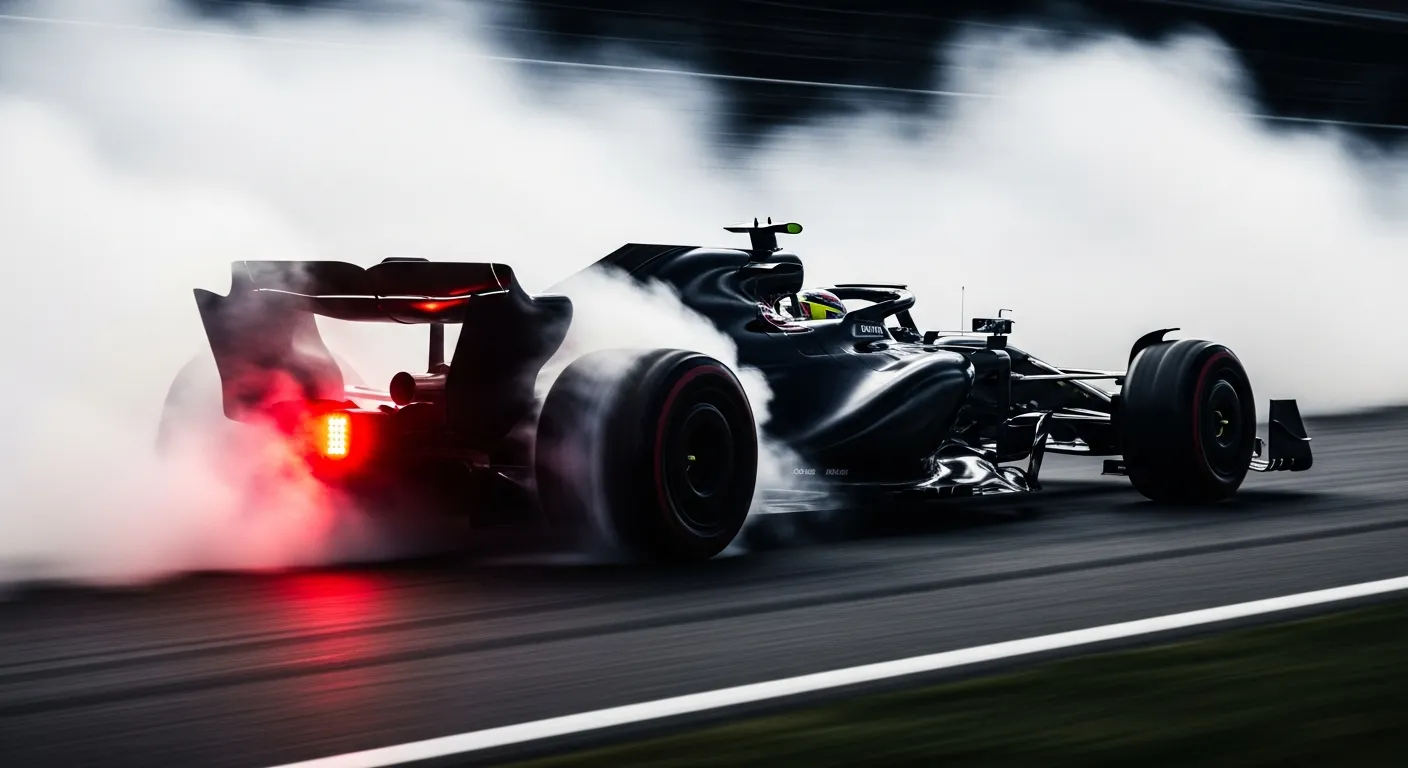
Carlos Sainz's outing at the 2026 Japanese Grand Prix saw the Williams driver work to extract performance from a midfield starting position, ultimately concluding the race one place higher than his grid slot. Starting from 16th on the grid at the iconic Suzuka Circuit, Sainz completed all 53 laps of the race, crossing the finish line in 15th position with a total race time of 1:29:08.411. This result, while an improvement on his starting grid, did not yield any championship points for the Spanish driver, leaving his season tally at 2 points. The race itself was won by Kimi Antonelli for Mercedes, highlighting the significant performance gap to the front of the [Formula 1 — official site](https://www.formula1.com/en) field.
The Williams Grand Prix Engineering team faced a challenging weekend, as evidenced by the performance of both its drivers. While Sainz managed to gain a position, his teammate Alexander Albon, who started 17th, finished further back in 20th, two laps down. This contrast in race progression, despite similar starting positions, warrants closer examination. Interestingly, Albon recorded a significantly faster individual lap time of 1:33.427 on lap 53, ranking 7th overall among all competitors, compared to Sainz's best of 1:34.514 on lap 38, which placed him 17th in the fastest lap standings. This disparity in fastest lap performance within the same team suggests differing race strategies, tire management approaches, or perhaps specific car characteristics over the course of the Grand Prix. For a broader view of the season's data, the [Jolpica/Ergast — 2026 season data](https://api.jolpi.ca/ergast/f1/2026.json) provides detailed statistics for all competitors. The 2026 season, like any other in [FIA — F1 World Championship](https://www.fia.com/events/fia-formula-one-world-championship) history, demands consistent performance across all areas, and Suzuka presented a stern test for the Williams chassis. Fans might recall similar challenges faced by drivers at this circuit, such as [Max Verstappen at the 2015 Japanese Grand Prix](/results/2015-suzuka-max-verstappen) or even [Carlos Sainz at the 2015 Japanese Grand Prix](/results/2015-suzuka-carlos-sainz), where grid position often dictated the maximum achievable outcome given the car's inherent pace. The technical demands of Suzuka, known for its high-speed corners and flowing layout, require a finely balanced car and a robust aerodynamic package, factors that Williams appears to have been contending with throughout the weekend. Understanding the intricate details of F1 racing can be further explored on [Wikipedia: Formula One](https://en.wikipedia.org/wiki/Formula_One). The team will undoubtedly be analyzing the telemetry from both cars to understand the nuances of their performance at this demanding venue. The objective for Williams remains to break into the points-scoring positions consistently, a goal that eluded them in Japan. For more on the official standings and race reports, visit the [Formula 1 — official site](https://www.formula1.com/en). The strategic decisions made during the race, particularly regarding tire management and pit stop timings, are crucial at a circuit like Suzuka. The gap to the front-runners, exemplified by the Mercedes victory, underscores the development curve still ahead for Williams. It's a continuous battle for every tenth of a second, a reality that impacts every driver, including [Lewis Hamilton at the 2015 Japanese Grand Prix](/results/2015-suzuka-lewis-hamilton) in his pursuit of championship glory. The team's post-race analysis would focus on optimizing the FW48's setup for upcoming rounds, aiming to translate qualifying pace into stronger Sunday results. The 2026 season is still early, but every race provides critical data for future development and strategic adjustments, particularly for teams striving to climb the constructors' ladder in the [FIA — F1 World Championship](https://www.fia.com/events/fia-formula-one-world-championship).
Verified race record · Ergast
Grid
P16
Finish
P15
Points
0
Laps
53
Constructor
Williams Grand Prix Engineering
Status
Finished
Teammate that weekend
Alexander Albon
Grid P17 · Finish P20 · 0 pts
Championship · before vs after
Before round 3
P132 pts
After round 3
P142 pts