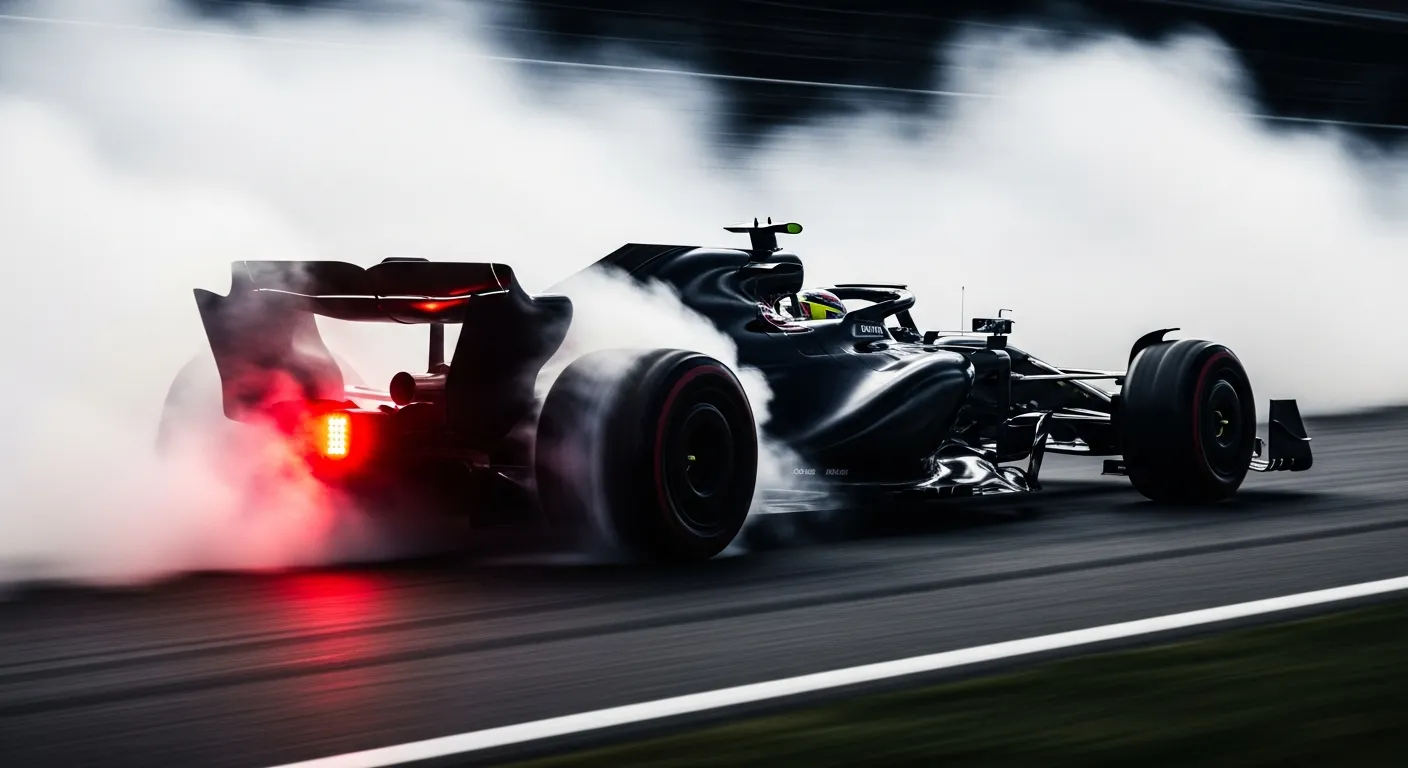
Carlos Sainz's drive at the 2023 Japanese Grand Prix saw him convert a P6 grid start into a P6 finish, a consistent if not spectacular outing for Scuderia Ferrari on a challenging Suzuka Circuit. The Spanish driver completed all 53 laps, recording a total race time of 1:31:48.642. His performance was characterized by maintaining position in a race that saw several incidents and retirements, including his teammate Charles Leclerc finishing P4, two positions ahead. Sainz's fastest lap, a 1:36.187 on lap 40, placed him as the fourth quickest driver on track, indicating a strong pace when the car was in clear air. This ability to extract performance mid-race is a hallmark of top-tier [Formula 1 drivers](https://www.formula1.com/en). The race also saw significant strategic battles, with Sainz holding his ground against competitors like Lewis Hamilton, who finished P5, and George Russell, who took P7. The demands of Suzuka, a circuit known for its high-speed corners and technical sections, often test both driver skill and car reliability, as detailed in the [FIA's F1 World Championship overview](https://www.fia.com/events/fia-formula-one-world-championship). Understanding the technical regulations that govern car design and performance is crucial for teams, as outlined on the [official Formula 1 site](https://www.formula1.com/en).
The P6 finish secured 8 points for Sainz, contributing to Scuderia Ferrari's constructor tally. His race progression, from starting P6 to finishing in the same position, highlights a strategy focused on execution and tire management rather than aggressive overtakes, especially given the competitive field. This measured approach can be contrasted with the varying fortunes seen in other races, such as [Alexander Albon at the 2026 Austrian Grand Prix](/results/2026-red-bull-ring-alex-albon), where different race dynamics played out. The detailed [Jolpica/Ergast F1 data archives](https://api.jolpi.ca/ergast/f1/2026.json) offer a granular view of how lap times evolved throughout the Japanese Grand Prix, illustrating Sainz's consistent pace. Understanding the nuances of race strategy, as discussed in comprehensive [Formula One analyses on Wikipedia](https://en.wikipedia.org/wiki/Formula_One), is key to appreciating these performances. Looking ahead, performances like this lay the groundwork for future races, much like how [Carlos Sainz's performance at the 2026 Austrian Grand Prix](/results/2026-red-bull-ring-carlos-sainz) will be analyzed in its own context. The competitive landscape often forces drivers like Sainz to maximize available performance, a challenge also faced by [Esteban Ocon at the 2026 Austrian Grand Prix](/results/2026-red-bull-ring-esteban-ocon) in his own campaigns. The historical context of the [Suzuka Circuit on Wikipedia](https://en.wikipedia.org/wiki/Suzuka_International_Racing_Course) further emphasizes the demanding nature of this venue.
Verified race record · Ergast
Grid
P6
Finish
P6
Points
8
Laps
53
Constructor
Scuderia Ferrari
Status
Finished
Teammate that weekend
Charles Leclerc
Grid P4 · Finish P4 · 12 pts
Championship · before vs after
Before round 16
P5142 pts
After round 16
P5150 pts