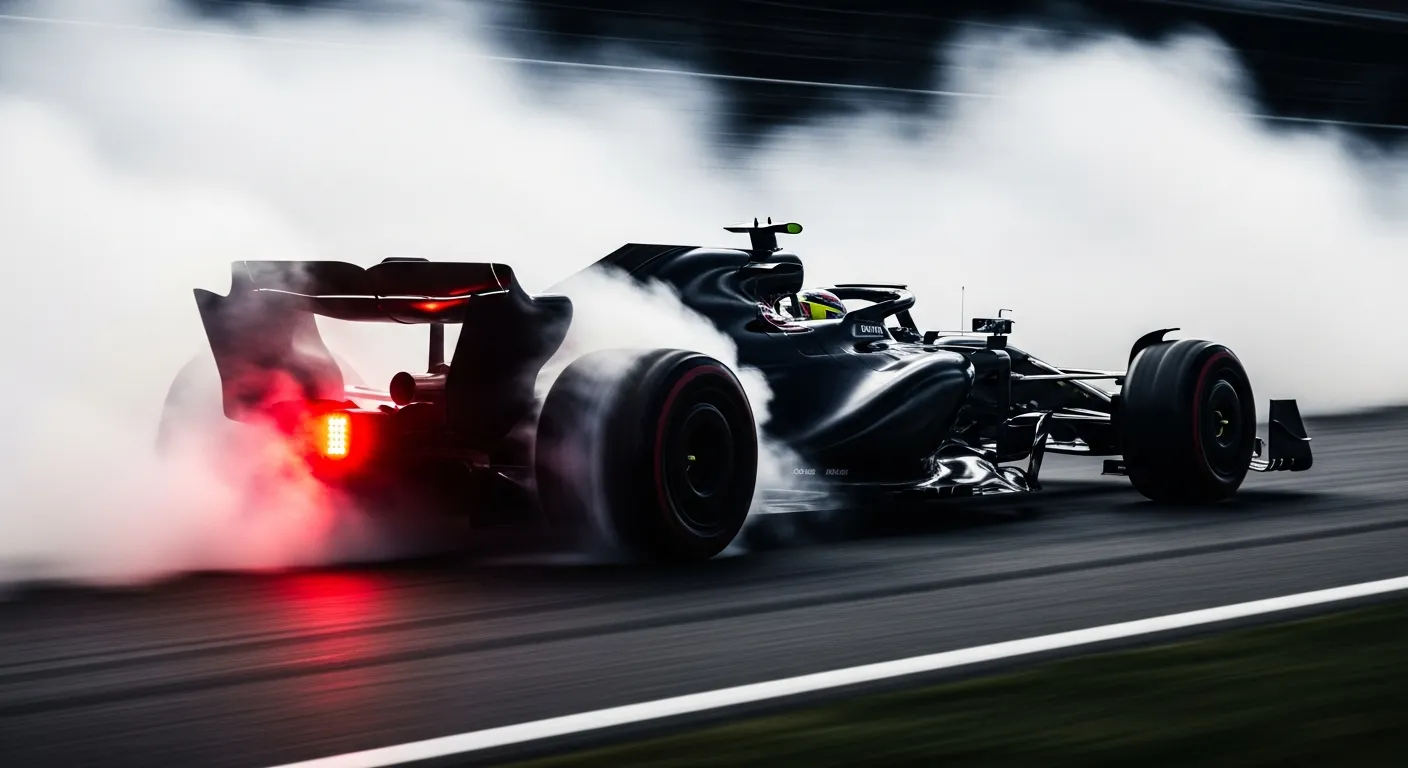
Esteban Ocon's drive at the 2026 Japanese Grand Prix saw him navigate the demanding Suzuka Circuit to secure a solitary championship point for the Haas F1 Team, converting a P12 grid start into a P10 finish. This result, achieved over 53 laps with a total race time of 1:28:54.619, marked a tangible gain for the American constructor in a fiercely competitive field. The race itself was a dynamic affair, with Kimi Antonelli taking the win for Mercedes, setting a high bar for the rest of the grid. Ocon's ability to maintain pace and avoid incident, particularly on a circuit known for its demanding high-speed sections and technical corners, was crucial. His teammate, Oliver Bearman, unfortunately, retired earlier in the race due to an accident on lap 20, underscoring the unforgiving nature of Suzuka and the fine margins separating a points finish from an early exit. This contrast highlighted Ocon's steady hand and the team's operational execution in ensuring his car reached the checkered flag.
Throughout the 53-lap contest, Ocon demonstrated consistent racecraft, managing his tires and strategy effectively to hold off competitors. His fastest lap of 1:34.256, recorded on the final tour, ranked 14th overall, indicating a strong finish and perhaps an ability to extract performance when the fuel load was low. This late-race pace suggests a well-managed strategy and effective tire conservation, allowing him to push when it counted most. Securing a single point from a mid-grid start, while not a podium finish, is a significant achievement for Haas, especially given the competitive depth of the 2026 season. It's a performance that can be contextualized against other mid-pack battles, where strategic decisions and consistent driving are paramount for point-scoring, much like [Carlos Sainz at the 2021 Monaco Grand Prix](/results/2021-monaco-carlos-sainz) demonstrated. For a broader understanding of the season's unfolding narrative and official race reports, the [Formula 1 — official site](https://www.formula1.com/en) provides comprehensive coverage. The point gained here moves Ocon up in the driver standings, a small but significant step in the broader [FIA — F1 World Championship](https://www.fia.com/events/fia-formula-one-world-championship) campaign. The strategic nuances of a Grand Prix, from tire degradation to pit stop timing, are critical elements that define many outcomes, as explored in various analyses of [Wikipedia: Formula One](https://en.wikipedia.org/wiki/Formula_One) race strategies. This result for Ocon contrasts with his performance at events like [Esteban Ocon at the 2021 Monaco Grand Prix](/results/2021-monaco-esteban-ocon), where different circuit characteristics and competitive pressures yielded varied outcomes. Reviewing the granular data for this specific event and other races can be done through resources like the [Jolpica/Ergast — 2026 season data](https://api.jolpi.ca/ergast/f1/2026.json), which offers detailed statistics for every driver. Even drivers like [Alexander Albon at the 2021 Monaco Grand Prix](/results/2021-monaco-alex-albon) have shown how race management can be crucial, even if points are out of reach.
Verified race record · Ergast
Grid
P12
Finish
P10
Points
1
Laps
53
Constructor
Haas F1 Team
Status
Finished
Teammate that weekend
Oliver Bearman
Grid P18 · Accident · 0 pts
Championship · before vs after
Before round 3
P160 pts
After round 3
P151 pts