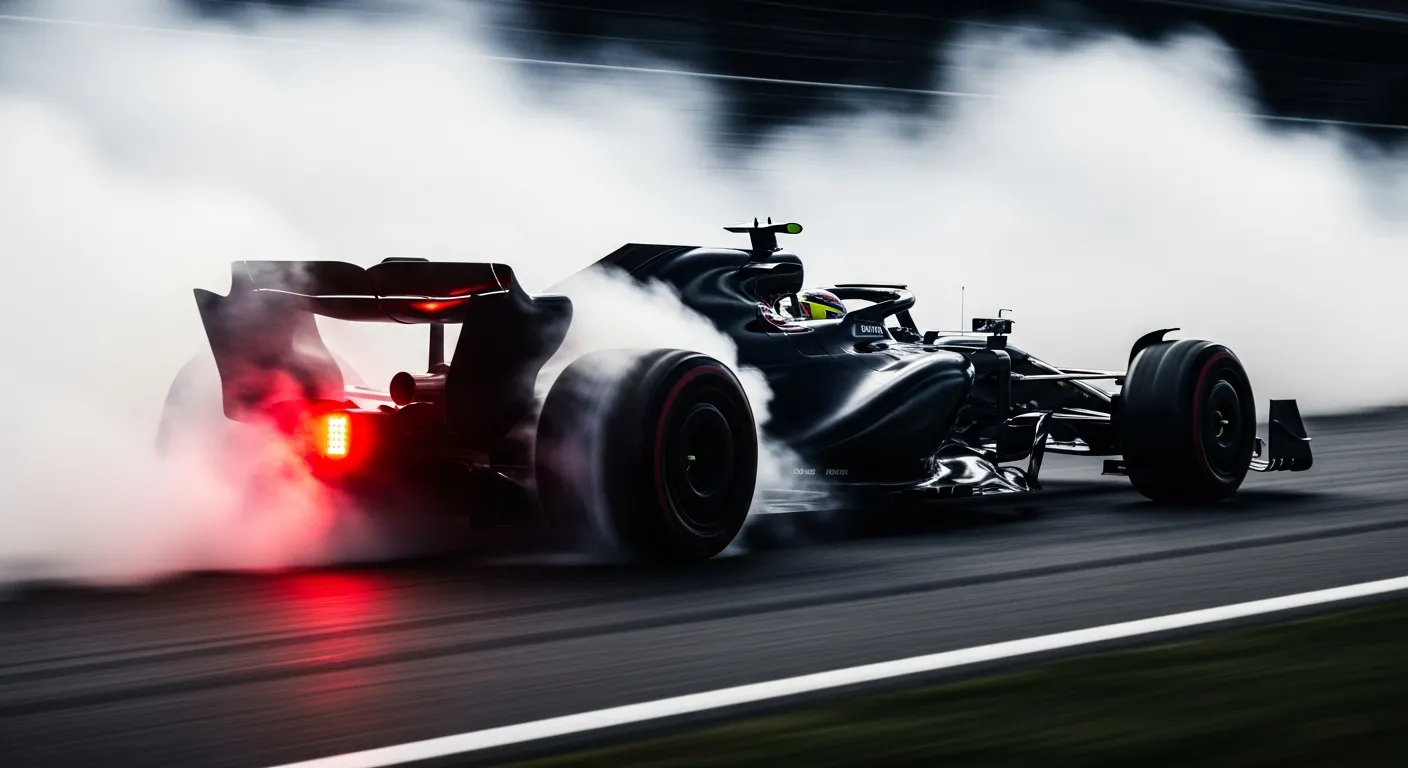
McLaren's performance at the Bahrain International Circuit, a permanent fixture on the Formula 1 calendar, has often served as an early barometer for their season's potential, showcasing the team's evolving car concept against the Sakhir track's unique demands. Across 22 starts, McLaren has secured 5 podium finishes, with a best finish of 1st projected for 2025, accumulating 199 total points. Early in the circuit's history, McLaren demonstrated strong form, securing podiums in 2005, 2006, 2007, and 2010. These results often came when their chassis paired effectively with the power unit to manage the high-traction zones and heavy braking demands of the Sakhir layout. The circuit’s abrasive surface and varied corner speeds require a balanced car, capable of both straight-line speed and strong mechanical grip through its slower sections.
However, the team's fortunes at Bahrain have been inconsistent. The mid-2010s, particularly during challenging periods for the team, saw a significant dip in performance, with finishes often outside the points, such as 17th in 2014 and 11th in 2015. These years highlighted the critical importance of a well-integrated package for success at a circuit that punishes any fundamental car weaknesses. The demands on the power unit are considerable, with long periods of full throttle, making the Mercedes power unit's efficiency and outright grunt a key factor for McLaren. Understanding the intricate relationship between car design and track characteristics is crucial for any team, as detailed by the FIA — F1 World Championship regulations.
More recently, McLaren has shown signs of a resurgence at Sakhir. The 2020 and 2021 seasons saw strong results, with best finishes of 4th in both years, and a double points finish in 2024 (6th and 8th). This upward trend suggests a better alignment between their car concept and the circuit's requirements, particularly in managing tire degradation over a race distance, which is a perennial challenge in Bahrain's desert environment. The team's approach to car development, focusing on aerodynamic efficiency and mechanical stability, is often tested rigorously here. Comparing this to other permanent circuits like the Williams at the Austrian Grand Prix or the Williams at the British Grand Prix reveals how different design philosophies are validated in early season races.
The intriguing projection of a win in 2025, as indicated by the historical data provided by sources like Jolpica/Ergast — 2026 season data, underscores a potential future trajectory for McLaren at this venue. This suggests that ongoing development efforts under Team Principal Andrea Stella are expected to yield significant dividends, potentially leading to a breakthrough performance. The Bahrain Grand Prix, often the season opener, remains a crucial test for McLaren, offering early insights into their competitive standing and the effectiveness of their latest design iterations, much like the high-speed demands seen in the Williams at the Canadian Grand Prix. The team's ability to adapt to the specific conditions of this permanent circuit, from qualifying pace to race strategy, will continue to define their story in Sakhir. For a broader context on the sport, the Formula 1 — official site provides comprehensive information.