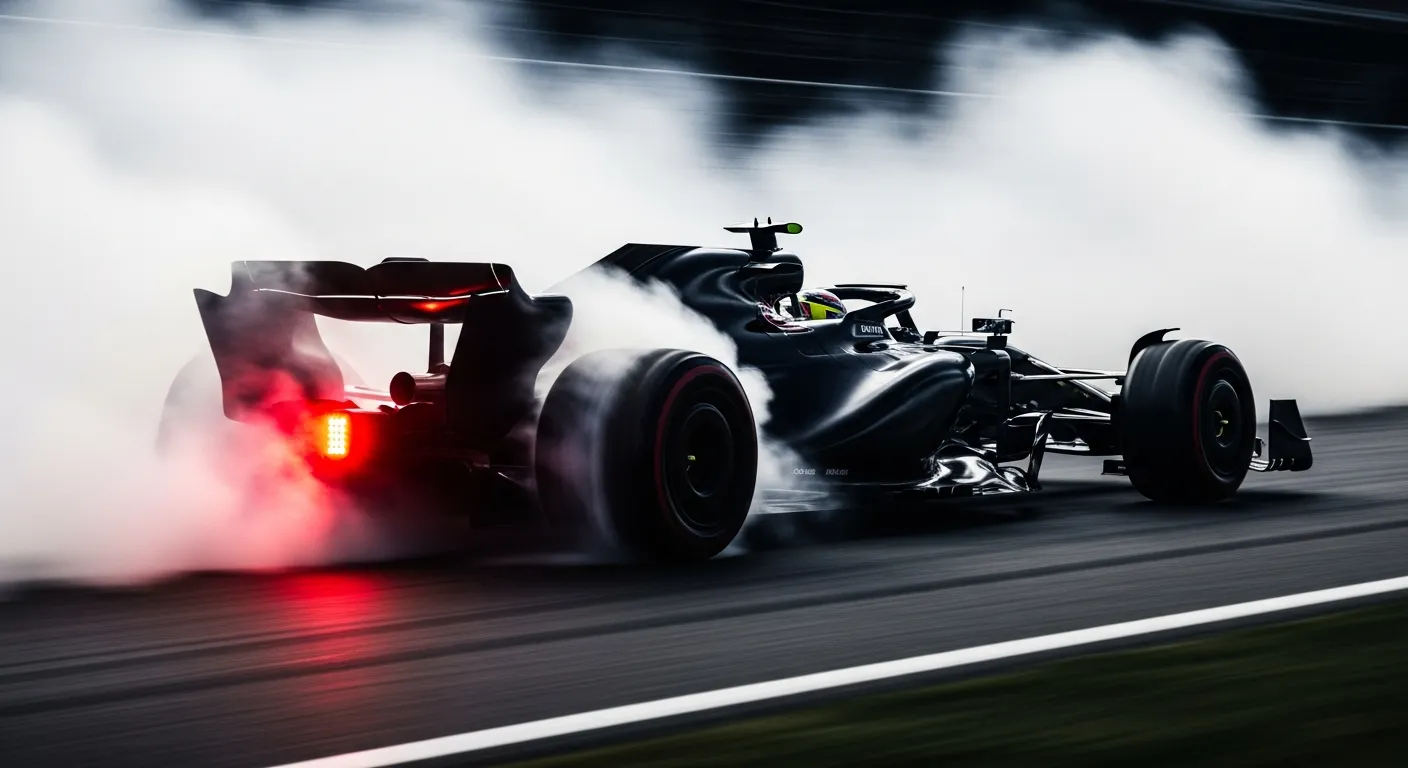
Max Verstappen's tenure in Formula 1 during the hybrid era, spanning from his debut in 2015 to his maiden championship in 2021, was a period defined by rapid ascent, fierce competition, and the cultivation of a truly formidable talent.
The era's character
The hybrid era, inaugurated in 2014, was fundamentally shaped by the introduction of complex 1.6-litre V6 turbo-hybrid power units. This regulatory shift, which brought significant changes to the sport's technical landscape as chronicled on Wikipedia: Formula One, ushered in unprecedented levels of technological sophistication. It also gave a significant performance advantage to Mercedes-AMG, who dominated much of the period. For drivers and teams outside the front-running Mercedes, the challenge was immense: not only to extract maximum performance from their chassis but also to contend with a power deficit that often seemed insurmountable. The era demanded precision, adaptability, and unwavering commitment to development, as teams grappled with intricate energy recovery systems and fuel management strategies, all under the watchful eye of the FIA — F1 World Championship technical regulations. This environment contrasted sharply with the more engine-centric battles seen in, for instance, Fernando Alonso in the V8 era.
What it asked of him
Verstappen entered this highly technical landscape as a prodigious teenager, making his debut with Toro Rosso in 2015 at just 17 years old. The era demanded not just raw speed, but also a rapid understanding of complex machinery and race strategy. His mid-season promotion to Red Bull Racing in 2016, a move that saw him win on debut at the Spanish Grand Prix, thrust him into a top-tier environment where consistency and maturity were paramount. He had to temper his aggressive natural instincts while still pushing the boundaries, learning to manage tyres, fuel, and the intricate hybrid power unit systems under immense pressure. This was a different kind of challenge than what Lando Norris in the hybrid era faced, as Verstappen was immediately thrown into a front-running team. The relentless development cycle, particularly Red Bull's partnership with Honda later in the era, required him to provide precise feedback and adapt to evolving car characteristics year after year.
Signature moments
Max Verstappen's career in the hybrid era is punctuated by several indelible moments. His victory at the 2016 Spanish Grand Prix, just days after joining Red Bull, made him Formula 1's youngest-ever race winner, a record that stands as a testament to his immediate impact. Throughout subsequent seasons, he became renowned for his audacious overtaking maneuvers and his ability to extract performance from the car in challenging conditions, often delivering standout drives even when the Red Bull chassis wasn't the outright fastest. The pinnacle of this era for Verstappen arrived in 2021. Engaged in one of the sport's most intense championship battles against Lewis Hamilton, the season culminated in a dramatic final lap overtake at the Abu Dhabi Grand Prix, securing his first world championship. This moment, widely reported across leading motorsport news outlets, marked the end of Mercedes' dominant run and ushered in a new era of competition.
How this era shaped what came next
The hybrid era was foundational for Max Verstappen, forging him into the championship-winning driver he became. The intense competition, particularly the 2021 title fight, honed his race craft, strategic thinking, and mental fortitude to an extraordinary degree. His ability to challenge and ultimately overcome a dominant force like Mercedes proved his mettle, setting the stage for his subsequent successes. The experience gained in understanding and exploiting the complex hybrid regulations, coupled with his innate talent, provided the perfect springboard for his continued dominance into the Max Verstappen in the ground-effect era. His journey through this period demonstrated a relentless pursuit of performance and a remarkable capacity for growth, ultimately redefining expectations for a new generation of drivers in Formula 1, as documented on the Formula 1 — official site.