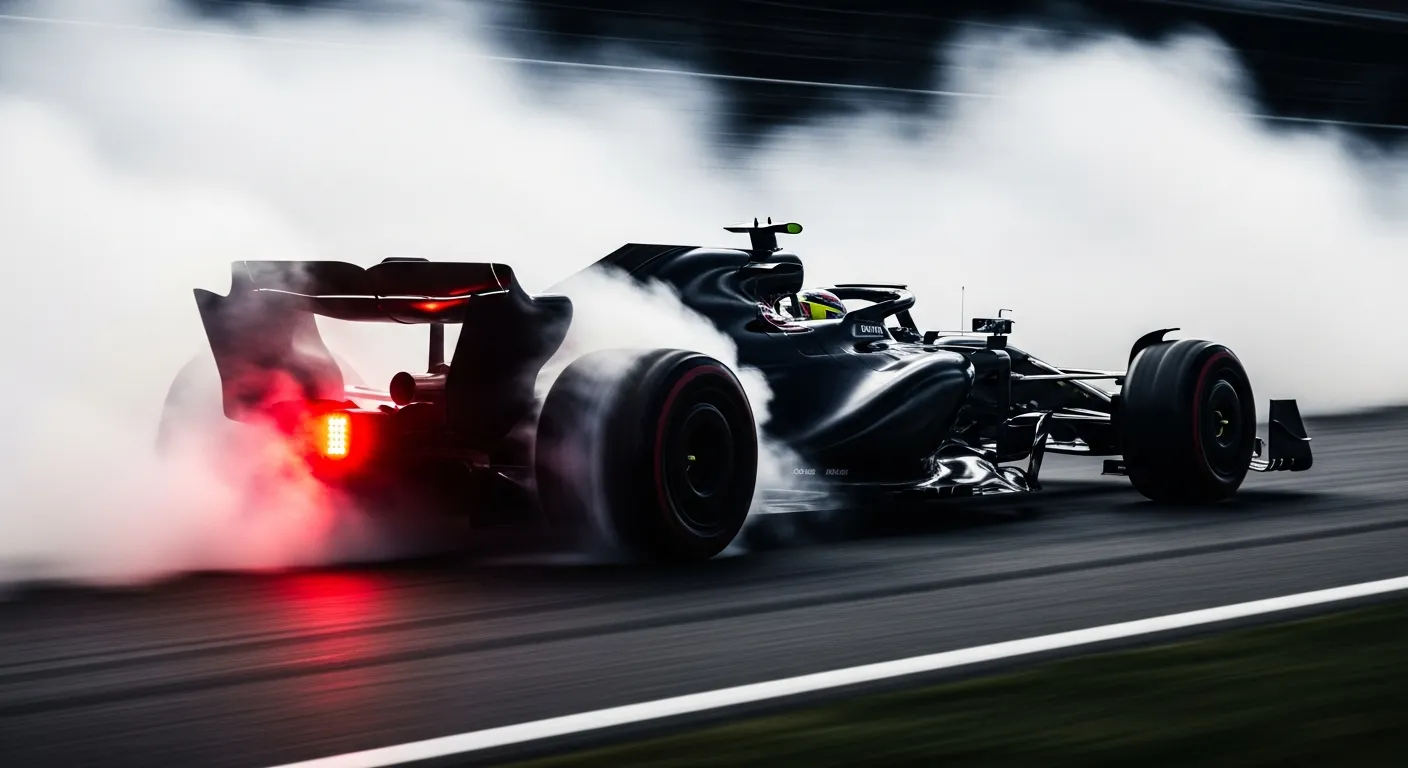
The term "gap" in Formula 1 precisely quantifies the time or distance separating two cars on track, serving as a fundamental metric for understanding race dynamics and strategic decision-making. While often displayed as a time differential on broadcast graphics, it fundamentally represents the physical separation between competitors, measured with precision by timing transponders around the circuit. This seemingly simple number is, in fact, a cornerstone of race strategy, influencing everything from pit stop windows to on-track battles. For a broader understanding of motorsport terminology, including "gap," the Wikipedia glossary entry offers a comprehensive overview.
The Strategic Importance of Gaps
Gaps are under constant scrutiny by teams and drivers, dictating critical strategic choices throughout a Grand Prix weekend. In qualifying, the smallest of gaps, often mere hundredths or thousandths of a second, can separate a driver from Pole Position or even a spot in Q3. These tight margins highlight the absolute precision required to extract maximum performance from the car and driver.
During the race, gaps become even more dynamic and strategically vital. One of the most common applications is in calculating pit stop strategy. Teams aim to create or maintain a "pit window" – a sufficient time gap to the car behind that allows their driver to make a scheduled stop for fresh Pirelli tires and re-join the track without losing a position to a direct rival. For example, if a pit stop costs roughly 20-22 seconds, a driver needs to build a gap of at least that much to the car behind to ensure a "free" stop. Conversely, if a driver is chasing, they need to close the gap to force the car ahead into an early stop or risk an undercut.
Gaps in On-Track Action
Beyond strategy, gaps are central to the spectacle of racing itself. A driver aiming to overtake must first close the gap to the car ahead, often utilizing a tow in high-speed sections or benefiting from the Drag Reduction System (DRS) in designated zones. The rate at which a gap shrinks or grows provides immediate feedback on a car's pace relative to another, reflecting factors like tire degradation, fuel load, and driver performance. A rapidly closing gap can signal an impending overtake attempt, while a widening gap might indicate one car is struggling or managing its pace.
Race control also monitors gaps closely, particularly under safety car or virtual safety car conditions, where specific regulations outlined in the FIA Formula One regulations dictate how gaps are maintained or reset to ensure fair competition and safety. Understanding the nuances of these regulations is key to appreciating the strategic chess match unfolding on track.
Common Viewer Misconceptions
For viewers, the term "gap" can sometimes be confused with "interval." While "gap" generally refers to the time difference between any two cars, "interval" specifically denotes the time difference between a car and the car immediately ahead of it. Furthermore, the dynamic nature of gaps – constantly changing due to varying lap time performance, traffic, and strategic plays – can make real-time analysis challenging. A gap that looks comfortable one lap can evaporate the next if tires degrade or a driver makes a mistake. Ultimately, "gap" is a simple term for a complex, ever-evolving metric that underpins much of Formula 1's strategic depth and on-track drama.
Common questions
- How is the gap measured in F1?
- Gaps are primarily measured using timing transponders on each car and timing loops embedded in the track. These systems precisely record when a car crosses a specific point, allowing for accurate calculation of time differences between competitors.
- What's the difference between "gap" and "interval"?
- In F1 broadcasting, "gap" typically refers to the time difference between a car and a specific competitor, often the leader or a car in a strategic battle. "Interval" more specifically denotes the time difference to the car immediately ahead on track.
- Why do gaps change so quickly in a race?
- Gaps are highly dynamic due to factors like tire degradation, fuel load changes, traffic, and driver performance. A car on fresh tires will often close a gap rapidly, while a car struggling with worn tires or in dirty air might see its gap widen quickly.