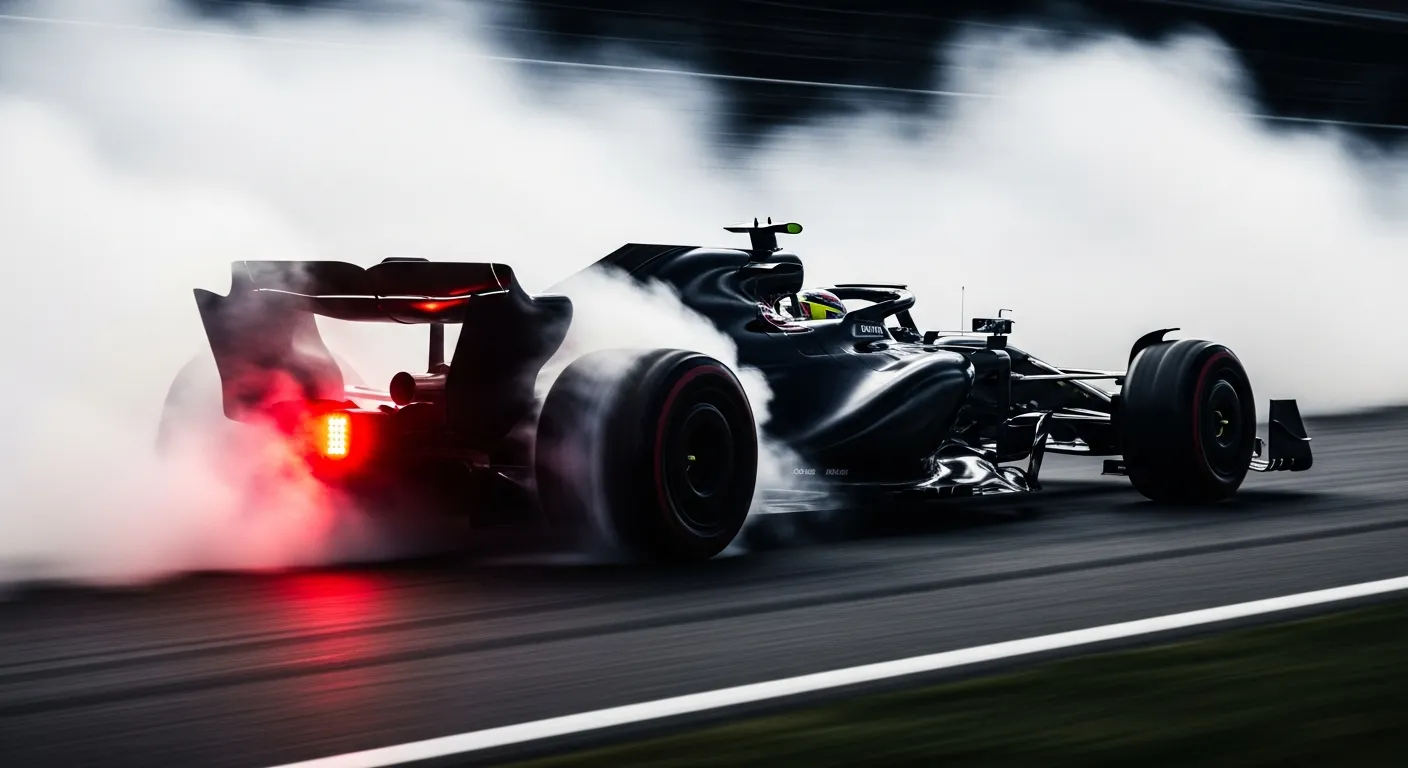
The Halo is a robust, curved titanium structure integrated into the chassis of every Formula 1 car, specifically engineered to protect the driver's head from potential impacts. Introduced as a mandatory safety feature by the FIA for the 2018 season, its distinctive three-pronged design — a central pillar extending forward from the cockpit, flanked by two side attachments — has become an unmistakable part of modern F1 car aesthetics.
What the Halo Is and Why It Matters
At its core, the Halo is a life-saving device. Its primary function is to deflect large debris, such as errant tires or other car components, and to prevent a driver's head from striking barriers or other vehicles during a collision. Constructed from aerospace-grade titanium, it is incredibly strong, capable of withstanding forces equivalent to the weight of a double-decker bus. This structural integrity is paramount, as demonstrated by stringent FIA Formula One regulations governing its design and implementation.
While initially met with some aesthetic criticism and concerns about driver visibility, particularly in adverse conditions requiring Wet Tires or Intermediate Tires where spray already reduces sightlines, drivers have largely adapted. The central pillar, though seemingly intrusive, is positioned to align with the driver's natural focal point far down the track, minimizing its obstruction. The halo — Wikipedia glossary entry provides further context on its development and impact.
Concrete Examples of Its Impact
The Halo's value has been dramatically proven on multiple occasions. Perhaps the most vivid example occurred at the 2020 Bahrain Grand Prix, where Romain Grosjean's Haas speared into a barrier, splitting his car in two and erupting in flames. The Halo demonstrably deflected the barrier, preventing catastrophic head injuries and allowing Grosjean to escape the inferno. Without it, the outcome would almost certainly have been fatal.
Another critical instance was at the 2022 British Grand Prix. In a chaotic opening lap, Zhou Guanyu's Alfa Romeo was flipped upside down and slid across the track into the gravel trap before vaulting over the tire barrier. The Halo absorbed significant impact, protecting Zhou's head as the car skidded and ultimately landed between the barrier and catch fence. These incidents underscore that while drivers focus intensely on managing factors like tire degradation and preventing graining on their Pirelli tires, the Halo provides a crucial, passive layer of protection, allowing them to push the limits of performance with greater security. Its presence has fundamentally reshaped safety standards in Formula 1, moving beyond theoretical protection to proven, life-saving intervention on the track.
Common questions
- When was the Halo introduced in F1?
- The Halo was made mandatory by the FIA for all Formula 1 cars starting from the 2018 season, following years of research and testing into cockpit protection.
- Is the Halo heavy?
- Yes, the Halo adds approximately 7 kilograms (about 15 pounds) to the car's weight. This weight is factored into the car's minimum weight regulations.
- Does the Halo affect driver visibility?
- While it initially raised concerns, drivers have largely adapted. The central pillar is designed to align with the driver's distant focal point, minimizing obstruction during racing.