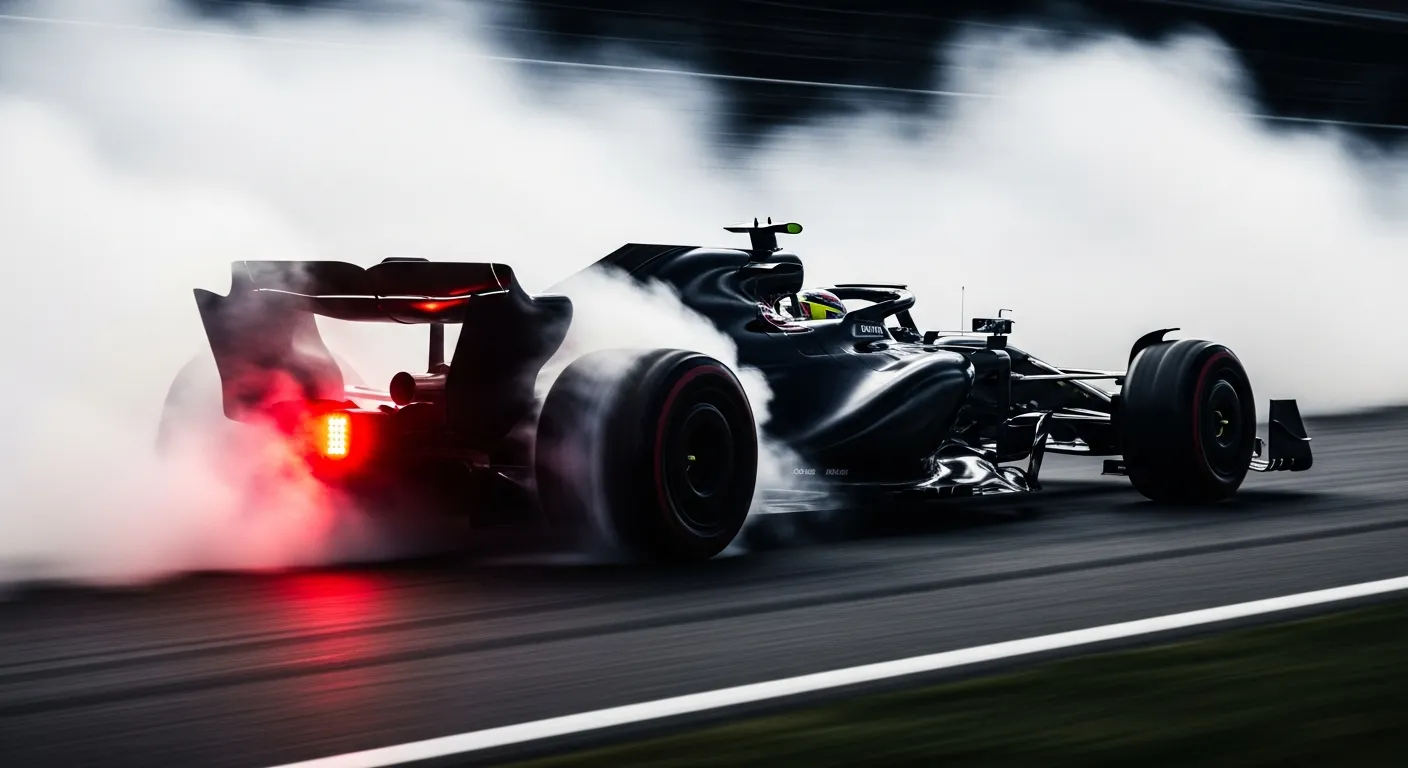
Bouncing in Formula 1 is the unsettling vertical movement of a car, distinct from traditional suspension travel, primarily driven by complex aerodynamic interactions and the car's stiffness. This phenomenon, often exacerbated by the ground effect aerodynamics reintroduced in the 2022 season, sees the car rapidly rise and fall as airflow beneath its floor is alternately attached and detached, creating fluctuating downforce.
The Mechanics of Aerodynamic Bouncing
The core of bouncing lies in the intricate relationship between a Formula 1 car's aerodynamics and its mechanical setup. The 2022 regulation changes aimed to reduce turbulent air for closer racing by relying heavily on ground effect, generated by venturi tunnels beneath the car's floor. As the car gains speed, the downforce increases, pulling the car closer to the track. This reduces the gap between the floor and the asphalt, further accelerating the airflow and increasing downforce — a positive feedback loop. However, if the car gets too low, the airflow can stall or become turbulent, causing a sudden loss of downforce. The car then rises, the airflow re-attaches, and the cycle repeats, leading to the characteristic bouncing motion. This particular manifestation is often termed 'porpoising', drawing a parallel to the way porpoises move through water. The stiffness of the suspension and chassis, designed for optimal aerodynamic performance, often contributes to the severity of this vertical oscillation, as there's less mechanical damping to absorb the rapid changes in load.
Impact on Performance and Driver Well-being
When a car is bouncing, its performance is significantly compromised. Drivers struggle with braking points and turn-in precision, especially when navigating high-speed sections or negotiating a Chicane. The constant vertical motion makes it difficult to maintain consistent tire contact with the track, leading to reduced grip and increased Pirelli tire wear. Drivers also report significant discomfort and physical strain, with some experiencing headaches and back pain, particularly on bumpy circuits or when hitting a Kerb. This physical toll can impact concentration and endurance over a full race distance. Teams, with their Race Engineer at the forefront, spend considerable time in simulations and trackside adjusting ride height, spring rates, and damper settings to mitigate bouncing without sacrificing too much aerodynamic performance. The FIA even intervened with technical directives in 2022 to address extreme cases, introducing an Aerodynamic Oscillation Metric (AOM) to ensure driver safety, as outlined in the FIA Formula One regulations. Understanding bouncing is crucial for appreciating the engineering challenges and driver skill required in modern F1, as detailed in the bouncing — Wikipedia glossary entry.
Common questions
- Is bouncing the same as porpoising?
- Porpoising is a specific, severe form of bouncing primarily caused by aerodynamic stall and re-attachment under the car's floor at high speeds. While all porpoising is bouncing, not all bouncing is porpoising; other factors like suspension setup or track bumps can also cause a car to bounce.
- Why did bouncing become a major issue in 2022?
- The 2022 regulations reintroduced ground effect aerodynamics, which rely on underfloor tunnels to generate downforce. This design, combined with stiff suspension setups, made cars highly susceptible to aerodynamic stall and re-attachment at high speeds, leading to the pronounced bouncing seen that season.