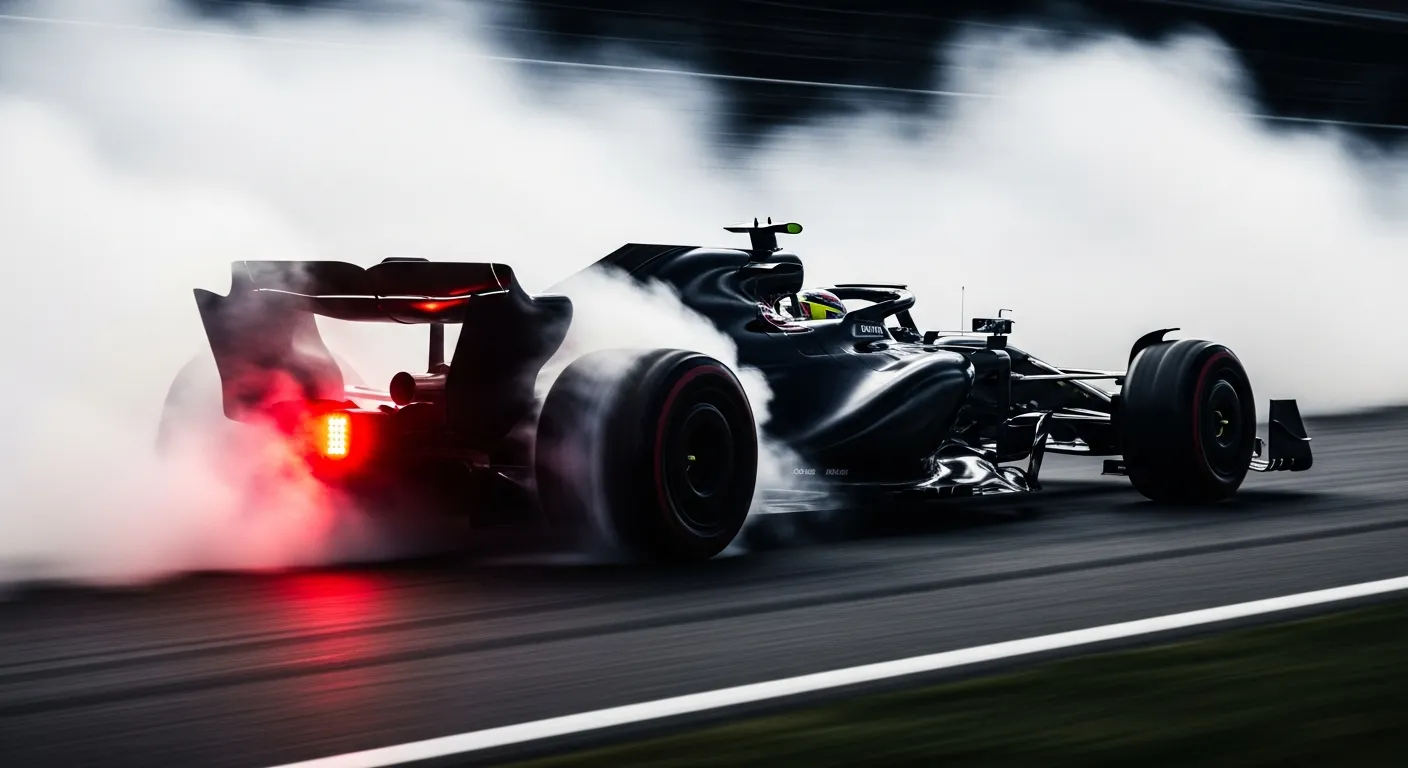
The Strategic Playbook
The overcut is a calculated Formula 1 pit stop strategy where a driver remains on track for additional laps after a direct rival has already pitted, aiming to gain a time advantage before making their own stop. Unlike the more common undercut, where a driver pits early to capitalize on fresh tires, the overcut relies on the premise that the out-lap of a car on new tires, and potentially the subsequent few laps, will be slower than the in-lap and continued pace of a car on older, fully warmed-up tires. The goal is to build a sufficient gap during these crucial laps so that when the overcutting car finally pits for its own fresh rubber, it emerges ahead of its rival. This strategy is a testament to the intricate dance between tire degradation, track conditions, and driver performance, all governed by the overarching FIA Formula One regulations.
Conditions for Success
An overcut isn't always viable; specific race conditions must align for it to be effective. It typically thrives when new tires, particularly harder compounds, take longer to reach their optimal operating temperature and grip levels. In such scenarios, the car that has just pitted might struggle for grip on its out-lap, losing crucial tenths. Meanwhile, the car staying out benefits from its tires being fully up to temperature and potentially from a "cleaner" track as fuel load reduces, allowing for faster, more consistent lap times. Track evolution, where the circuit gains grip as more rubber is laid down, can also play a significant role, making later laps faster. This dynamic is heavily influenced by the characteristics of the Pirelli — tire compound + regulation context brought to each race weekend. Drivers might also adjust their Brake Bias or fine-tune their Differential settings to optimize performance on older tires, eking out every last bit of pace. The presence of clear air for the overcutting car is also paramount; being stuck in traffic would negate any potential time gain.
Memorable Moments and Nuances
While the undercut is often the default aggressive strategy, the overcut has proven decisive in several races. A classic scenario unfolds when a driver on Soft Tires manages to extend their stint effectively, maintaining strong pace while their rival, who pitted earlier, struggles on cold new tires. The 2022 Monaco Grand Prix provided a clear demonstration of the overcut's power, particularly for Sergio Pérez, who extended his first stint on wet tires and then benefited from a perfectly timed switch to intermediates, emerging ahead of rivals who had pitted earlier. This race highlighted how crucial tire temperature and track conditions are in Monaco, where new tires take time to switch on. Understanding the overcut, as detailed in the overcut — Wikipedia glossary entry, is key to appreciating the strategic depth of Formula 1, distinguishing it from its more frequently discussed counterpart, the undercut. The key difference lies in the timing: undercut is early, overcut is late, each exploiting different phases of tire performance.
Common questions
- Is the overcut always better than the undercut?
- No, it depends on track conditions, tire compounds, and how quickly new tires warm up. The undercut is generally favored when new tires offer immediate grip, while the overcut works best when new tires struggle initially.
- What makes an overcut successful?
- Success hinges on the car staying out maintaining strong pace on older, warmed-up tires, while the car that pitted struggles on cold new tires, often due to low track grip or specific tire characteristics that delay optimal performance.
- Can an overcut happen under a Safety Car?
- Less likely. Under a Safety Car, the field bunches up, and pitting often results in less time loss compared to normal racing, making an overcut less effective as a direct strategic gain against a rival.