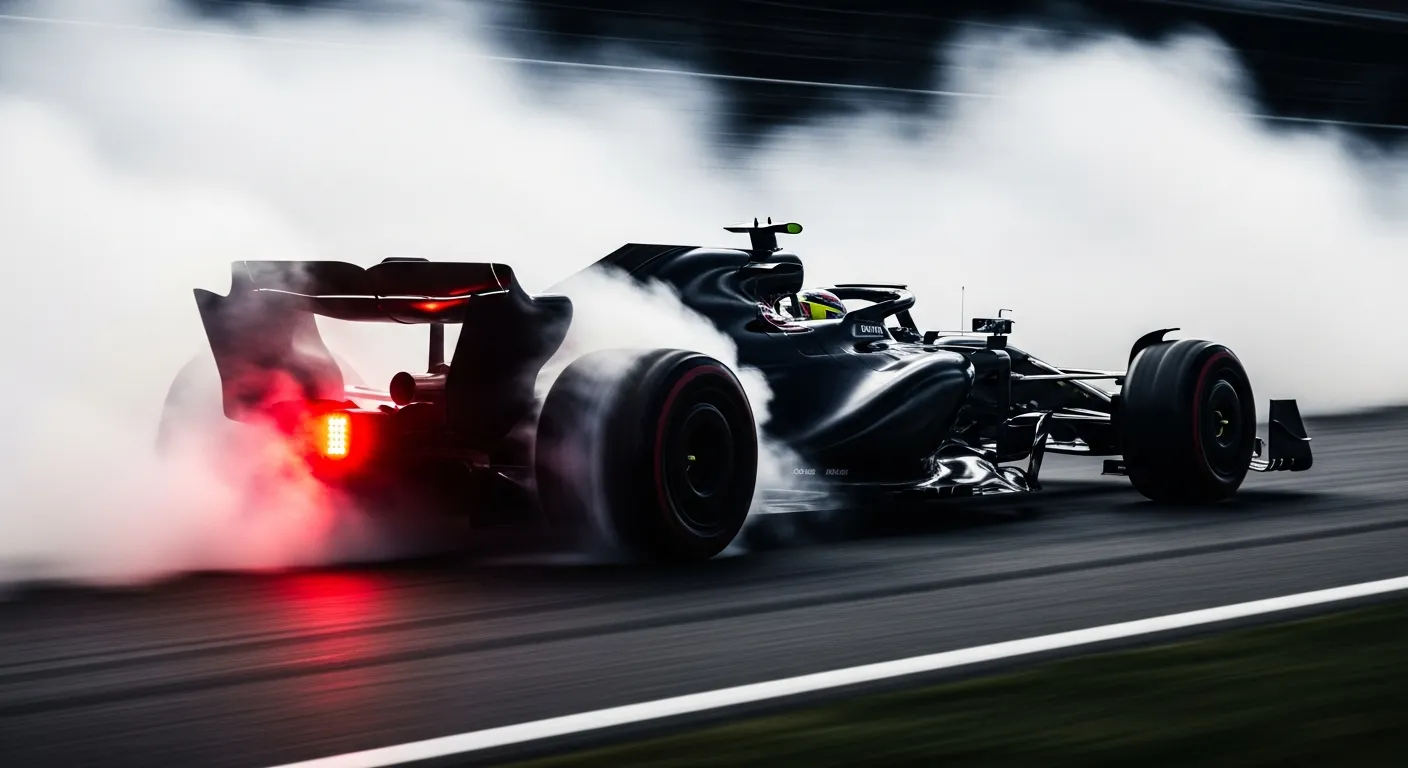
Dirty air describes the turbulent airflow left behind a moving Formula 1 car, significantly hindering the aerodynamic performance of a following car. This phenomenon is a critical factor in the intricate dance of F1 racing, directly impacting a driver's ability to follow closely and attempt overtakes.
What Dirty Air Is and Its Impact
Formula 1 cars are engineering marvels, designed to generate immense downforce through sophisticated aerodynamic surfaces, including the front wing, floor, and diffuser. As a car slices through the air at high speeds, it inevitably creates a wake of highly turbulent, low-pressure air. This disrupted air, often referred to as "dirty air," is less dense and far less predictable than the undisturbed, or "clean," air. When a following car enters this turbulent wake, its own aerodynamic components struggle to work efficiently. The most significant effect is a substantial reduction in downforce, particularly on the front axle. This loss of downforce translates directly into reduced grip, making the car less stable, harder to turn into corners, and more prone to understeer. Drivers often report that their cars feel "light" or "nervous" in dirty air, forcing them to back off.
When It Matters in a Race
Dirty air is most pronounced and impactful during close-quarters racing, especially when a driver is attempting to chase down or overtake another. The performance penalty in dirty air can be so severe that a car might lose several tenths of a second per lap, even if it's inherently faster than the car ahead. This makes following through high-speed corners particularly challenging and often leads to increased tire degradation, as drivers must slide the car more to maintain pace, putting extra stress on the Pirelli — tire compound + regulation context. While less of a concern during a Formation Lap or a Standing Start where cars are not yet at full speed or are spread out, it becomes the defining challenge once racing lines converge. Strategically, teams often try to get their drivers into clean air, perhaps through an undercut during a Pit Stop, to unlock their car's full potential.
Regulation Changes and Recent Examples
The challenge of dirty air has been a recurring theme in Formula 1's technical regulations. For years, the highly complex aerodynamics of F1 cars meant they were incredibly sensitive to turbulent air, making overtaking notoriously difficult. Drivers would often struggle to get within DRS range, let alone make a move, due to the significant performance drop. In response, the FIA introduced a major aerodynamic overhaul for the 2022 season, with the explicit goal of mitigating dirty air's effects. The new regulations, detailed in the FIA Formula One regulations, simplified front wings and redesigned floors to create an "outwash" effect, pushing turbulent air away from the following car rather than directly into its path. While dirty air has not been entirely eliminated, the 2022 and subsequent seasons have generally seen improved close-quarters racing and more opportunities for sustained battles, demonstrating the regulations' partial success.
Common Viewer Confusion
A frequent point of confusion for viewers is distinguishing dirty air from the slipstream effect. While both involve a car's interaction with the air disturbed by a leading car, their effects are opposite. Slipstream, or a "tow," occurs on straights where the following car experiences reduced drag, allowing for higher top speed. Dirty air, conversely, is primarily about the loss of downforce and grip, predominantly affecting cornering performance and overall stability. It's not simply about losing straight-line speed; it's a fundamental compromise of the car's aerodynamic efficiency. For a broader understanding of motorsport terminology, the dirty air — Wikipedia glossary entry provides additional context.
Common questions
- Does DRS help with dirty air?
- DRS (Drag Reduction System) primarily reduces drag on straights, aiding top speed and overtaking. While it helps overcome some speed deficit, it does not directly mitigate the downforce loss caused by dirty air in corners, which is the main issue.
- Is dirty air the same as slipstream?
- No, they are distinct. Slipstream (or 'tow') is the reduced drag experienced by a car closely following another on a straight, allowing for higher top speed. Dirty air refers to the turbulent air that reduces downforce and grip, primarily affecting cornering performance.
- Do all F1 cars create the same amount of dirty air?
- While all F1 cars generate dirty air, the exact amount and characteristics can vary slightly depending on a car's specific aerodynamic design and setup. Regulations aim to standardize the impact, but subtle differences persist between teams.