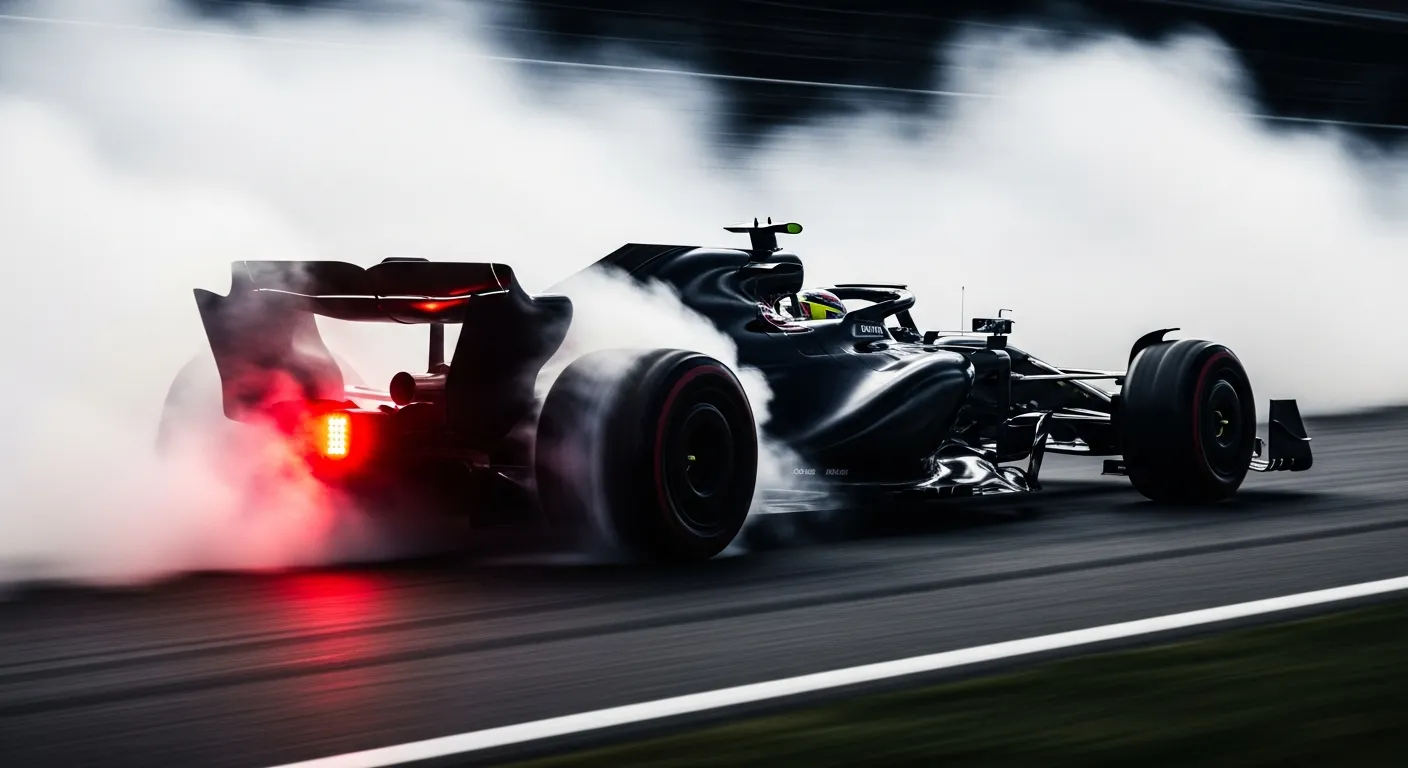
A 'tow,' also known as a 'slipstream,' is a fundamental aerodynamic phenomenon in Formula 1 where a trailing car benefits from reduced air resistance by driving in the low-pressure wake of a leading car. This effect is a direct consequence of the leading car displacing air, creating a pocket of less dense air behind it, which significantly lowers the Drag experienced by the following vehicle. The concept is simple yet profoundly impactful, allowing the trailing car to achieve higher top speeds on straights with less engine power.
The Physics of the Tow
When a Formula 1 car moves at high speed, it pushes through a substantial volume of air, creating high-pressure zones at its front and low-pressure zones behind it. This pressure differential is the primary source of aerodynamic Drag. By positioning itself directly behind another car, the trailing vehicle effectively 'hides' from the full force of the oncoming air, operating within the leading car's low-pressure wake. This reduction in air resistance translates directly into increased straight-line speed, often by several kilometers per hour, without requiring additional engine output. The precise effect can vary based on the cars' aerodynamic designs, the track layout, and even the ambient conditions, all governed by the intricate FIA Formula One regulations that shape car performance.
Strategic Importance in Qualifying and Racing
The strategic use of a tow is a critical element in both qualifying and race scenarios. In qualifying, drivers often attempt to coordinate with teammates or even strategically position themselves behind competitors to gain those crucial tenths of a second on long straights, which can make the difference between pole position and a mid-grid start. Circuits like Monza, with its long, high-speed straights, are particularly famous for tow strategies. During races, a tow is an invaluable tool for overtaking. A driver can close the gap to a rival on a straight, benefiting from the reduced drag, and then use that extra speed to attempt a pass, often aided by DRS (Drag Reduction System) activation. However, the benefit comes with a trade-off: following too closely for too long can disrupt the airflow over the trailing car's wings, reducing Downforce and making cornering more challenging, while also potentially overheating tires, as highlighted by expert analysis of Pirelli tire performance under various conditions.
Common Misconceptions and Nuances
One common area of confusion for viewers is distinguishing between a tow and the effect of DRS. While both increase straight-line speed by reducing drag, a tow is a passive aerodynamic phenomenon created by a leading car's wake, whereas DRS is an active, driver-activated system that opens a flap on the rear wing. They can be used in conjunction for maximum effect, but they are distinct concepts. Furthermore, while beneficial for speed, a strong tow can also make a car less stable, particularly when braking or turning into corners, as the turbulent air affects the car's aerodynamic balance and its ability to generate consistent Ride Height and grip. Understanding the nuances of the tow is essential for appreciating the complex interplay of physics and strategy in Formula 1, as detailed in motorsport glossaries like the tow — Wikipedia glossary entry.
Common questions
- How much speed does a tow typically add?
- A tow can typically add 5-10 km/h (3-6 mph) to a car's top speed on straights, though this varies significantly with track characteristics, car design, and the duration of the slipstream.
- Is a tow always beneficial in F1?
- Not always. While it boosts straight-line speed, following too closely can reduce clean airflow for cooling, disrupt a car's aerodynamic balance, and reduce [Downforce](/glossary/downforce) in corners, making it harder to maintain grip and manage tire temperatures.