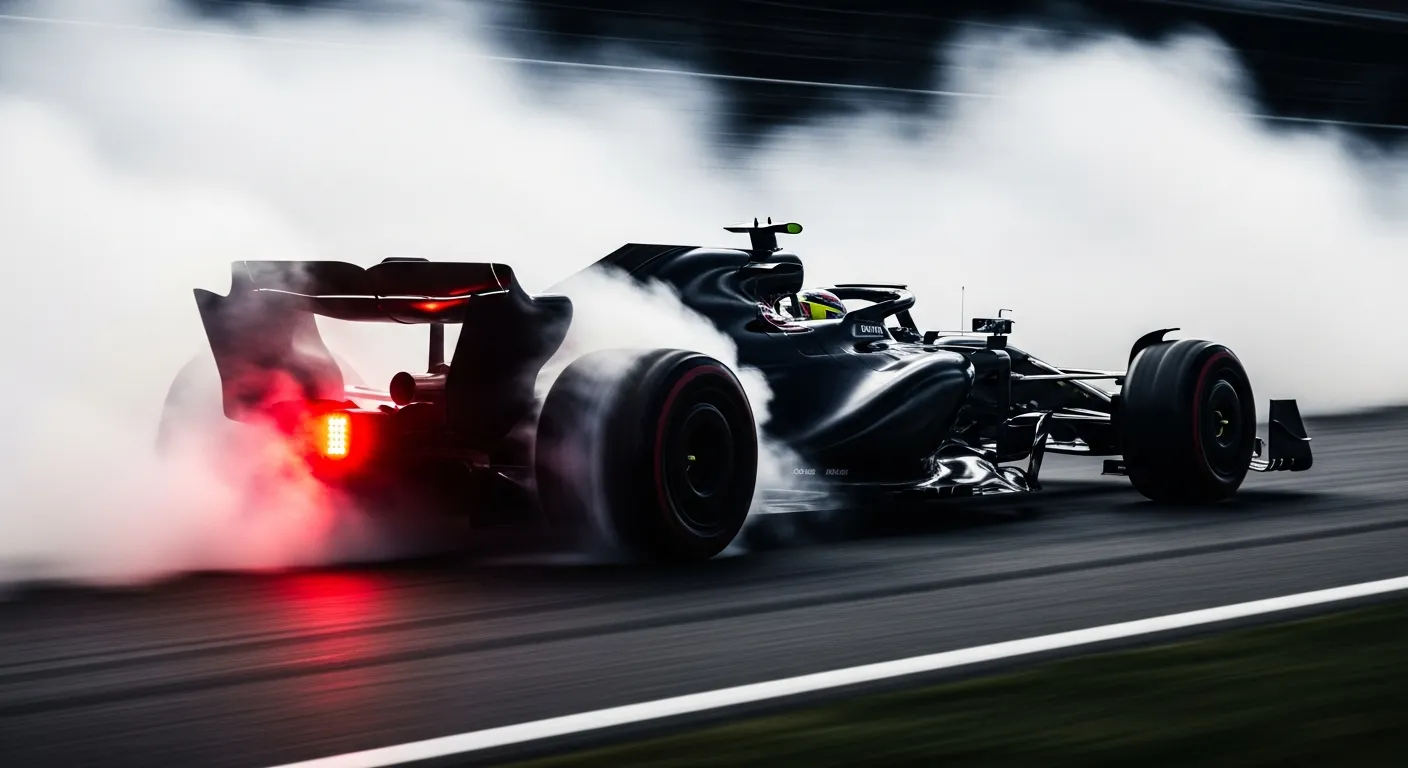
A reserve driver in Formula 1 is a crucial, often unseen, component of any team's operational strategy, standing ready to take the wheel in the event a primary race driver cannot compete. This role is far more than a mere formality; it represents a critical insurance policy for teams facing the unpredictable nature of top-tier motorsport. These drivers are typically under contract, often spending countless hours in the simulator, contributing to car development, and sometimes participating in Free Practice 1 sessions to gain track experience and fulfill regulatory requirements for young drivers. Their primary mandate, however, is immediate readiness, possessing the necessary superlicence points and physical conditioning to compete at a moment's notice.
The Call-Up: When Preparedness Meets Opportunity
The moment a reserve driver's role becomes acutely relevant is when one of a team's two contracted race drivers is suddenly unable to compete. This can stem from a variety of reasons: illness, injury, or even unforeseen logistical challenges like visa issues. The rapid nature of these call-ups demands an extraordinary level of adaptability and mental fortitude. A reserve driver must be prepared to jump into a car they may have limited experience with, on a circuit they might not have driven in current F1 machinery, and immediately perform at the pinnacle of motorsport. This involves not just understanding the car's complex systems, from its intricate paddle shift gearbox to its sophisticated brake bias settings, but also quickly gelling with a new set of engineers and strategists.
Recent seasons have provided vivid illustrations of this demanding role. In 2022, Nyck de Vries famously stepped in for Alexander Albon at Williams during the Italian Grand Prix after Albon suffered appendicitis. De Vries, then a Mercedes reserve, not only qualified well but also scored points on his debut, showcasing the potential impact a well-prepared reserve can have. Similarly, in 2023, Liam Lawson was thrust into the AlphaTauri seat after Daniel Ricciardo sustained a hand injury at Zandvoort. Lawson's performances over several races demonstrated his capability, navigating the challenges of adapting to a new car, managing different soft tires compounds, and competing against seasoned F1 veterans. These instances underscore the importance of the reserve driver's continuous preparation, often detailed in the broader context of the FIA Formula One regulations that govern driver eligibility and team entries.
Beyond the Simulator: The Real-World Impact
A common misconception among viewers is to conflate a reserve driver with a pure test or development driver. While there can be overlap in their duties, the core distinction lies in the reserve driver's immediate race readiness. A development driver might focus on long-term car evolution or spend more time on specific component testing, often in older machinery. A reserve driver, as outlined in resources like the reserve driver — Wikipedia glossary entry, is contractually obligated to be race-ready. They are expected to understand the current car's nuances, including how it interacts with different Pirelli tire compounds, and integrate seamlessly into the race weekend structure. The pressure is immense, as a single strong performance can open doors to a full-time seat, while a struggle can diminish future prospects. Their role is a testament to the depth of talent required to sustain a Formula 1 team.
Common questions
- What is the difference between a reserve driver and a test driver?
- A reserve driver is race-ready, holding the necessary superlicence to compete immediately if a primary driver is unavailable. A test driver often focuses on car development and data collection, sometimes without the same immediate race readiness or superlicence status.
- Do reserve drivers get to drive the F1 car often?
- It varies. They spend significant time in simulators. Some participate in Free Practice 1 sessions during race weekends, which helps them gain real-world track experience in the current car.
- Can a reserve driver become a full-time F1 driver?
- Absolutely. Strong performances as a reserve, especially during unexpected call-ups, can be a direct pathway to securing a full-time F1 seat in subsequent seasons. Nyck de Vries and Liam Lawson are recent examples.