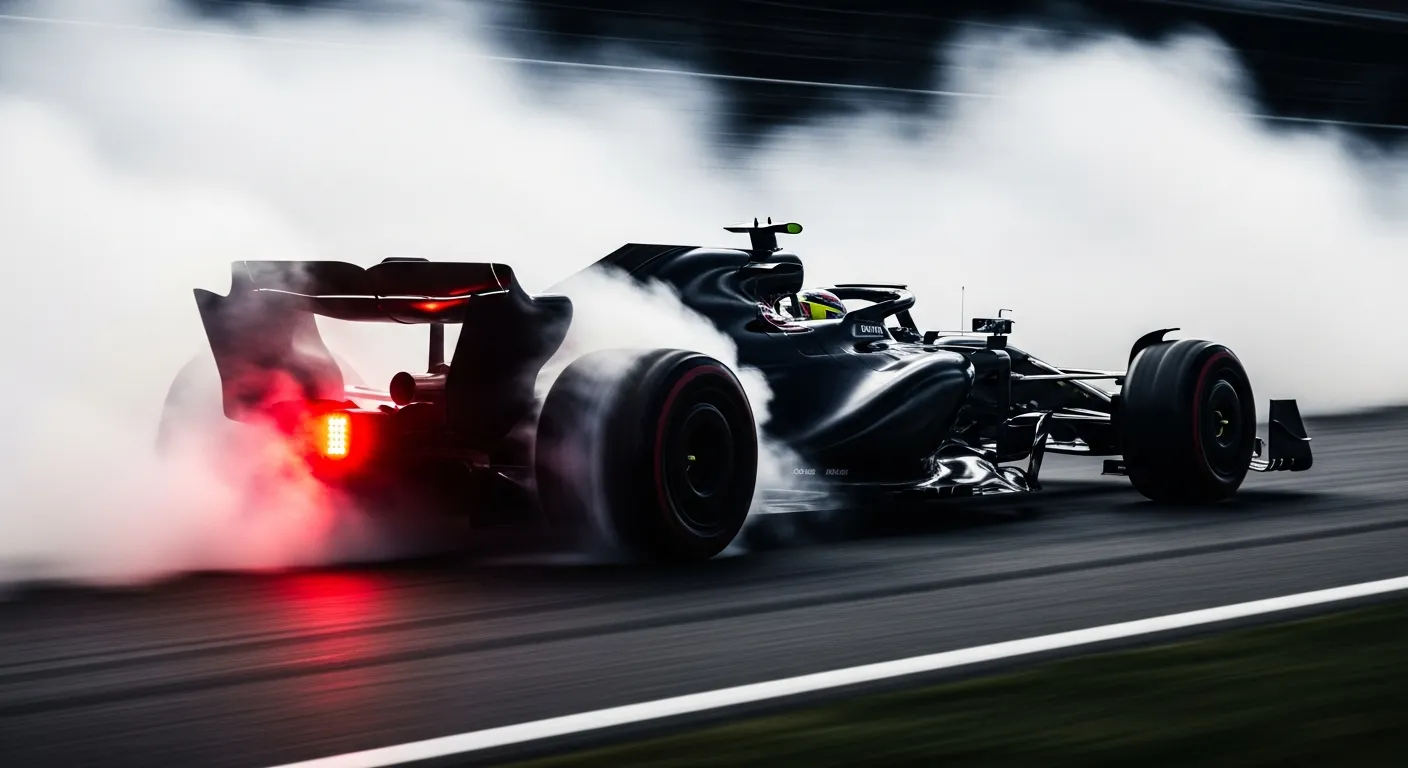
The Stop-Go Penalty is one of the most severe in-race sanctions a Formula 1 driver can incur, demanding an immediate and costly halt to their progress without the benefit of a tire change or car adjustments. Unlike a time penalty added to a driver's race time, or a drive-through penalty that merely requires passing through the pit lane, a stop-go mandates a complete stop in the team's pit box for a fixed period, typically 10 seconds, before the driver is allowed to proceed. This effectively removes the car from competitive running for a significant duration, often costing a driver 20-30 seconds or more once pit lane entry and exit times are factored in.
When It's Applied and Its Impact
Stewards issue a Stop-Go Penalty for serious infractions that occur during a race, often involving dangerous driving, significant procedural breaches, or flagrant disregard for regulations. Common reasons include causing a collision, unsafe release from a pit stop, or speeding excessively in the pit lane. The severity of the penalty reflects the gravity of the offense, aiming to deter actions that compromise safety or sporting integrity. For instance, in the 2017 Azerbaijan Grand Prix, Sebastian Vettel received a 10-second stop-go penalty for dangerous driving after deliberately steering into Lewis Hamilton's car behind the safety car. Such an incident highlights the FIA's commitment to upholding strict conduct guidelines, as detailed in the official FIA Formula One regulations.
Receiving a stop-go penalty can be devastating to a driver's race, often dropping them out of contention for points or even multiple laps down, depending on the circuit and race phase. The strategic implications are profound; teams must decide whether to serve the penalty immediately, potentially sacrificing track position, or wait for a more opportune moment, risking further sanctions if they delay too long. The entire pit stop process, including the careful management of Pirelli — tire compound + regulation context changes, is meticulously practiced, but a stop-go adds an unpredictable, mandatory pause that disrupts any planned strategy.
Understanding the Nuances
For viewers, the Stop-Go Penalty can sometimes be confused with other sanctions. A key distinction is that during a stop-go, no work can be performed on the car. This differs from a standard pit stop where tires are changed and adjustments made. The driver simply waits for the allotted time to elapse, then departs. While often associated with driving infractions, the comprehensive nature of F1 regulations means that even technical breaches related to components like the Power Unit or aerodynamic designs leveraging Ground Effect are strictly policed, though these typically result in grid penalties or disqualification rather than an in-race stop-go. However, the underlying principle remains: adherence to the rulebook, covering everything from car design to driver conduct, is paramount. Even safety concerns, such as persistent issues like Porpoising that might lead to technical directives, underscore the broad scope of regulatory oversight.
This penalty is a critical tool for race control, ensuring fair play and safety on track, and its impact is always a significant talking point. For a broader understanding of motorsport terminology, the stop go penalty — Wikipedia glossary entry offers further context.
Common questions
- What's the difference between a Stop-Go and a Drive-Through penalty?
- A Stop-Go requires the driver to stop completely in their pit box for a fixed time (usually 10 seconds). A Drive-Through penalty only requires the driver to pass through the pit lane without stopping, rejoining the track at pit exit.
- Can a team change tires during a Stop-Go penalty?
- No, during a Stop-Go penalty, no work is permitted on the car. The driver must simply stop for the specified duration and then rejoin the race without any service.