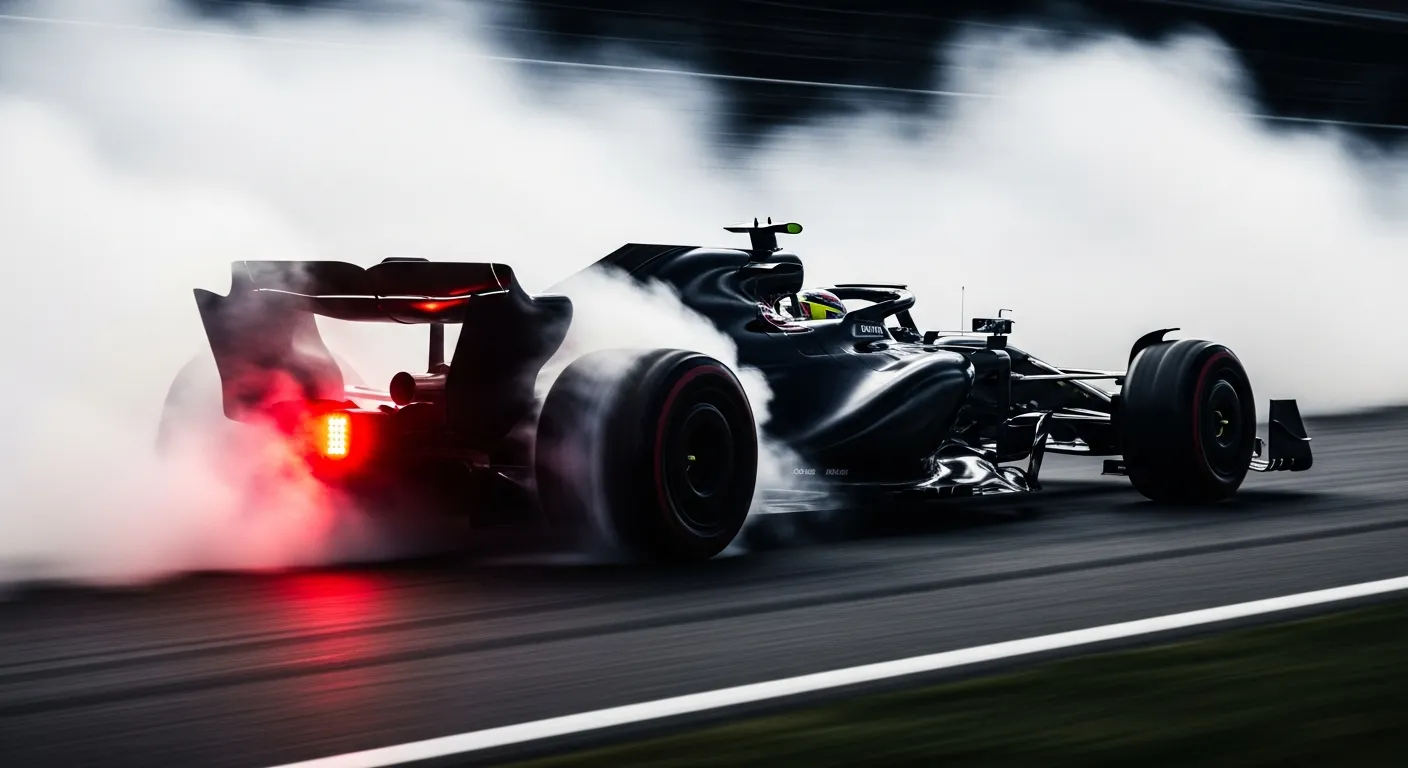
A standing start is the foundational method by which Formula 1 races, or specific race segments, commence, requiring drivers to launch their cars from a complete standstill on the grid. This high-stakes moment is arguably one of the most critical junctures in any Grand Prix, often dictating early race positions and strategic trajectories.
The Mechanics of Launch
Before a standing start, cars line up in their qualifying order on designated grid slots. The starting procedure is meticulously governed by the FIA Formula One regulations, ensuring fairness and safety. Drivers engage their launch control systems, manage clutch bite points, and precisely modulate throttle input as a sequence of five red lights illuminates, one by one, before extinguishing simultaneously. The moment those lights go out, the race is on. The challenge for drivers is to achieve maximum acceleration without inducing excessive wheelspin, which can lead to a sluggish getaway or even a dramatic stall. The delicate balance between clutch release and throttle application is honed through countless practice starts. The immense forces at play during launch test the structural integrity of the car, particularly the Monocoque, which forms the core safety cell.
When Standing Starts Define the Race
While the initial race start is the most common instance, standing starts also frequently occur after a red flag stoppage, where the race is temporarily halted and then resumed from the grid. This was famously seen at the 2021 Azerbaijan Grand Prix, where a late-race red flag led to a standing restart, completely reshuffling the strategic landscape and creating a thrilling sprint finish. Similarly, the 2020 Tuscan Grand Prix featured multiple standing restarts following safety car periods and a red flag, highlighting how these moments can dramatically alter the race narrative. Unlike a rolling start, where cars maintain speed behind a Safety Car before the race resumes, a standing start offers a complete reset, giving drivers another chance to gain ground or lose it. For a broader understanding of this race commencement method, the standing start — Wikipedia glossary entry provides additional context.
The Impact on Car Performance
The initial burst of acceleration from a standing start places immense demands on the car's aerodynamic components and tires. The Front Wing and Rear Wing are critical in generating the necessary downforce to put power to the ground efficiently, preventing the tires from simply spinning away grip. Teams work extensively on optimizing their car's setup for launch, considering factors like weight distribution and suspension settings. Tire choice, influenced by conditions and strategy, also plays a significant role; different Pirelli tire compounds offer varying levels of grip and durability, directly impacting launch performance. A cold tire on a damp track, for instance, makes a clean getaway significantly more challenging. The spectacle of twenty cars launching in unison, jostling for position into the first corner, is a hallmark of Formula 1 and a moment of pure, unadulterated racing drama.
Common questions
- What's the difference between a standing start and a rolling start?
- A standing start involves cars launching from a complete stop on the grid. A rolling start, conversely, sees cars maintain a controlled speed behind the Safety Car, resuming racing once the Safety Car pulls into the pits. Standing starts offer more dramatic initial position changes.
- Why do some races have standing starts after a Safety Car?
- Typically, races resume with a rolling start after a Safety Car. However, if a race is red-flagged and then restarted, the regulations often mandate a standing start from the grid. This provides a full restart spectacle and can significantly impact race strategy and outcomes.