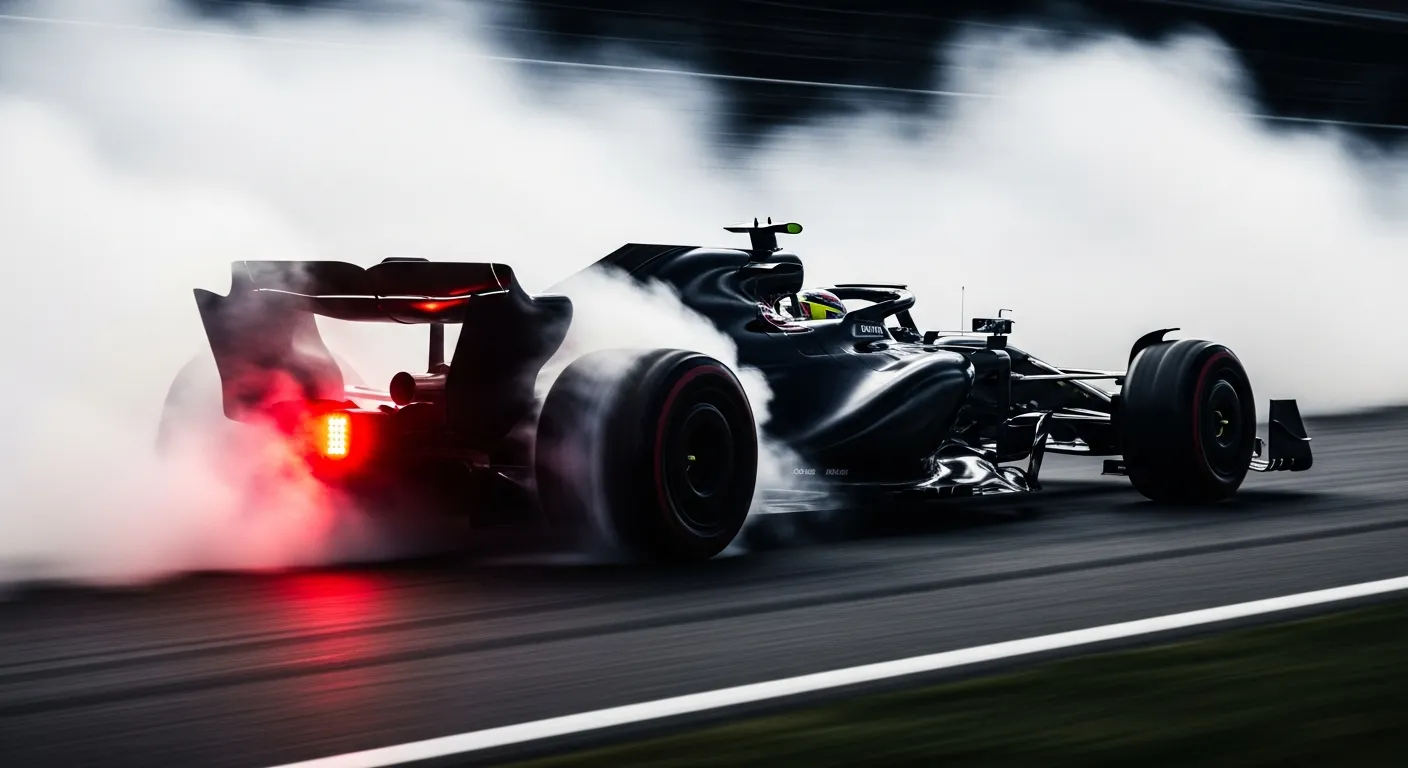
The Virtual Safety Car (VSC), often simply referred to as VSC, is a critical safety mechanism in Formula 1, allowing race control to neutralize the pace of competition across the entire circuit without the need for the physical Safety Car. Introduced in 2015, following incidents like Jules Bianchi's accident in 2014, its primary purpose is to manage hazards such as debris on track or a stranded car, ensuring the safety of drivers and marshals alike.
How the VSC Operates
When the Stewards or race control determine an incident requires intervention but doesn't warrant a full Safety Car deployment, the VSC is activated. Drivers are immediately notified via messages on their steering wheel display and trackside light panels. Crucially, they must adhere to a specific "delta time," which is a minimum lap time set by the FIA Formula One regulations. This delta ensures all cars slow down to a predetermined pace, typically around 30-40% below normal racing speed, while maintaining their relative gaps to one another. This differs significantly from a full Safety Car, which bunches the entire field behind a lead car. The VSC period ends when "VSC ENDING" is displayed, followed by green flags and lights, allowing drivers to resume racing speed.
Strategic Implications and Race Impact
The VSC's unique characteristic of maintaining gaps means it has a distinct impact on race strategy compared to a full Safety Car. While a full Safety Car often presents a major "free pit stop" opportunity by significantly reducing the time lost in the pit lane, the VSC offers a more nuanced advantage. Pit stops under VSC conditions are still quicker than under green flag racing, but the time saved is less dramatic. This can create difficult decisions for a Team Principal and their strategists, weighing the benefit of a slightly cheaper pit stop against the risk of losing track position if rivals don't pit. For instance, in the 2022 Saudi Arabian Grand Prix, a VSC period saw several front-runners opt for pit stops, hoping to gain an advantage, showcasing how these moments can reshape the race narrative. The impact on tire strategy, particularly how long a set of Pirelli compounds might last or when to switch, becomes a critical calculation during these periods. The precise timing of a VSC can elevate a mid-field driver or even a Rookie into a points-scoring position if their strategy aligns perfectly.
Common Confusions and Monitoring
A frequent point of confusion for viewers is why the field doesn't bunch up under VSC. The key lies in that delta time: every driver must adhere to it, preventing them from closing up on the car ahead. Drivers use sophisticated Telemetry systems and their car's onboard displays to monitor their speed and ensure they stay above the required delta. The virtual safety car — Wikipedia glossary entry elaborates further on the technical aspects and historical context. Any failure to comply with the delta time is closely monitored by race control and can result in penalties, enforced by the Stewards. The VSC is a testament to Formula 1's continuous evolution in prioritizing safety while striving to minimize the disruption to the racing spectacle, allowing for incidents to be managed efficiently without completely resetting the race dynamics.
Common questions
- How do drivers know what speed to drive under VSC?
- Drivers receive a delta time on their steering wheel display. They must stay above this reference time, effectively slowing down to a controlled pace across the entire track, monitored by race control.
- What's the main difference between VSC and a full Safety Car?
- The VSC maintains gaps between cars, neutralizing the race without bunching the field. A full Safety Car brings all cars together behind a physical car, often leading to bigger strategic shifts.