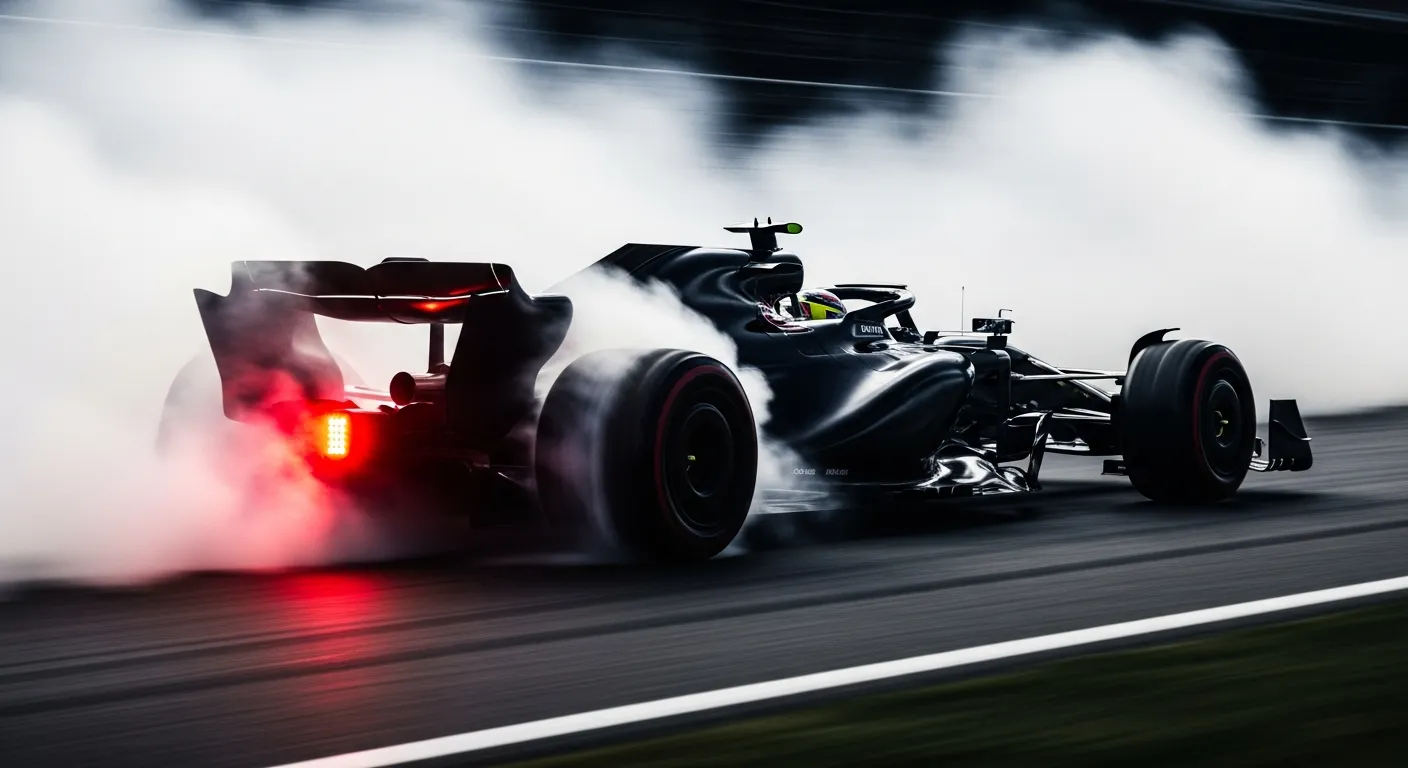
The 2017 Azerbaijan Grand Prix at the Baku City Circuit stands as a singular event in the turbo-hybrid era, a race where attrition, driver incidents, and strategic gambles converged to produce one of the most unpredictable outcomes in recent memory.
Qualifying
The Baku City Circuit, a unique blend of high-speed straights and incredibly tight, winding old city sections, always presents a distinct qualifying challenge. Its unforgiving nature means precision is paramount, and even a minor misjudgment can end a session. For the 2017 Azerbaijan Grand Prix, the grid was set with the usual front-runners vying for pole, demonstrating the raw pace required to master this street circuit. The high-stakes environment ensured that even before the race began, the potential for drama was palpable, a characteristic often seen in races like the 2022 Singapore Grand Prix where street circuit demands push drivers to the limit.
Race
The 2017 Azerbaijan Grand Prix quickly descended into a spectacle of attrition and strategic upheaval. The initial laps saw skirmishes and incidents, triggering the first of multiple safety car deployments. This pattern of intense racing, followed by neutralisation, became the defining rhythm of the afternoon. A particularly significant moment occurred under one of these safety car periods, involving two of the season's primary championship protagonists. An incident behind the safety car led to a contentious penalty for one driver, adding a layer of personal rivalry to the championship narrative. The race was eventually red-flagged, a rare occurrence, allowing teams to regroup and reassess their strategies. This pause, much like the strategic resets seen in the 2022 Azerbaijan Grand Prix years later, offered a critical juncture for those who had struggled or benefited from the chaos. The restart brought further drama, with more incidents and overtakes reshaping the order repeatedly. The sheer unpredictability of the event meant that drivers who had been out of contention found themselves in scoring positions, showcasing the dynamic nature of Formula 1 racing, as documented by the Formula 1 — official site.
Strategic Story
The strategic narrative of the 2017 Azerbaijan Grand Prix was dictated almost entirely by the frequent safety car periods and the red flag. Teams had to make split-second decisions on tyre compounds and pit stop timings, often gambling on whether to stop immediately or wait for a more opportune moment. The red flag, in particular, offered a unique strategic reset, allowing teams to change tyres without losing significant track position, effectively giving everyone a 'free' pit stop. This leveled the playing field and opened the door for unexpected contenders to challenge for strong finishes. The drivers who managed to navigate the chaos, avoid penalties, and execute clean restarts were those who ultimately found themselves in contention for the podium. The race underscored how critical effective communication between driver and pit wall is in such volatile conditions, a constant challenge for teams aiming for championship success, as outlined by the FIA — F1 World Championship regulations. Understanding the nuances of race data, often found in archives like the Jolpica/Ergast — 2026 season data, is crucial for post-race analysis of these strategic calls.
Championship Impact
The chaotic outcome of Baku significantly tightened the championship battle, with crucial points swings impacting both the Drivers' and Constructors' standings. The incident between key title contenders added a new layer of intensity to the season's unfolding narrative, ensuring the fight for the world title remained fiercely contested. The unexpected results meant that while some front-runners lost valuable points, others capitalized, injecting further intrigue into the championship chase. This race served as a stark reminder that in Formula 1, every single point can prove decisive by the season's end, a principle often highlighted in historical analyses available on Wikipedia: Formula One. The repercussions of the Baku result resonated through subsequent rounds, influencing team strategies and driver approaches. The dynamic shifts in momentum are a hallmark of competitive seasons, much like the intense battles witnessed during the 2022 Italian Grand Prix, where every decision had championship implications, as detailed on the Formula 1 — official site.
Full classified results
Every driver's verified grid-to-flag result from the 2017 Azerbaijan Grand Prix — grid, finish, points, teammate H2H, and championship swing.
- P1Daniel RicciardoRed Bull25 pts
- P2Valtteri BottasMercedes18 pts
- P3Lance StrollWilliams15 pts
- P4Sebastian VettelFerrari12 pts
- P5Lewis HamiltonMercedes10 pts
- P6Esteban OconForce India8 pts
- P8Carlos SainzToro Rosso4 pts
- P9Fernando AlonsoMcLaren2 pts
- P14Kimi RäikkönenFerrari0 pts
- —Sergio PérezForce IndiaSeat
- —Nico HülkenbergRenaultAccident
- —Max VerstappenRed BullOil pressure