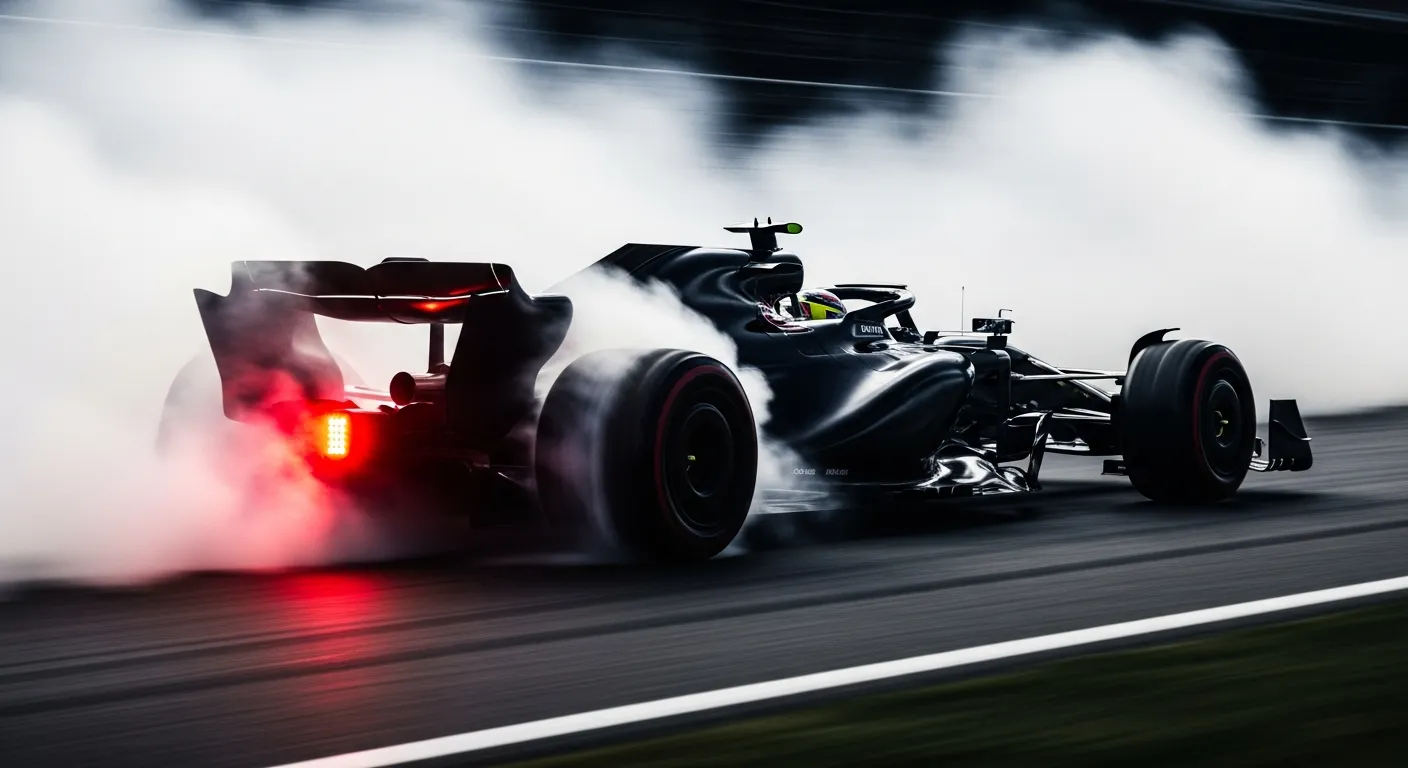
The 2019 Austrian Grand Prix at the Red Bull Ring was defined by a dramatic second half, where Max Verstappen orchestrated a recovery from a challenging start to engage in a decisive, wheel-to-wheel battle for the lead.
Qualifying
Qualifying saw Charles Leclerc secure pole position, placing his Ferrari at the front of the grid for what promised to be a challenging race. Max Verstappen lined up alongside him, setting the stage for an intense contest. Valtteri Bottas started third, with Lewis Hamilton fourth. A notable grid penalty affected Sebastian Vettel, who started from ninth after a power unit issue in Q3 prevented him from setting a representative lap time. Carlos Sainz also faced a significant grid drop due to a power unit change, starting from 19th.
Race
Verstappen's race began with a particularly poor start, causing him to drop several positions in the opening laps. Leclerc, meanwhile, maintained his lead, attempting to control the pace. Mercedes drivers, Bottas and Hamilton, were in contention, though Hamilton's race was complicated by front wing damage mid-race, necessitating an unscheduled pit stop. The latter stages of the race were where the true drama unfolded. Verstappen, having managed his tyres and demonstrating exceptional pace, began to rapidly close the gap to Leclerc. The decisive moment arrived in the final laps when Verstappen made an aggressive move on Leclerc at Turn 3, resulting in wheel-to-wheel contact. This overtake was immediately put under investigation by the stewards, adding significant tension to the post-race proceedings, though ultimately no penalty was applied.
Strategic Story
Tyre strategy played a critical role in the outcome. Leclerc started on soft tyres, pitting relatively early for hard compounds. Verstappen, also starting on softs, mirrored this strategy, but his sustained pace in the second half of the race was a key differentiator. Mercedes opted for a medium-to-hard strategy for both their drivers. Hamilton's early pit stop for a new front wing significantly impacted his race trajectory, forcing him into a recovery drive. Sebastian Vettel's strong recovery from ninth on the grid to fourth demonstrated Ferrari's underlying pace and his ability to execute an effective strategy, including a late second stop for softs to attack. This race highlighted how a well-executed alternative strategy, combined with driver aggression, could overcome initial grid disadvantages, a theme sometimes seen in races like the 2020 Mexico City Grand Prix.
Championship Impact
While Mercedes had been dominant in the early part of the 2019 season, this victory for Red Bull at their home circuit provided a significant challenge to their momentum. It was a crucial 26 points for Max Verstappen, including the fastest lap, preventing Lewis Hamilton from extending his championship lead further and injecting new competitive energy into the WDC and WCC battles. This result underscored the competitive potential of the Red Bull-Honda package, especially on circuits that reward strong chassis performance and driver skill, a factor that often comes into play at tracks like the 2020 United States Grand Prix. The FIA's decision post-race regarding the Verstappen-Leclerc incident also set a precedent for what was deemed acceptable racing, influencing future on-track battles. For a broader understanding of F1 regulations, the FIA — F1 World Championship website offers comprehensive details. The data from this season, and indeed all seasons, is meticulously recorded by various sources, including the Jolpica/Ergast — F1 historical data. For more detailed race analysis, the official Formula 1 site provides extensive coverage, while reputable Autosport F1 news outlets and Motorsport.com F1 coverage offer further insights. The dynamic nature of F1 strategy and on-track action is a constant topic of discussion among fans and analysts, as explored in the history of Formula One itself. The strategic nuances here could be compared to the intense pit stop decisions seen at the 2020 São Paulo Grand Prix.
Read the full editorial
Full classified results
Every driver's verified grid-to-flag result from the 2019 Austrian Grand Prix — grid, finish, points, teammate H2H, and championship swing.
- P1Max VerstappenRed Bull26 pts
- P2Charles LeclercFerrari18 pts
- P3Valtteri BottasMercedes15 pts
- P4Sebastian VettelFerrari12 pts
- P5Lewis HamiltonMercedes10 pts
- P6Lando NorrisMcLaren8 pts
- P7Pierre GaslyRed Bull6 pts
- P8Carlos SainzMcLaren4 pts
- P9Kimi RäikkönenAlfa Romeo2 pts
- P11Sergio PérezRacing Point0 pts
- P12Daniel RicciardoRenault0 pts
- P13Nico HülkenbergRenault0 pts
- P14Lance StrollRacing Point0 pts
- P15Alexander AlbonToro Rosso0 pts
- P18George RussellWilliams0 pts