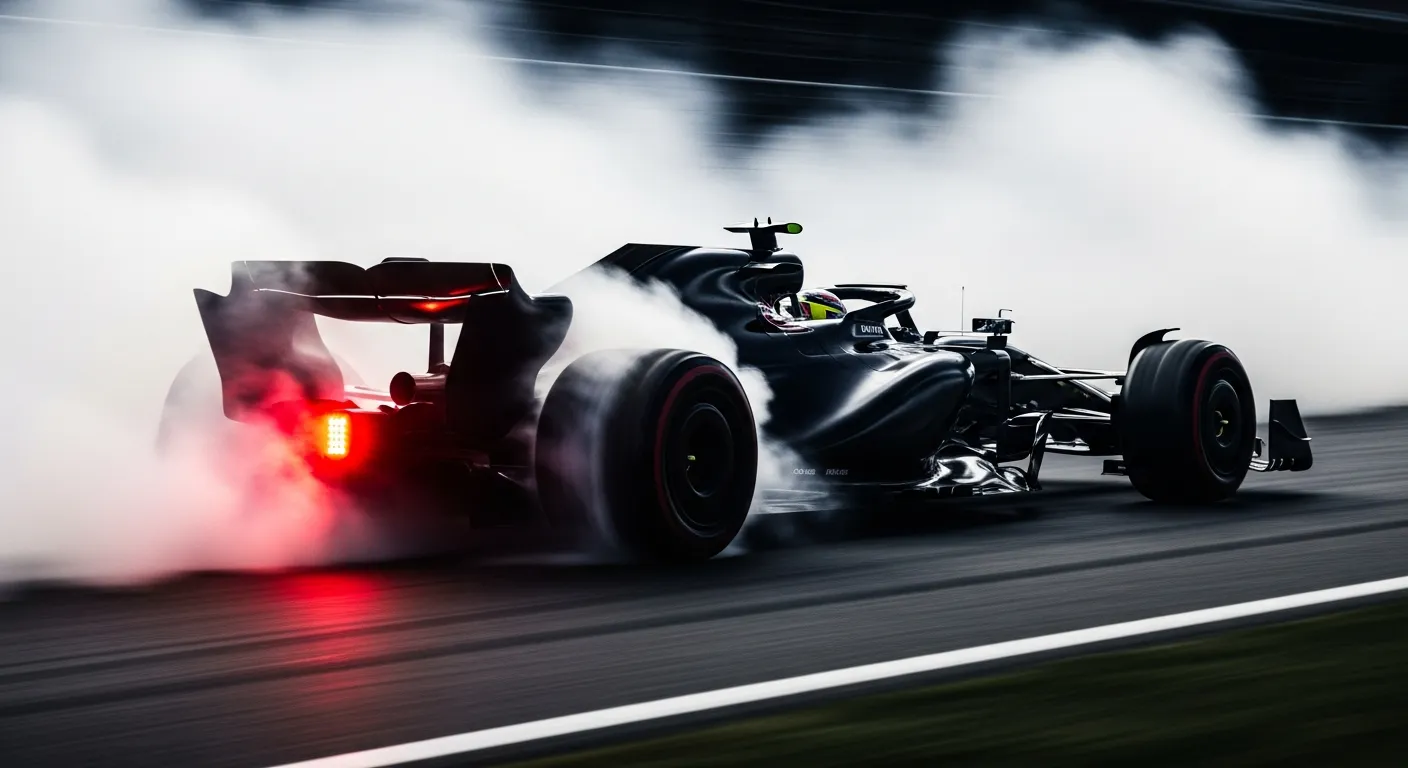
The 2021 United States Grand Prix at Circuit of the Americas delivered a high-stakes strategic duel, showcasing the intense championship battle between Max Verstappen and Lewis Hamilton. This race was not merely about raw pace, but about the calculated risks and precise execution of pit stop strategy under pressure, defining a pivotal moment in the turbo-hybrid era.
Qualifying
Qualifying saw Max Verstappen secure pole position, setting the stage for a critical start. Lewis Hamilton lined up alongside him in second, with Sergio Pérez completing the top three. Charles Leclerc demonstrated Ferrari's pace by qualifying fourth, ahead of Carlos Sainz. McLaren's Daniel Ricciardo started sixth, while Lando Norris was seventh. Valtteri Bottas, facing a grid penalty, started ninth, highlighting Mercedes' challenge to get both cars into contention from the outset. Further back, George Russell and Sebastian Vettel also faced grid penalties, starting from the back of the grid.
Race
From the moment the lights went out, the race was a direct confrontation. Hamilton made a strong start, immediately challenging and taking the lead from Verstappen into Turn 1. This early move shifted the strategic dynamic, forcing Red Bull to react. Sergio Pérez maintained a solid third position, running a largely solitary race and providing crucial support for Red Bull's constructors' championship ambitions. Ferrari's Charles Leclerc drove a composed race to secure fourth, demonstrating consistent performance. Daniel Ricciardo, after starting sixth, moved up to finish fifth, ahead of Valtteri Bottas who executed a strong recovery drive from his grid penalty to finish sixth. The race also saw several retirements, including Pierre Gasly early on due to suspension issues, followed by Esteban Ocon and Fernando Alonso later in the race with mechanical and rear wing problems, respectively. Alonso's retirement was particularly notable given his strong pace earlier in the race, as detailed by various Formula 1 news outlets.
Strategic Story
The strategic narrative of the 2021 United States Grand Prix hinged entirely on Red Bull's aggressive undercut. After Hamilton took the lead, Red Bull opted for an early pit stop for Verstappen on lap 10, switching to hard tires. This move was a clear attempt to gain track position, forcing Mercedes' hand. Mercedes responded by extending Hamilton's first stint, aiming for a longer second stint on fresher tires at the end of the race. However, the pace Verstappen demonstrated on his new hard tires proved too potent. Mercedes eventually pitted Hamilton, but the gap had already been reduced significantly. Red Bull repeated the early stop for Verstappen in the second round of pit stops, further solidifying his track position. This high-stakes chess match, where tire degradation and track position were paramount, echoed strategic battles seen in other races of the era, such as the 2017 British Grand Prix where tire management also played a crucial role. The execution of these pit stops and the subsequent tire management by both drivers dictated the outcome, with Verstappen ultimately holding off Hamilton by a narrow margin of 1.333 seconds after 56 laps. Understanding the nuances of F1 strategy often requires a deep dive into FIA technical regulations and tire performance data, which can be explored further through resources like Jolpica/Ergast's F1 data.
Championship Impact
Max Verstappen's victory extended his lead in the Drivers' Championship, a crucial advantage as the season entered its final races. This result underscored the tight competition, with every point vital. For Mercedes, securing second and sixth positions meant valuable points for the Constructors' Championship, but the loss of a potential victory for Hamilton was a blow to his WDC aspirations. The intense rivalry of the 2021 season, often highlighted on the official Formula 1 website, continued to build towards a dramatic conclusion, with the momentum shifting back and forth between the two title contenders. The strategic depth of this race at COTA, a permanent circuit known for its challenging layout, added another layer to the season's unfolding narrative, a common theme in the history of Formula One racing. The strategic calls made here could be compared to those in the 2017 Canadian Grand Prix where early stops also proved decisive, or the 2017 Austrian Grand Prix where different tire compounds led to varied strategies.
Read the full editorial
Full classified results
Every driver's verified grid-to-flag result from the 2021 United States Grand Prix — grid, finish, points, teammate H2H, and championship swing.
- P1Max VerstappenRed Bull25 pts
- P2Lewis HamiltonMercedes19 pts
- P3Sergio PérezRed Bull15 pts
- P4Charles LeclercFerrari12 pts
- P5Daniel RicciardoMcLaren10 pts
- P6Valtteri BottasMercedes8 pts
- P7Carlos SainzFerrari6 pts
- P8Lando NorrisMcLaren4 pts
- P9Yuki TsunodaAlphaTauri2 pts
- P10Sebastian VettelAston Martin1 pts
- P12Lance StrollAston Martin0 pts
- P13Kimi RäikkönenAlfa Romeo0 pts
- P14George RussellWilliams0 pts
- —Fernando AlonsoAlpine F1 TeamRear wing
- —Esteban OconAlpine F1 TeamMechanical
- —Pierre GaslyAlphaTauriSuspension