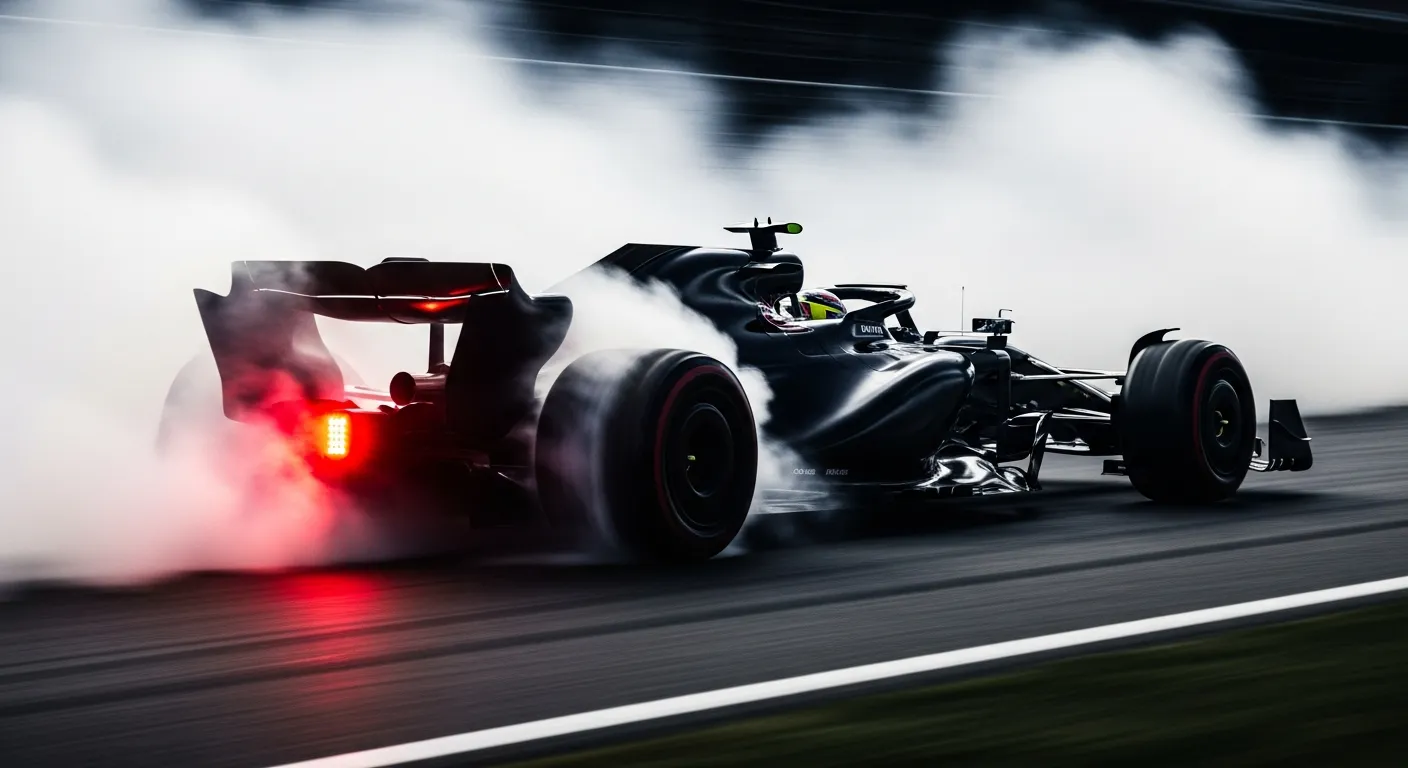
The inaugural 2022 Miami Grand Prix at the Miami International Autodrome was a strategic masterclass for Red Bull, demonstrating their early ground-effect era strength through decisive racecraft and pit wall execution against a strong Ferrari challenge.
Qualifying
Ferrari had shown impressive pace in the early stages of the 2022 season, and Miami's qualifying session was no exception. Charles Leclerc secured pole position, underlining the F1-75's single-lap potential on this new street circuit. His teammate, Carlos Sainz, had a more challenging build-up, having crashed during Friday practice, which undoubtedly impacted his rhythm, though he still managed to line up third. Max Verstappen, starting from third, found himself needing to overcome the two Ferraris, a task that would test Red Bull's race pace and strategic acumen. The qualifying session set the stage for a direct confrontation between the two leading constructors, a narrative that had defined the opening rounds of the season.
Race
From the moment the lights went out, Verstappen was on the offensive. He quickly dispatched Sainz, then set his sights on Leclerc. His overtake for the lead was executed with precision, demonstrating Red Bull's superior straight-line speed and tire management over a race distance. Once ahead, Verstappen began to build a comfortable gap, seemingly controlling the pace. However, the race was dramatically reset by a Safety Car deployment following a collision between Lando Norris and Pierre Gasly. This incident, occurring mid-race, compressed the field and presented a critical strategic dilemma for all teams. While some drivers benefited from a 'free' pit stop, others, like Verstappen, had to manage their existing tires through the restart. The subsequent restart saw Leclerc apply significant pressure, but Verstappen held firm, showcasing robust defensive driving on a circuit that offered limited overtaking opportunities outside of the DRS zones. For a deeper dive into race events and official results, the Formula 1 — official site is an invaluable resource.
Strategic Story
Red Bull's strategy revolved around maximizing Verstappen's race pace and tire longevity. His ability to push hard early in the stints without excessive degradation was a key differentiator. The Safety Car, while initially appearing to threaten Verstappen's lead, ultimately did not alter the outcome at the front. The decision to stay out and manage the gap, rather than pit under the Safety Car, proved effective. Ferrari, despite their qualifying advantage, struggled to match Red Bull's sustained performance, particularly in the latter half of tire stints. This race highlighted the nuanced differences in how teams adapted to the new ground-effect regulations, with Red Bull seemingly finding a better balance for race day performance. Understanding these strategic plays is crucial for any F1 fan, much like analyzing the tire strategies at the 2024 Hungarian Grand Prix or the high-speed demands of the 2024 Italian Grand Prix. For comprehensive technical regulations and event oversight, the FIA — F1 World Championship provides authoritative information.
Championship Impact
Verstappen's victory in Miami significantly narrowed the gap to Leclerc in the Drivers' Championship. This result underscored Red Bull's potent challenge, demonstrating that their early season reliability issues were being overcome by sheer pace and strategic execution. The Constructors' Championship also saw Red Bull gain crucial points, intensifying the battle at the top. This early ground-effect era season was shaping up to be a thrilling contest between the two titans. Analyzing historical F1 data, such as that available from Jolpica/Ergast — 2026 season data, helps contextualize these championship shifts. For broader historical context on the sport, Wikipedia: Formula One offers a detailed overview. The strategic implications of such races often echo through the season, influencing decisions at circuits like the 2024 British Grand Prix, where high-speed performance and tire management are paramount. Further news and analysis can be found on the F1 news analysis section of the official site, providing ongoing insights into the championship narrative.
Full classified results
Every driver's verified grid-to-flag result from the 2022 Miami Grand Prix — grid, finish, points, teammate H2H, and championship swing.
- P1Max VerstappenRed Bull26 pts
- P2Charles LeclercFerrari18 pts
- P3Carlos SainzFerrari15 pts
- P4Sergio PérezRed Bull12 pts
- P5George RussellMercedes10 pts
- P6Lewis HamiltonMercedes8 pts
- P7Valtteri BottasAlfa Romeo6 pts
- P8Esteban OconAlpine F1 Team4 pts
- P9Alexander AlbonWilliams2 pts
- P10Lance StrollAston Martin1 pts
- P11Fernando AlonsoAlpine F1 Team0 pts
- P12Yuki TsunodaAlphaTauri0 pts
- P13Daniel RicciardoMcLaren0 pts
- P17Sebastian VettelAston Martin0 pts
- —Pierre GaslyAlphaTauriSuspension
- —Lando NorrisMcLarenCollision