Track record
Source: Jolpica F1 API- Starts
- 3
- Wins
- 2
- Podiums
- 2
- Best finish
- P1
- DNFs
- 0
- Points
- 60
Won here in: 2023, 2025
Every appearance
| Year | Team | Grid | Finish | Pts |
|---|---|---|---|---|
| 2023 |
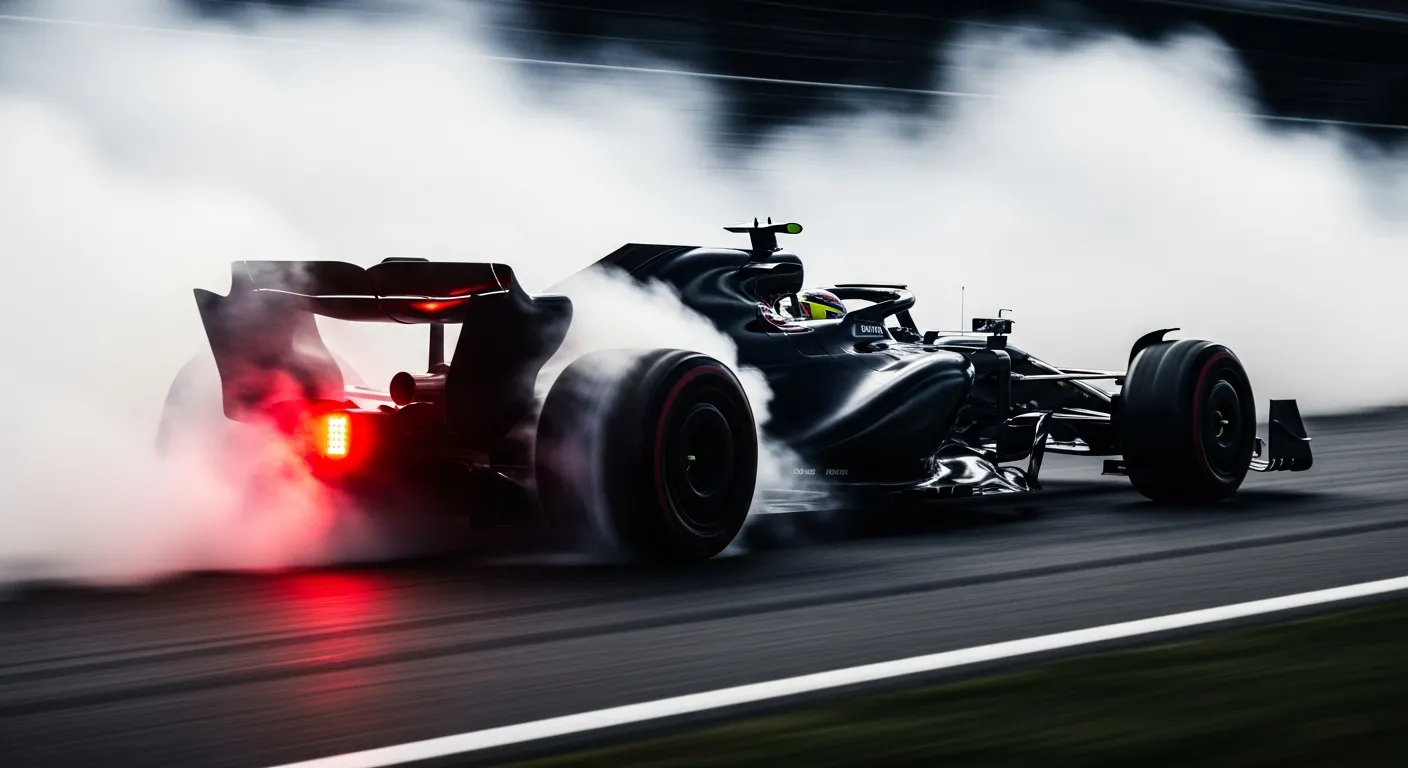
Driver × Circuit · street
Max Verstappen's record at the Las Vegas Grand Prix is marked by two wins from three starts, showcasing his adaptability to the unique demands of this high-speed street circuit.
Won here in: 2023, 2025
| Year | Team | Grid | Finish | Pts |
|---|---|---|---|---|
| 2023 |
One email a day, ahead of every session. Race results, paddock signal, and the calls the explainer sites miss.
By subscribing, you agree to receive daily F1 news and updates from The F1 Formula. No spam. Unsubscribe anytime. Privacy Policy
Continue reading
Max Verstappen secured a P5 finish at the 2024 Las Vegas Grand Prix, converting his P5 grid slot into 10 points for Red Bull Racing on the challenging street circuit.
Max Verstappen secured victory at the 2023 Las Vegas Grand Prix, converting his second-place grid start into a dominant win for Red Bull Racing despite an early penalty.
| Red Bull Racing |
| P2 |
| P1 |
| 25 |
| 2024 | Red Bull Racing | P5 | P5 | 10 |
| 2025 | Red Bull Racing | P2 | P1 | 25 |
Max Verstappen's engagement with the Las Vegas Grand Prix has been a study in adaptation and eventual dominance, culminating in two victories from his three starts. His initial win in 2023, overcoming a grid penalty and a challenging start, demonstrated his capacity to manage the distinct characteristics of a brand-new street circuit. The Las Vegas track, with its exceptionally long straights and tight, low-speed corners, presents a unique challenge, particularly given the cool desert temperatures that affect tire performance and grip levels.
While Verstappen secured a commanding victory in the inaugural 2023 event and again in 2025, his 2024 appearance saw him finish P5 from a P5 grid start. This result, while still yielding points, stands as a notable deviation from his typical front-running performances, suggesting that even for a driver of his caliber, the specific setup and race conditions on this particular street circuit can be highly influential. This contrasts with his more consistent performances on established circuits, though it's worth noting that other top drivers, like Charles Leclerc at the Las Vegas Grand Prix, have also found varying degrees of success and challenge here. The circuit's demands on car balance and tire warm-up are particularly acute, often requiring a compromise between straight-line speed for the long Strip section and mechanical grip for the slower turns.
Verstappen's driving style, known for its aggressive precision and ability to push the limits of tire adhesion, generally thrives on circuits that reward strong front-end grip and confident braking. However, the low-grip, cold conditions of Las Vegas can sometimes temper this advantage, demanding a more nuanced approach to conserve tires and maintain consistent pace. His ability to extract performance even when the car might not be perfectly optimized for the conditions is a hallmark of his success, as seen across various tracks, including more traditional layouts like those encountered at the United States Grand Prix.
Red Bull Racing's engineering prowess plays a significant role in adapting the RB car to these specific challenges. The balance between aerodynamic efficiency for the high-speed sections and mechanical grip for the tight corners is critical. Verstappen's feedback is instrumental in fine-tuning the car for qualifying and race trim, a process that is often more complex on temporary street circuits. For those interested in the broader technical regulations governing such adaptations, the FIA's official F1 World Championship documentation provides extensive detail. His record of 2 wins and 2 podiums from 3 starts, with a best finish of 1st in 2023, underscores his overall effectiveness on this unique stage, despite the occasional variability. Further historical context on Formula 1's evolution and its diverse circuits can be found on Wikipedia's Formula One page, highlighting the varied challenges drivers face globally. For a detailed breakdown of race results, including specific points and positions, comprehensive Jolpica/Ergast season data offers granular insights into individual performances across seasons, including Verstappen's outings in Las Vegas. His consistent ability to score points, with 60 total points and zero DNFs across his appearances, further solidifies his strong presence at this event, mirroring his overall championship form often seen at season-ending events like the Abu Dhabi Grand Prix.
Ultimately, Max Verstappen at the Las Vegas Grand Prix represents a compelling blend of his undeniable talent meeting a circuit that demands both raw speed and strategic subtlety. His record here, while not entirely unblemished, remains indicative of a driver who can master even the most unconventional of F1 venues.